



FRA launches 45-day Metra investigation
Will focus on the commuter rail's program of operational tests and inspections for all its operating crews, with special emphasis on training, qualification and testing of locomotive engineers.

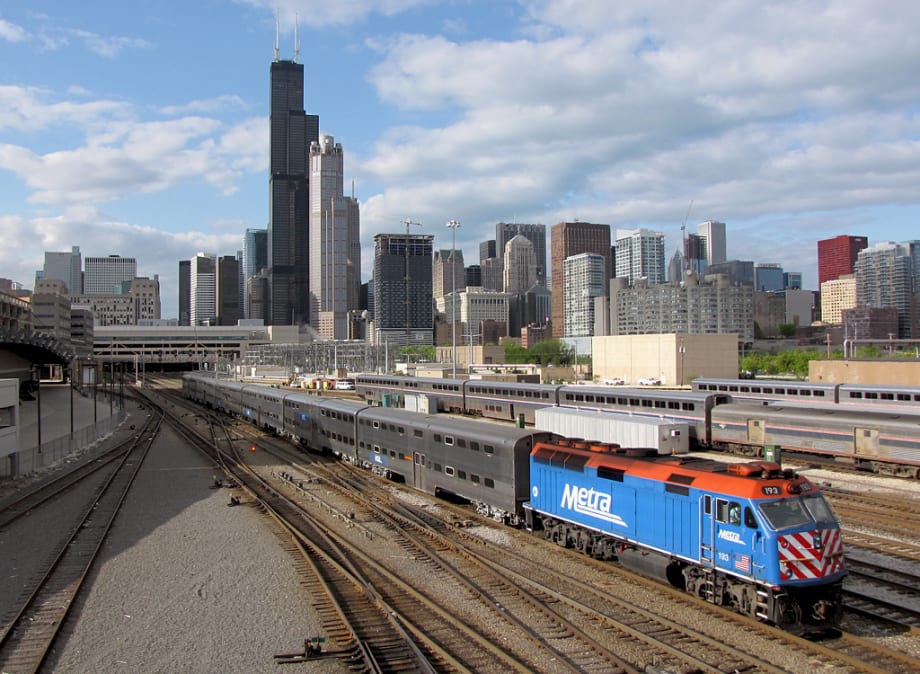
Photo courtesy Amtrak_russ
Photo courtesy Amtrak_russ
The Federal Railroad Administration (FRA) is launching a 45-day focused deep dive safety assessment of Chicago’s Metra in response to three incidents that have taken place in the last two weeks.
The FRA will focus on Metra’s program of operational tests and inspections for all its operating crews, with special emphasis on training, qualification and testing of locomotive engineers.
The assessment is similar to “Operation Deep Dive,” the recent safety assessment conducted after a series of accidents on Metro-North Rail Road that serves Connecticut, New York and New Jersey.
As a result, Metro-North was directed to address 25 specific recommendations covering eight safety critical concerns in an effort to mitigate risk and to begin a turnaround of the railroad’s safety culture.
“Safety is Metra’s top priority. We are in the process of completing our own internal investigations on these incidents,” said Metra CEO Don Orseno. “Metra contacted the FRA to inform them of our actions. We are fully committed to working with the FRA and welcome their review. We share a common goal of making commuter rail travel the safest mode of transportation.”
FRA investigators will focus on three recent incidents involving speeding and signal violations, which resulted in three Metra engineers losing their certifications. During the course of the investigation, FRA inspectors will:
Interview all affected employees.
Review event recorder tapes and video recordings.
Review operations testing records.
Review radio tapes.
Review Metra’s locomotive engineer qualifications certification program.
Investigators will also perform a comprehensive audit of Metra’s program of tests and inspections for its operating employees that will:
Analyze testing records for 2013 and 2014.
Review training, qualification and competency of testing officers.
Conduct testing sessions with Metra officers.
Conduct independent background reviews on Metra employees.
Perform speed checks.
In addition, FRA personnel will meet with labor leaders and Metra employees to listen to their concerns regarding these recent events.
More Management

Brian Dickson on Building Stronger, More Resilient Transportation Organizations
Bus Business Consultants Founder Brian Dickson discusses the leadership principles, operational discipline, and strategic planning that separate transportation companies positioned for long-term success from those stuck in survival mode.
Read More →
LA Metro Breaks Ground on Vermont BRT Project
The 12.4-mile corridor is projected to serve 66,200 daily riders, reduce travel times by up to 24%, and create the nation's busiest bus rapid transit corridor.
Read More →
Building Stronger Leaders, More Resilient Transit Teams
Dr. Carol Parker Walsh discusses leadership development, employee retention, workplace culture, and preparing transit’s workforce for AI and automation.
Read More →
Roman Cornell on ABC Companies’ Evolution and the Future of Passenger Transportation
The company’s CEO discusses carrying forward a third-generation family legacy, ABC’s continued evolution in passenger transportation, support for increasingly complex fleets, and how technology and continued investment could help operators improve uptime.
Read More →
CATS Launches West Charlotte Microtransit Zone, Expands Transit Services
The new microtransit zone connects residents to key destinations as Charlotte Area Transit System rolls out the first phase of its 2055 Transit System Plan.
Read More →
VIA Bus Ridership Grows 10.1% Through August 2026
San Antonio's VIA Metropolitan Transit reported the highest bus ridership growth among major Texas transit systems. Federal Transit Administration data ranked it second among the nation's 50 largest transit systems.
Read More →
CSA Group Releases Climate Resilience Standard for Transit, Passenger Rail
Developed with support from the Standards Council of Canada, CSA D700 guides assessing climate-related risks and planning adaptation measures for transit and passenger rail systems.
Read More →
ETA CEO John Maglio on Transit Technology, Innovation, and Building Agency Trust
ETA founder and CEO John Maglio explores the evolution of transit technology, the importance of reliable systems, and how stronger partnerships can help agencies improve operations and the passenger experience.
Read More →
COTA Launches First Customer Experience Action Plan to Improve Transit Service
The new plan outlines improvements to service reliability, accessibility, communication, and the overall rider experience across Central Ohio's transit system.
Read More →
LA Metro September Ridership Climbs 3.9%, Led by Rail Growth
The agency recorded more than 27.2 million boardings, with rail ridership increasing 12.4% year over year and the D Line posting the largest gains.
Read More →