




Related: Learn about TAM at BusCon's Transit Maintenance Forum
FTA issues transit asset management final rule
Lays out a strategic approach to maintain and improve capital assets, based on careful planning and improved decision-making, such as reviewing inventories and setting performance targets and budgets to achieve state of good repair goals.
July 26, 2016

2 min to read
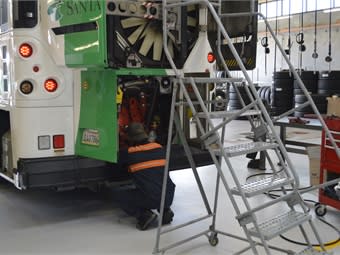
The Federal Transit Administration (FTA) announced a final rule requiring FTA grantees to develop management plans for their public transportation assets, including vehicles, facilities, equipment and other infrastructure. Transit asset management (TAM) is an essential practice for providing safer, more reliable transit service nationwide, while helping lower operating costs.
“The Obama Administration has made transportation infrastructure a priority across the United States,” said U.S. Transportation Secretary Anthony Foxx. “FTA’s new transit asset management rule will ensure that large and small transit operators take a common sense, strategic approach to maintaining their assets. This rule is a big step toward ensuring safe and efficient transit service for the tens of millions of Americans who rely on public transportation each day.”
Transit asset management lays out a strategic approach to maintain and improve capital assets, based on careful planning and improved decision-making, such as reviewing inventories and setting performance targets and budgets to achieve state of good repair goals. The rule, required under MAP-21 legislation, is intended to close the gap on aging and poorly maintained transit assets.
In 2013, FTA estimated that the transit industry had deferred maintenance and replacement needs totaling $86 billion, representing more than 12% of transit assets nationwide. FTA estimates that more than half of that backlog is made up by rail systems. In addition, nearly half of all buses are in either poor or marginal condition, meaning that they are due — or soon due — for replacement.
“We’ve worked inclusively with our grantees to develop the TAM rule, setting clear requirements for transit agencies to identify and prioritize state of good repair needs,” said FTA Acting Administrator Carolyn Flowers. “The good news for both transit operators and the traveling public is that the rule will improve safety and reliability and result in fewer travel delays for passengers.”
Under the TAM rule, each FTA-supported transit provider will be required to inventory and assess the conditions of their assets, develop priorities for investment based on the inventory and establish performance targets to keep assets in a state of good repair.
As FTA developed the TAM rule, it hosted listening sessions at dozens of events, ran webinars and conducted a multi-phase public comment period.
The new rule takes effect in October 2016. Agencies must complete asset management plans within two years and establish preliminary state of good repair performance targets by January 2017. The rule also establishes new reporting requirements to the National Transit Database.
FTA is providing technical assistance through guidebooks, webinars, newsletter articles highlighting TAM case studies, FTA’s annual state of good repair roundtables and a National Transit Institute course devoted to asset management. For more information, visit FTA’s transit asset management website.
More Management

METRO Opens Submissions for 2026 Motorcoach Awards
Nominations are now being accepted for METRO Magazine’s Operator of the Year and Innovative Operator of the Year awards.
Read More →
New York MTA Advances Final Contract for Second Avenue Subway Expansion
Contract Four is the largest in the Second Avenue Subway Phase 2 project and includes construction of station infrastructure, tracks, and signals for the subway expansion, MTA officials said. Work on Contract Four will begin in 2027.
Read More →
Transit Agencies Highlight Safety Gains at National Summit
Leaders from 15 major transit systems shared crime-reduction results and safety initiatives while discussing the role of continued federal support.
Read More →

NITA Names New Leadership, Expands Reduced-Fare Program at First Board Meeting
The new regional transit authority appointed its first board chair and interim executive director while extending reduced fares across CTA, Metra, and Pace for eligible riders.
Read More →
Beyond the Checklist: A Structured Approach to Transit Maintenance
Reliability-Centered Maintenance helps transit agencies move beyond routine checklists to focus limited resources on the assets and failures that have the greatest impact on safety, reliability, and service.
Read More →
APTA 2026 Nominating Committee Selects Leadership Slate, Names Chair and Vice Chair Nominees
Leadership changes will help shape the association’s priorities and its representation of the transportation industry during the 2026–2027 term.
Read More →
DART Launches Major Security, Fare Enforcement Initiative
The 90-day demonstration will deploy coordinated security teams at five light rail stations while testing controlled access and gathering data to guide future investments.
Read More →
Sponsored•September 9, 2026
Advancing Fare Collection Through Technology and Innovation
Learn about delivering 1300 gates at 91 stations while managing fare evasion. Explore the large scale deployment, solution customization and real-world results that affect the region. Prepare for deployment in your region now.
Read More →
Game Day in Motion: Moving Millions During the 2026 World Cup
Between packed transit stations and team motorcoaches, see how agencies and operators across North America tackled the transportation demands of the 2026 FIFA World Cup.
Read More →
Surface Transportation Extension Averts Shutdown, Leaves Transit Funding Gap
The stopgap keeps federal transportation programs moving, but missing advance funding could complicate the transit and rail projects agencies are planning next.
Read More →