




RELATED: Greater opportunities for transit oriented development
L.A. Metro announces first chief innovation officer
Metro CEO Phillip Washington taps nationally recognized transportation expert Dr. Joshua L. Schank to head newly created office of extraordinary innovation.
September 30, 2015

3 min to read

The Los Angeles County Metropolitan Transportation Authority announced today the selection of Dr. Joshua L. Schank as the first-ever head of Metro’s newly created Office of Extraordinary Innovation. Schank’s hire reflects L.A. Metro’s commitment to innovation, accessibility and accountability in transportation for all Angelenos.
Schank currently serves as President/CEO of the Eno Center for Transportation in Washington, D.C., an influential, nonpartisan transportation policy think tank. At Eno, Schank successfully sought innovative solutions to pressing national transportation concerns through consensus and coalition building among industry leaders, elected officials and academics. In this role, Schank also directed Eno’s highly visible working groups on public-private partnerships (P3s), freight, aviation and transportation finance.
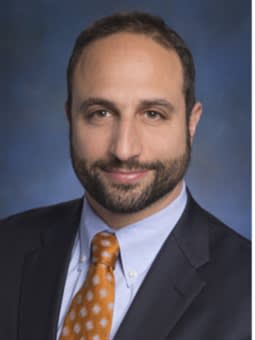
He started his career at the New York Metropolitan Transportation Authority as a transportation planner and went on to work as a Congressional Transportation Fellow and Legislative Assistant in the U.S. Senate. He also worked as a senior associate for two major international transportation consulting firms, specializing in public transit and federal transportation policy. Schank also served as Director of Transportation Research for the Bipartisan Policy Center based in Washington, D.C., where he directed a large panel of former elected officials, policy experts, business executives and civic leaders overseeing a national study of federal transportation policy that resulted in recommendations for accountable, performance-based transportation programs.
“Dr. Schank is highly regarded across the transportation industry as a collaborator and an innovator,” said L.A. Metro CEO Phillip Washington. “He is a leader in transportation policy and driving mobility solutions through his own unique vision.”
In July, just two months after taking the helm as Metro’s new CEO, Washington announced the creation of an Office of Extraordinary Innovation. The intent of this office is to champion new ideas to improve mobility in L.A. County. The responsibilities are threefold: 1) Inform the high-level vision for L.A. Metro through exposure to innovative people, organizations and industries; 2) Support Metro departments in piloting and implementing new and experimental programs and policy and 3) Serve as the primary liaison for new ideas relevant to L.A. Metro coming from entrepreneurs, private sector entities, academia or individuals.
“This office will be responsible for mining and implementing the most out of the box and innovative strategies the transportation industry has ever seen in this country,” said Washington. “This will be our Innovative Strike Force Team in areas such as public-private partnerships, value capture opportunities, high technology and autonomous vehicle impact on transit, as well as leading the agency’s strategic planning efforts.”
Schank earned a Bachelor of Arts Degree in Urban Studies - Political Science from Columbia University. He earned a Master of Arts Degree in City Planning - City Design and Development from Massachusetts Institute of Technology (MIT) and a Ph.D. in Urban Planning with a Transportation Specialization from Columbia University, New York, N.Y.
He will begin his new role as Chief Innovation Officer on Oct. 5, 2015.
More Management

LIT Marks 10-Year Milestone at Annual Summit
Hosted by the COTA from September 10 to 13, the Summit carried the theme “Celebrating 10 Years of Excellence, Leadership, and Impact,” with every part of the program honoring the people, agencies, and partners who built LIT over its first decade.
Read More →
People Movement: Dan Dipert Coaches Adds Third-Generation Leader, Keolis Names New Valley Metro VP/GM, and More
In this edition, we also cover recent appointments and announcements at the Wabtec, SilverRide, HNTB, and more, showcasing the individuals helping to shape the future of transportation.
Read More →
METRO Opens Submissions for 2026 Motorcoach Awards
Nominations are now being accepted for METRO Magazine’s Operator of the Year and Innovative Operator of the Year awards.
Read More →

New York MTA Advances Final Contract for Second Avenue Subway Expansion
Contract Four is the largest in the Second Avenue Subway Phase 2 project and includes construction of station infrastructure, tracks, and signals for the subway expansion, MTA officials said. Work on Contract Four will begin in 2027.
Read More →
Transit Agencies Highlight Safety Gains at National Summit
Leaders from 15 major transit systems shared crime-reduction results and safety initiatives while discussing the role of continued federal support.
Read More →
NITA Names New Leadership, Expands Reduced-Fare Program at First Board Meeting
The new regional transit authority appointed its first board chair and interim executive director while extending reduced fares across CTA, Metra, and Pace for eligible riders.
Read More →
Beyond the Checklist: A Structured Approach to Transit Maintenance
Reliability-Centered Maintenance helps transit agencies move beyond routine checklists to focus limited resources on the assets and failures that have the greatest impact on safety, reliability, and service.
Read More →
APTA 2026 Nominating Committee Selects Leadership Slate, Names Chair and Vice Chair Nominees
Leadership changes will help shape the association’s priorities and its representation of the transportation industry during the 2026–2027 term.
Read More →
DART Launches Major Security, Fare Enforcement Initiative
The 90-day demonstration will deploy coordinated security teams at five light rail stations while testing controlled access and gathering data to guide future investments.
Read More →
Sponsored•September 9, 2026
Advancing Fare Collection Through Technology and Innovation
Learn about delivering 1300 gates at 91 stations while managing fare evasion. Explore the large scale deployment, solution customization and real-world results that affect the region. Prepare for deployment in your region now.
Read More →