



L.A. Metro breaks ground on Purple Line extension
The first subway segment will extend the Purple Line 3.9 miles from the existing Wilshire/Western Purple Line terminus near Koreatown into Beverly Hills. T


Visitor7
Visitor7
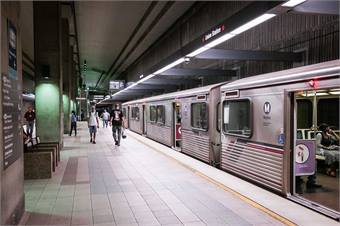
The Los Angeles County Metropolitan Transportation Authority (Metro) leaders were joined by federal, state and local elected officials in the Mid-Wilshire District to break ground on the long awaited Metro Purple Line Extension Project, the largest, most ambitious public works project in the Western U.S., according to Metro.
In July, Metro's board of directors approved a contract with Skanska, Traylor and Shea (STS), a joint venture, to construct the Purple Line Extension Project. Construction of the subway extension will connect West Los Angeles to the region's growing rail network, making it possible to travel between Downtown Los Angeles and Westwood in 25 minutes.
The first subway segment will extend the Purple Line 3.9 miles from the existing Wilshire/Western Purple Line terminus near Koreatown into Beverly Hills. Three new underground stations are planned at Wilshire/La Brea, Wilshire/Fairfax and Wilshire/La Cienega, providing fast, frequent, high-capacity transit service farther west along busy Wilshire Boulevard.
The Purple Line Extension is a critically important rail project that is partially funded by the 2008 Measure R sales tax that was overwhelmingly approved by two-thirds of L.A. County voters. The first segment of the subway is expected to be completed in 2023 with a project budget of $2.821 billion. In addition to this local funding, Metro received a $1.25 billion Full Funding Grant Agreement from the Federal Transit Administration to help pay for the first segment.
The U.S. Department of Transportation also granted Metro a low-interest loan of $856 million from a Transportation Infrastructure Finance and Innovation Act (TIFIA) to complete the funding package for the project's first phase. Combined, these nearly $2 billion in project commitments represent the biggest federal transportation investment for a single construction segment in the history of Los Angeles County.
The remaining $821 million in project funding for the first segment includes Measure R, City of Los Angeles local funding, and other existing local and federal funds.
The project is planned to be built in three sections. Section two, which will include Wilshire/Rodeo and Century City stations, is scheduled for completion in 2026. Section three, which will include Westwood/UCLA and Westwood/VA Hospital stations, is planned to open in 2035. When all three project sections are complete, the Purple Line will extend westward from Wilshire/Western for nearly nine miles with a total of seven new stations.
Metro is currently seeking additional federal funding that could accelerate subway construction for Section two in the form of a $1.1 billion grant from the federal New Starts program and a $307 million low-interest loan from the federal TIFIA program.
More Management
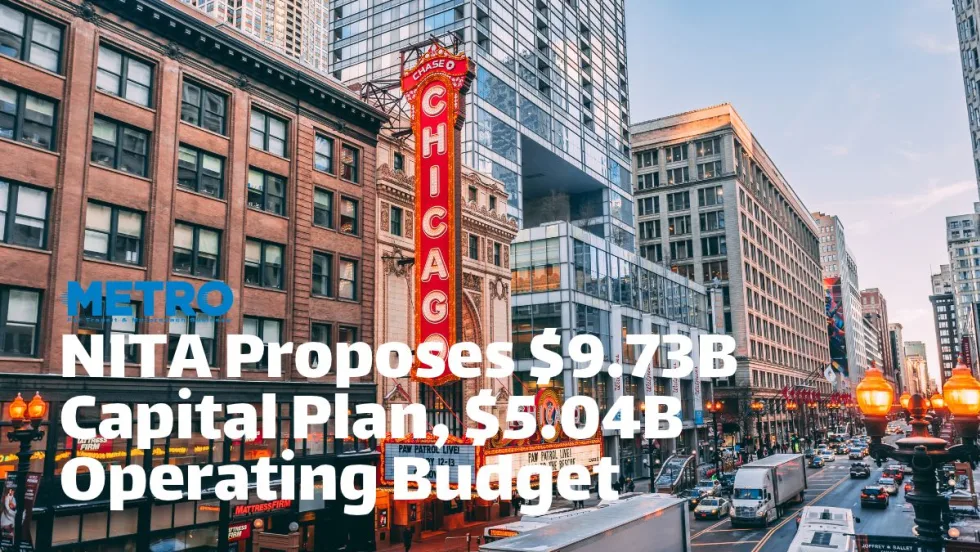
NITA Proposes $5B Operating Budget, $9.7B Capital Program for 2027
The proposed budget includes funding for expanded transit service, safety initiatives, fleet upgrades, and infrastructure improvements across CTA, Metra, and Pace.
Read More →
Financing, Fleet Replacement Requires a More Strategic Approach
Executives from ABC Companies and MCI discuss how rising costs, changing market conditions, and post-pandemic challenges are prompting motorcoach operators to rethink financing strategies, fleet replacement cycles, and long-term planning.
Read More →
Bringing Austin’s First Light Rail System to Life
Austin Transit Partnership CEO Greg Canally discusses the city's nearly 10-mile light rail project, its collaborative approach to project delivery, the importance of community engagement, and the milestones ahead as construction approaches in 2027.
Read More →
ETA CEO John Maglio on Transit Technology, Innovation, and Building Agency Trust
ETA founder and CEO John Maglio explores the evolution of transit technology, the importance of reliable systems, and how stronger partnerships can help agencies improve operations and the passenger experience.
Read More →
Metra Draft Plan Outlines Costs, Service Improvements for Regional Rail
The Systemwide Network Plan identifies infrastructure needs and potential investments to expand all-day, bidirectional rail service across the Chicago region.
Read More →
New Orleans RTA Names Augustine III as New CEO
In this edition, we also spotlight recent personnel moves at HDR, PATH, STV, and more, highlighting the people taking on new roles across the transportation industry.
Read More →
How Transit Agencies Are Using Free Rides to Improve Voting Access
Transit agencies are using fare-free service, trip-planning tools, and targeted rides to improve voting access. See what other agencies can learn from these efforts.
Read More →
Caltrain’s Electrification Drives a New Era of Ridership Growth
The railroad’s shift to electric service has brought more frequent trains, stronger customer satisfaction, and increased ridership, earning it APTA’s Outstanding Public Transportation System award.
Read More →
Chicago, Charlotte Transit Agencies Expand Rider Support Programs
CTA launched crisis intervention teams as CATS prepares to deploy fare ambassadors, expanding customer assistance and security efforts across both systems.
Read More →
New York MTA Launches Historic $1.9B Signal, Track Modernization Project
Funded in part by congestion pricing revenue, the project will replace nearly century-old signals along the A and C lines in Brooklyn and Queens.
Read More →