




RELATED: L.A. Metro taps Denver transit chief to lead agency
L.A. Metro rail system reaches 25-year milestone
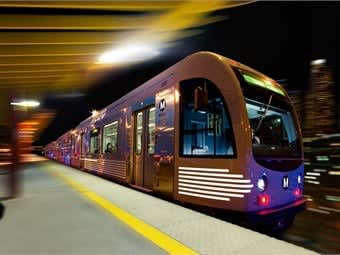
From zero miles of rail in 1990 to 87 miles today and with five major rail lines under construction, including two more set to open next year that will add 17.6 more miles, modern Metro Rail is an amazing accomplishment.
July 14, 2015
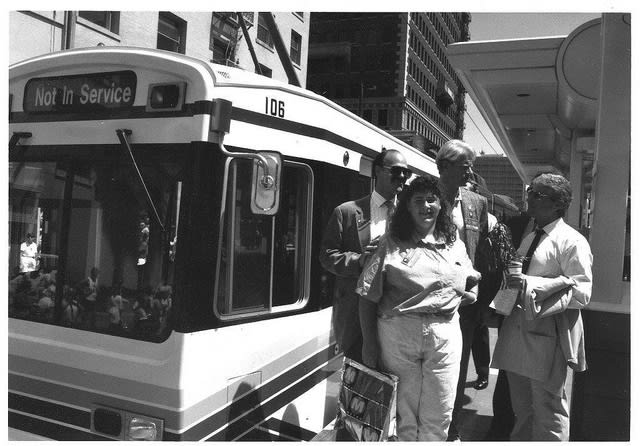
Metro Rail Blue Line opening day, July 14, 1990. Courtesy Metro Library and Archive.
2 min to read
Metro Rail Blue Line opening day, July 14, 1990. Courtesy Metro Library and Archive.
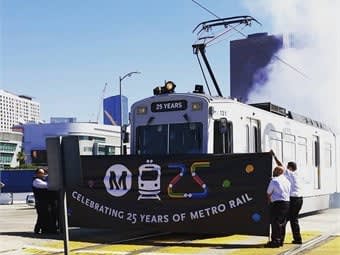
On Monday, July 13, Los Angeles' Metro marked 25 years of modern Metro Rail – and an astonishing 87 miles of rail built — by re-creating the opening of the Metro Blue Line at the same spot where it occurred 25 years earlier.
A Metro Blue Line train appeared from the 7th St/Metro Center Station tunnel through a veil of smoke to break through a banner as it did in 1990.
“We’re here today to thank the voters of L.A. County,” said Metro Board Chair and L.A. County Supervisor Mark Ridley-Thomas. "... through your generosity and farsightedness, we’re creating a modern rail system that is regional in scope, rational in its appeal to riders and equitable in the benefits it is providing for the people of L.A. County. We would not be here today, were it not for you.”
From zero miles of rail in 1990 to 87 miles today and with five major rail lines under construction, including two more set to open next year that will add 17.6 more miles, modern Metro Rail is an amazing accomplishment, according to an agency statement.
Courtesy Metro
Since 1990, the expanding Metro Rail system has carried 1.5 billion rides, which has led to a reduction of particulate matter in the air by 4,800 pounds per car for each year that the car is left at home.
Additionally, the rail system has contributed to the positive reversal of surrounding neighborhoods such as Hollywood, Long Beach, Pasadena and Little Tokyo. Better lighting, commercial development and the in-and-out of travelers have all made the surrounding neighborhoods more prosperous and attractive to business and community.
“But Metro Rail does not fly solo,’ said Metro CEO Phil Washington. “It’s the centerpiece of a transit network that includes 2,200 Metro buses covering 170 bus routes and nearly 16,000 bus stops. Together with Metrolink, the municipal carriers like the Big Blue Bus, the local-return operators like the Glendale Bee and highway improvements like the ExpressLanes project for highway mobility, we’re building a balanced transportation network to address the issues of the entire region.”
Courtesy Metro
In celebration of the Metro Rail event, 5,000 25th Anniversary commemorative TAP cards are being loaded into ticket vending machines in Union Station and 7th/Metro, Pico and Willowbrook stations.
A Metro website has been established at Metro25 with details on upcoming 25th anniversary events, including concerts and art and architecture tours of the rail stations, scheduled for the next year, as well as a chance to share stories through an interactive literary program that is open to the public.
More Rail

New York MTA Advances Final Contract for Second Avenue Subway Expansion
Contract Four is the largest in the Second Avenue Subway Phase 2 project and includes construction of station infrastructure, tracks, and signals for the subway expansion, MTA officials said. Work on Contract Four will begin in 2027.
Read More →
San Diego MTS Breaks Monthly Trolley Ridership Record
Agency officials said July’s ridership indicates MTS’s continued recovery from the pandemic.
Read More →
Report Examines NJ TRANSIT Reliability, Funding Challenges
The Garden State Initiative analysis examines the roles of Amtrak infrastructure, fleet management, and agency operations while recommending a more performance-based approach to improving reliability.
Read More →
Stadler, CapMetro Sign Long-Term Rail Fleet Support Agreement
Beginning in 2027, Stadler will provide on-site technical expertise, spare parts support, training, and obsolescence management to help extend the reliability and longevity of CapMetro’s GTW fleet.
Read More →
Biz Briefs: Alstom Lands Canadian Contract, LYT to Supply California TSP, and More
In METRO's latest installment, we take a look at recent news from Complete Coach Works, Beep, FlixBus, and more partnerships making headlines across the transportation sector.
Read More →
CATS Gold Line Marks 5 Years of Service, 2.8M Passenger Trips
With a six-mile expansion planned, the Charlotte streetcar is positioned to connect more neighborhoods and major transit hubs across the region.
Read More →
Why Simulating Pedestrian Movement Has Become Essential for Modern Rail Stations
Pedestrian microsimulation is helping rail planners identify bottlenecks, test station designs, and prepare complex transit hubs for growing passenger volumes.
Read More →
Amtrak Begins Major Construction at New York’s Sunnyside Yard
The new maintenance facility will support Amtrak’s Airo trainsets while improving maintenance efficiency and turnaround times in New York.
Read More →
Chicago Leaders Unveil Plans for O’Hare Airport Express Train
The privately developed project would offer a 15-minute trip between downtown and O’Hare’s Terminal 2, with trains operating every 15 minutes on a dedicated track. The service would use battery-electric trains and three existing freight rail rights-of-way.
Read More →
OCTA Maps Out 30-Year Strategy to Protect Coastal Rail Corridor
The draft feasibility report identifies strategies to protect the coastal rail line for decades as the agency continues near-term stabilization and sand placement efforts.
Read More →