



Related: LA Metro to invest $9M in affordable housing near transit
L.A. rail facility is innovative, sustainable, light-filled space
The Expo line has become a significant success story for LA Metro. In the first three months following the opening of the extension, ridership grew more than 53%.
by Sean Feeney
October 10, 2017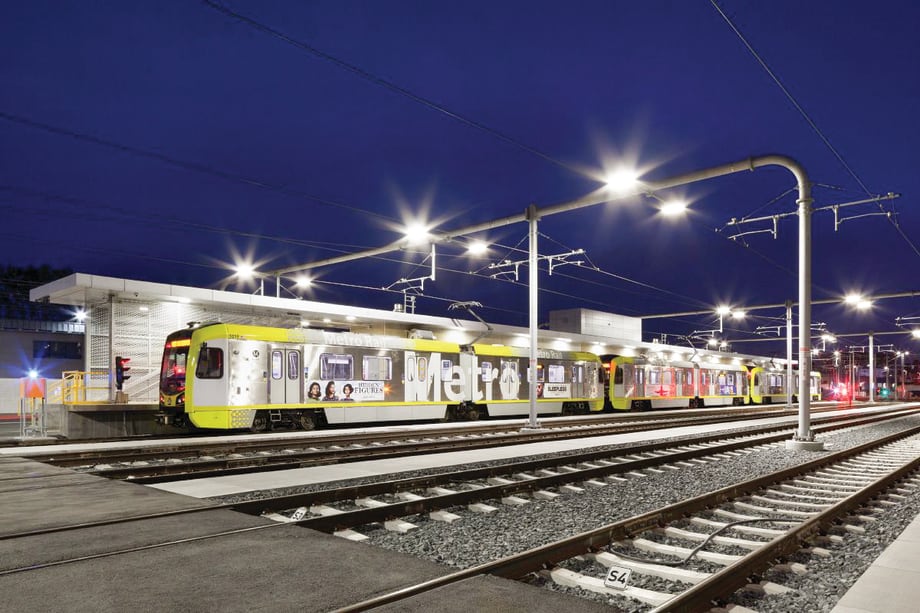
The main purpose of the facility is the maintenance of 45 trains that use it as their home yard. Photo by Chang Kim.
6 min to read
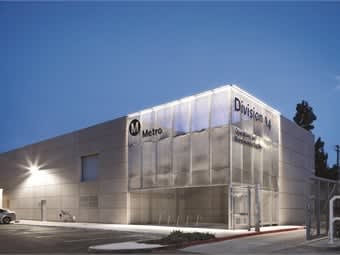
Metro’s Division 14 Expo Light Rail and Operations Maintenance Facility is one of the first buildings that passengers on the new Expo Light Rail Line see on their way into Santa Monica. Photo by Chang Kim.
The Los Angeles Metro Division 14 Expo Light Rail Operations & Maintenance Facility in Santa Monica, Calif., is designed to enhance the operations and maintenance serving the Expo light rail line, promote employee wellness, and integrate seamlessly into the surrounding community.
The new Metro Expo Line connects Santa Monica by rail to Downtown Los Angeles, Pasadena, San Fernando Valley, South Bay, Long Beach, and a number of points in between via a 6.6-mile extension from the Culver City Station to Santa Monica. The line has become a significant success story for Metro. In the first three months following the opening of the extension, ridership grew more than 53%.
Metro’s Division 14 Expo Light Rail and Operations Maintenance Facility is a critical component of that service and one of the first buildings that passengers on the new Expo Light Rail Line see on their way into Santa Monica.
The site encompasses over 70,000 square feet of building area on a narrow 9.7-acre site. The design team worked closely with Metro to overcome the tight site challenges and deliver a facility that goes well beyond the basic functionality requirements of a typical operations and maintenance facility.
The light-filled spaces embrace the industrial nature of the transit agency’s work while also supporting employee well-being and the client’s sustainability goals. The design team also worked closely with neighborhood stakeholders during the design process to ensure the facility accomplished Metro’s other major goal of being a good neighbor to the surrounding community.
While ultimately successful, this project was not without substantial challenges, driven primarily by the project’s unique siting. Overcoming these challenges required close collaboration between the design, engineering, and construction teams.
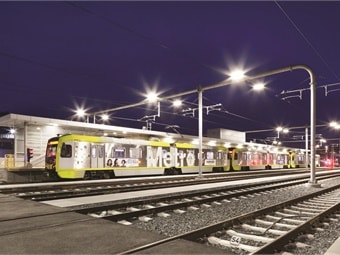
The main purpose of the facility is the maintenance of 45 trains that use it as their home yard. Photo by Chang Kim.
The site includes distinct spaces for administration, operations, maintenance, and servicing. It contains six storage tracks for three-car trainsets, a light maintenance and repair shop, administration facility, blow-down facility, run-through wash building, double-track interior car cleaning platform, and a traction power substation designed to maintain the fleet of 45 vehicles. The site also includes parking for staff and visitors with paved aprons, ramps and roadways, landscaping, perimeter security walls and fencing, and a 24/7 guarded entry.
Goals & Community Feedback
Because of the project’s large scale and visibility, it was important to make sure all stakeholders, including the surrounding community, were engaged in the design process. In the course of comparing neighborhood feedback to the early master plan, the design team determined there were several design conflicts between Metro’s goals and concerns the community had expressed.
To address these concerns, the design team revisited the master plan and reshaped the layout of the facility to create a “buffer park” — recently dedicated as Ishihara Park — along Exposition Boulevard that ultimately benefits both Metro and the community. To mitigate potential noise concerns, the south bar of the facility works as one large sound wall in conjunction with 12-foot six-inch precast concrete site walls on either side of the Main Building.
Overcoming Site Challenges
While there are 9.7 acres of space, the site is narrow, requiring a unique solution of overlapping some of the building spaces over the rail yard and maintenance area. The moment frames that span over two train tracks are 34 feet long, and the main hallway hangs over a part of the maintenance area, using space as efficiently as possible.
The typology of a rail maintenance facility requires tall, unimpeded bays in the direction of train travel to accommodate the OCS and pantograph while still meeting the seismic requirements of southern California. To account for this, open span moment frames allowing train travel were used in the north/south direction in combination with brace frames in the other direction.
The Control Suite, which serves as the heart and brain of the facility, needed exceptional visibility of the site, the two lead tracks to the main line, and the other remote buildings, so the team designed this particular room to cantilever out from the north elevation to provide views to both sides of the yard.
Inviting, Industrial Nature
While the design of this facility provides a supportive, light-filled environment, it also intentionally expresses the industrial nature of the work. The form is driven by efficiency and the functionality of Metro’s rail operations while providing a sculptural aesthetic to the public.
The lobby stairs welcome visitors and employees with an industrial and modern, yet inviting look achieved through a thoughtful application of architecturally exposed structural steel. The stairs are meant to look monolithic and literally hang from the roof structure by 1 1/2-inch diameter rods. The glass railings with their illuminated handrails can make you feel like you’re ascending into another world while walking up.
To take advantage of borrowed light, many of the interior partitions are glazed. This provided another opportunity to express the industrial nature of the project by ghosting the brace frames behind translucent walls.
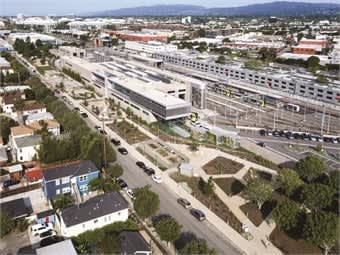
The site encompasses over 70,000 square feet of building area on a narrow 9.7-acre site. Photo by Chang Kim.
As the facility houses both maintenance and operations, it was important to make sure the two sides felt as connected as possible. A bridge was created that connects the north (Operations) and south (Maintenance) bars, literally and symbolically linking the two groups.
Safety
Since the main purpose of the facility is the maintenance of 45 trains that use the facility as their home yard, safety was a top priority. Three run-through train bays are used for quick service and inspection as well as more time-dependent tasks like component change out and truck repair. The bays have a clear height of over 30 feet to accommodate the continuous OCS wire that passes through them or the two large bridge cranes that dominate the CCO Bay. Light-reflective floor hardener and bright white painted finishes provide light reflection for better working visibility.
Train roofs can be accessed by an elevated composite deck platform with safety platforms of metal grating to allow the passage of light and fall protection. Large skylights fill the entire space with natural daylight and roof vents naturally exhaust heated air. A recessed pit area provides access to the undercarriage of the trains. To enhance safety, much of the miscellaneous steel, such as guardrails, lift cages, and platform edges, are painted an obvious yellow.
Leveraging Natural Advantages
Throughout the design process, the team looked for ways to incorporate the latest research in design for workplace wellbeing leveraging natural light and the mild Southern California climate. The Maintenance area was designed with the aforementioned large skylights that fill the entire space with natural daylight and roof vents that naturally exhaust heated air. These features serve a functional purpose in the space, but they also make the maintenance area a healthier, more pleasant work environment for Metro employees.
The north bar contains the Operations administrative offices, the control suite, and the operators’ room and amenities. Throughout these areas, natural ventilation is used through repair positions and under-floor air distribution, and natural daylight is maximized.
Sustainability
One of Metro’s main goals for their facilities is to support sustainable and responsible resource use. So while all of the components of the facility are largely driven by their functionality, the design team worked with internal stakeholders to develop concepts for a vibrant, transparent, and healthy work environment for the Division 14 staff.
Passive strategies, such as harvesting daylight to reduce electrical demands and using the area’s mild climate to help reduce mechanical demand, were combined with innovative design strategies for water, energy use, and ventilation. An urban runoff mitigation plan, for example, helped the project reduce interior potable water usage by 44% and potable water use for irrigation by 53%.
Sean Feeney, RA, LEED AP, is a Sr. Associate at RNL (www.rnldesign.com), now part of Stantec.
More Rail

New York MTA Advances Final Contract for Second Avenue Subway Expansion
Contract Four is the largest in the Second Avenue Subway Phase 2 project and includes construction of station infrastructure, tracks, and signals for the subway expansion, MTA officials said. Work on Contract Four will begin in 2027.
Read More →
San Diego MTS Breaks Monthly Trolley Ridership Record
Agency officials said July’s ridership indicates MTS’s continued recovery from the pandemic.
Read More →
Report Examines NJ TRANSIT Reliability, Funding Challenges
The Garden State Initiative analysis examines the roles of Amtrak infrastructure, fleet management, and agency operations while recommending a more performance-based approach to improving reliability.
Read More →
Stadler, CapMetro Sign Long-Term Rail Fleet Support Agreement
Beginning in 2027, Stadler will provide on-site technical expertise, spare parts support, training, and obsolescence management to help extend the reliability and longevity of CapMetro’s GTW fleet.
Read More →
Biz Briefs: Alstom Lands Canadian Contract, LYT to Supply California TSP, and More
In METRO's latest installment, we take a look at recent news from Complete Coach Works, Beep, FlixBus, and more partnerships making headlines across the transportation sector.
Read More →
CATS Gold Line Marks 5 Years of Service, 2.8M Passenger Trips
With a six-mile expansion planned, the Charlotte streetcar is positioned to connect more neighborhoods and major transit hubs across the region.
Read More →
Why Simulating Pedestrian Movement Has Become Essential for Modern Rail Stations
Pedestrian microsimulation is helping rail planners identify bottlenecks, test station designs, and prepare complex transit hubs for growing passenger volumes.
Read More →
Amtrak Begins Major Construction at New York’s Sunnyside Yard
The new maintenance facility will support Amtrak’s Airo trainsets while improving maintenance efficiency and turnaround times in New York.
Read More →
Chicago Leaders Unveil Plans for O’Hare Airport Express Train
The privately developed project would offer a 15-minute trip between downtown and O’Hare’s Terminal 2, with trains operating every 15 minutes on a dedicated track. The service would use battery-electric trains and three existing freight rail rights-of-way.
Read More →
OCTA Maps Out 30-Year Strategy to Protect Coastal Rail Corridor
The draft feasibility report identifies strategies to protect the coastal rail line for decades as the agency continues near-term stabilization and sand placement efforts.
Read More →