



Long Beach Transit adds Rotary Lifts
The order includes 11 60,000-lb. capacity two-piston models and one three-piston version rated at 90,000 lbs. Peterson Hydraulics will also lay an epoxy-coated floor with the new lifts.

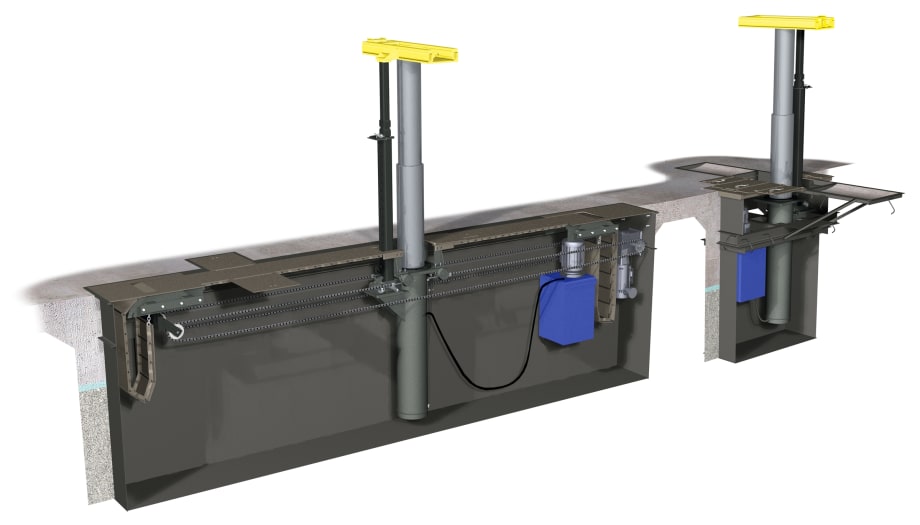
Calif.-based Long Beach Transit (LBT) awarded a contract to Peterson Hydraulics Inc. for 12 Rotary Lift MOD30 environmentally friendly in-ground lifts.
The MOD30s will replace existing lifts at LBT’s Anaheim Street Facility. The order includes 11 60,000-lb. capacity two-piston models and one three-piston version rated at 90,000 lbs. Peterson Hydraulics will also lay an epoxy-coated floor with the new lifts.
The Rotary Lift MOD30 uses half the hydraulic fluid required by traditional in-ground lifts. The entire system is contained in a six-foot deep steel enclosure that is coated inside and out with Rotary Lift’s exclusive EnviroGuard sealant to protect against electrolysis and contamination.
To enhance productivity, the MOD30 features an automatically positioning moveable piston and automatic trench covers. Rotary Lift’s patented universal saddle adapter further reduces setup time, and the lift’s upright console eliminates the need to bend down to operate the controls.
LBT facility and maintenance department staff considered many options before selecting the MOD30. Work is scheduled to begin shortly and run through February 2014. Peterson Hydraulics will train LBT technicians on proper use and maintenance of the lifts after the first phase of installation is complete.
RELATED ARTICLE: Check out, "Long Beach Transit Takes Innovative Path."
More Bus

New York MTA Plans Largest Bus Fleet Upgrade in More Than a Decade
The agency is seeking manufacturers for 650 new CNG buses to replace aging vehicles, improve reliability, and advance its broader fleet modernization strategy.
Read More →
Building a Flexible Path to Transit Electrification
John Hroncich discusses BAE Systems’ modular and scalable approach, lessons learned from decades of real-world operations, and how agencies can identify electrification strategies that fit their fleets.
Read More →
Bus Tech Talk: Keeping Transit Technicians Ahead of the Technology Curve
LA Metro’s Obed Mejia discusses technician training, evolving maintenance technology, fleet replacement, and strategies for getting the most out of today’s transit fleets.
Read More →
Biz Briefs: RIPTA Unveils New Frontrunners, Clevland RTA Adds New Siemens, and More
In METRO's latest installment, we take a look at recent news from Siemens, Prevost, Dodge, and more partnerships making headlines across the transportation sector.
Read More →
People Movement: Holly Arnold Joins Transdev and More
In this edition, we also cover recent appointments and announcements at Pace, CamTran, MCI, and more, showcasing the individuals helping to shape the future of transportation.
Read More →
The High Cost of Transit Buses: Industry Leaders Look to Procurement Reform
Transit leaders and policymakers examine how standardized bus designs, streamlined procurement, and predictable funding could help agencies stretch budgets and deliver better service.
Read More →
The Business Voice Behind Public Transportation
As chair of APTA’s Business Members Board of Governors, Ray Melleady explains how more than 850 business members are partnering with transit agencies to advance funding, innovation, and industry-wide collaboration.
Read More →
From Surviving to Thriving: Building Stronger Transportation Organizations
Bus Business Consultants founder Brian Dickson shares lessons on leadership, organizational health, and creating options for long-term success in a changing transportation industry.
Read More →
Finding the ‘Happy Medium’: Optimizing Maintenance Without Sacrificing Reliability
The key to maintenance optimization isn’t doing less work—it’s doing the right work at the right time on the right assets.
Read More →
LA Metro, City of West Hollywood, and Partners Advance Smarter Bus Lane Enforcement
The award-winning partnership combines AI-powered detection with human oversight to improve bus reliability, accessibility, and enforcement efficiency.
Read More →