



Metrolink demos new PTC system
Wabtec's I-ETMS PTC System will be implemented on select trains that share BNSF tracks on the Metrolink 91 Line, Orange County Line and Inland Empire-Orange County Line.

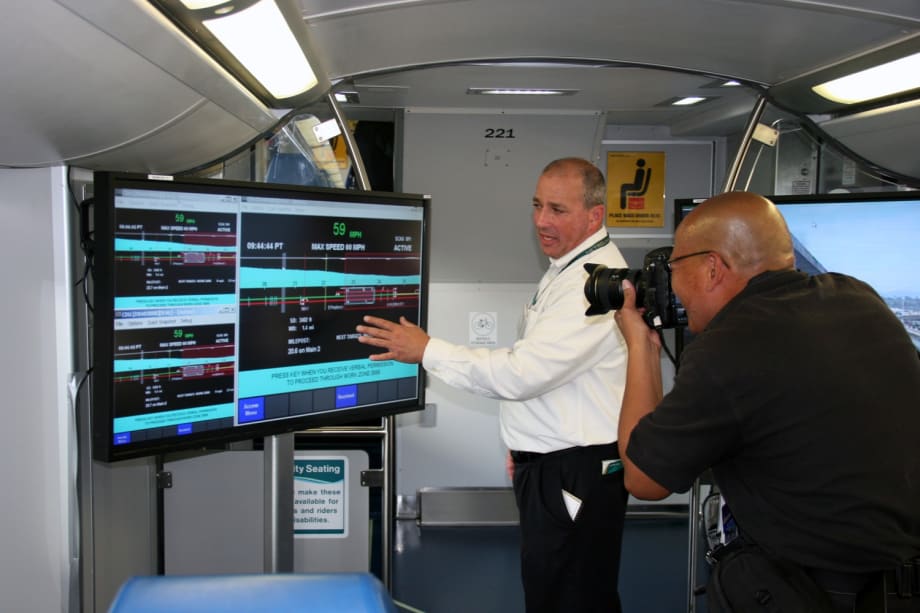
Metrolink's Neil Brown, manager of the agency's on-board PTC systems, explains PTC technology to a newspaper photographer on Feb. 20, 2014 at Los Angeles Union Station.
Metrolink's Neil Brown, manager of the agency's on-board PTC systems, explains PTC technology to a newspaper photographer on Feb. 20, 2014 at Los Angeles Union Station.
Southern California’s Metrolink recently launched Positive Train Control (PTC) in revenue service demonstration (RSD) under the authority of the Burlington Northern Santa Fe (BNSF) railroad at an event that included several dignitaries including Sen. Dianne Feinstein (D-CA) and Rep. Adam Schiff (D-CA).
The Federal Railroad Administration authorized Metrolink to operate PTC RSD on BNSF territory using Wabtec's Interoperable Electronic Train Management System (I-ETMS).
Wabtec's I-ETMS PTC System was selected by the four Class One freight railroads and by Amtrak outside of the northeast corridor as well as Metra and Coaster. Metrolink's PTC service on BNSF track will be implemented on select trains on the Metrolink 91 Line, Orange County Line and Inland Empire-Orange County Line.
PTC capability on Metrolink territory is expected to be available later this year, while the entire service area is anticipated to be complete well before the Rail Safety Improvement Act (RSIA) mandate of December 2015.
As part of its 512-mile system, Metrolink also operates on track owned and dispatched by the Union Pacific Railroad (UP) and the North County Transportation District (NCTD). Metrolink, BNSF, UP and NCTD, along with Amtrak trains, will all have to install and implement an interoperable system for PTC to be complete in the region. Metrolink will implement additional trains into PTC RSD in the coming weeks and months.
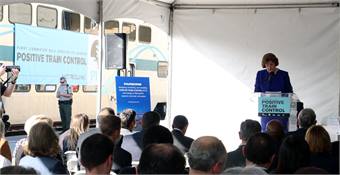
Senator Dianne Feinstein joined other dignitaries at Los Angeles Union Station on Feb. 20, 2014 as Metrolink launched PTC in revenue service demonstration under the authority of the BNSF railroad. Other dignitaries in attendance included California State Transportation Agency Deputy Secretary Chad Edison, California High Speed Rail Authority CEO Jeff Morales, Metrolink Board Chair Pat Morris and former Metrolink Board Chair Richard Katz.
The RSIA became law in 2008 after a contractor engineer operating a Metrolink train failed to stop at a red signal just north of the Metrolink Chatsworth Station. This action led to a head-on collision with a freight train resulting in 25 passenger deaths and more than 130 injuries.
The estimated cost for developing, installing and deploying PTC on the Metrolink system including the expansion of the communication network to support the PTC System is $216.3 million. Metrolink secured full funding from local, state and federal sources with the funding split at 50%, 42%, 9%, respectively, with nearly 30 grants were secured.
Metrolink's PTC program calls for installing a back-office system; replacing the current computer-aided dispatch system; installing on-board PTC equipment on 57 cab cars and 52 locomotives; installing systems to stop a train at 476 wayside signals; and implementing a six-county specialized communication network to link the wayside signals, trains, and a new 24,000 square foot security enhanced building to house the command and control equipment and personnel to dispatch the railroad at all times.
More Rail

New York MTA Advances Final Contract for Second Avenue Subway Expansion
Contract Four is the largest in the Second Avenue Subway Phase 2 project and includes construction of station infrastructure, tracks, and signals for the subway expansion, MTA officials said. Work on Contract Four will begin in 2027.
Read More →
San Diego MTS Breaks Monthly Trolley Ridership Record
Agency officials said July’s ridership indicates MTS’s continued recovery from the pandemic.
Read More →
Report Examines NJ TRANSIT Reliability, Funding Challenges
The Garden State Initiative analysis examines the roles of Amtrak infrastructure, fleet management, and agency operations while recommending a more performance-based approach to improving reliability.
Read More →
Stadler, CapMetro Sign Long-Term Rail Fleet Support Agreement
Beginning in 2027, Stadler will provide on-site technical expertise, spare parts support, training, and obsolescence management to help extend the reliability and longevity of CapMetro’s GTW fleet.
Read More →
Biz Briefs: Alstom Lands Canadian Contract, LYT to Supply California TSP, and More
In METRO's latest installment, we take a look at recent news from Complete Coach Works, Beep, FlixBus, and more partnerships making headlines across the transportation sector.
Read More →
CATS Gold Line Marks 5 Years of Service, 2.8M Passenger Trips
With a six-mile expansion planned, the Charlotte streetcar is positioned to connect more neighborhoods and major transit hubs across the region.
Read More →
Why Simulating Pedestrian Movement Has Become Essential for Modern Rail Stations
Pedestrian microsimulation is helping rail planners identify bottlenecks, test station designs, and prepare complex transit hubs for growing passenger volumes.
Read More →
Amtrak Begins Major Construction at New York’s Sunnyside Yard
The new maintenance facility will support Amtrak’s Airo trainsets while improving maintenance efficiency and turnaround times in New York.
Read More →
Chicago Leaders Unveil Plans for O’Hare Airport Express Train
The privately developed project would offer a 15-minute trip between downtown and O’Hare’s Terminal 2, with trains operating every 15 minutes on a dedicated track. The service would use battery-electric trains and three existing freight rail rights-of-way.
Read More →
OCTA Maps Out 30-Year Strategy to Protect Coastal Rail Corridor
The draft feasibility report identifies strategies to protect the coastal rail line for decades as the agency continues near-term stabilization and sand placement efforts.
Read More →