



Motiv, Champion team for first OEM-integrated all-electric shuttle bus
Based on the popular Ford E-450 platform, the EPIC chassis-equipped Champion Challenger EV is the first of its kind OEM integration for the North American shuttle bus market.

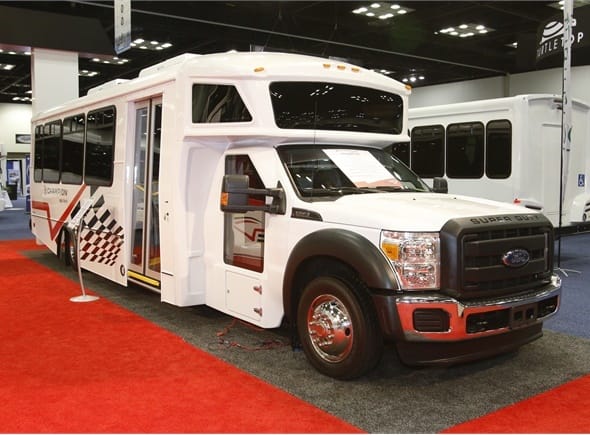
Offering comparable performance to combustion engine powered shuttle buses, the Challenger EV is capable of meeting a wide variety of range requirements, while continuing to offer smooth, quiet operation with minimal maintenance and service needs.
Offering comparable performance to combustion engine powered shuttle buses, the Challenger EV is capable of meeting a wide variety of range requirements, while continuing to offer smooth, quiet operation with minimal maintenance and service needs.
Motiv Power Systems announced it is commencing sales of all-electric EPIC 4 Series Dearborn chassis with Champion Bus, a REV Group company. The new zero-emissions shuttles feature the Challenger EV body manufactured by Champion in Imlay City, Mich. Based on the popular Ford E-450 platform, the EPIC chassis-equipped Champion Challenger EV is the first of its kind OEM integration for the North American shuttle bus market.
“We are excited to be part of this program with Champion,” said Kash Sethi, director of sales for Motiv Power Systems. “With fixed routes and high fuel costs, we’ve long seen the shuttle bus market as an ideal use case for the EPIC Chassis. Past deployments have borne this out and having Champion on board as an OEM marks the realization of this vision on a much larger scale”.
“Both from an economic and carbon reduction standpoint, we have strong demand for clean energy alternatives to gasoline and diesel in the shuttle bus market,” said David Rhode, VP/GM of REV Bus Imlay City. “Our integration with Motiv Power Systems helps meet this demand with the proven EPIC chassis, approved by Ford through its rigorous QVM standards, to deliver the performance and reliability that our customers have come to expect from Champion.”
Offering comparable performance to combustion engine powered shuttle buses, the Challenger EV is capable of meeting a wide variety of range requirements, while continuing to offer smooth, quiet operation with minimal maintenance and service needs. The total ownership cost of Challenger EVs will be below comparable fossil fueled shuttles, when factoring in the 85% reduction in operating costs and 66% reduction in maintenance costs that they represent, as well as the number of national and state subsidy programs for which they are eligible.
Challenger EVs are available for immediate purchase exclusively through Champion Bus dealers with deliveries commencing in the third quarter of 2018.
More Bus

New York MTA Plans Largest Bus Fleet Upgrade in More Than a Decade
The agency is seeking manufacturers for 650 new CNG buses to replace aging vehicles, improve reliability, and advance its broader fleet modernization strategy.
Read More →
Building a Flexible Path to Transit Electrification
John Hroncich discusses BAE Systems’ modular and scalable approach, lessons learned from decades of real-world operations, and how agencies can identify electrification strategies that fit their fleets.
Read More →
Bus Tech Talk: Keeping Transit Technicians Ahead of the Technology Curve
LA Metro’s Obed Mejia discusses technician training, evolving maintenance technology, fleet replacement, and strategies for getting the most out of today’s transit fleets.
Read More →
Biz Briefs: RIPTA Unveils New Frontrunners, Clevland RTA Adds New Siemens, and More
In METRO's latest installment, we take a look at recent news from Siemens, Prevost, Dodge, and more partnerships making headlines across the transportation sector.
Read More →
People Movement: Holly Arnold Joins Transdev and More
In this edition, we also cover recent appointments and announcements at Pace, CamTran, MCI, and more, showcasing the individuals helping to shape the future of transportation.
Read More →
The High Cost of Transit Buses: Industry Leaders Look to Procurement Reform
Transit leaders and policymakers examine how standardized bus designs, streamlined procurement, and predictable funding could help agencies stretch budgets and deliver better service.
Read More →
The Business Voice Behind Public Transportation
As chair of APTA’s Business Members Board of Governors, Ray Melleady explains how more than 850 business members are partnering with transit agencies to advance funding, innovation, and industry-wide collaboration.
Read More →
From Surviving to Thriving: Building Stronger Transportation Organizations
Bus Business Consultants founder Brian Dickson shares lessons on leadership, organizational health, and creating options for long-term success in a changing transportation industry.
Read More →
Finding the ‘Happy Medium’: Optimizing Maintenance Without Sacrificing Reliability
The key to maintenance optimization isn’t doing less work—it’s doing the right work at the right time on the right assets.
Read More →
LA Metro, City of West Hollywood, and Partners Advance Smarter Bus Lane Enforcement
The award-winning partnership combines AI-powered detection with human oversight to improve bus reliability, accessibility, and enforcement efficiency.
Read More →