




NYC Transit receives $57M to improve communications, subway stations
N.Y. MTA approves 2015-19 Capital Program
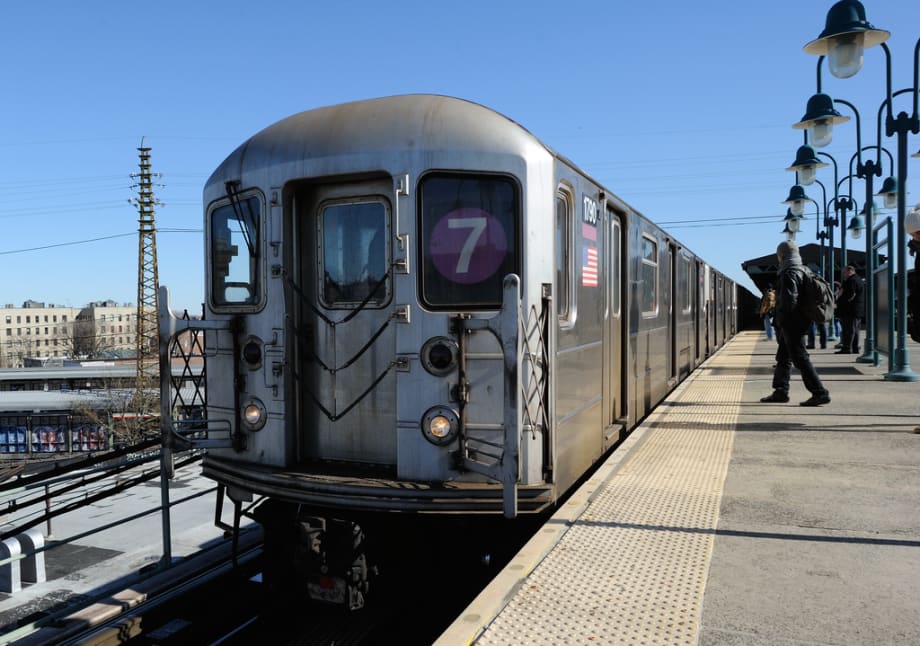
The Capital Program will buy thousands of new subway cars, train cars and buses; invest $2.8 billion in subway station improvements; finish installing positive train control on Metro-North Railroad and the Long Island Rail Road; and more.
October 29, 2015
Tim Adams
2 min to read
Tim Adams
The New York Metropolitan Transportation Authority’s (MTA) board approved its 2015-19 Capital Program, the largest investment ever in the subways, buses, railroads, bridges and tunnels that keep New York moving.
The Capital Program will buy thousands of new subway cars, train cars and buses; invest $2.8 billion in subway station improvements; finish installing positive train control on Metro-North Railroad and the Long Island Rail Road; bring countdown clocks to the majority of subway stations; begin work on extending the Second Avenue Subway to East Harlem; build a new LIRR station in Elmhurst, Queens; and construct four new Metro-North stations in underserved areas of the Bronx.
“Since our first Capital Program in 1982, we have invested more than $100 billion to rescue our mass transit network from near-collapse and make it an engine of growth for the entire region,” said MTA Chairman/CEO Thomas F. Prendergast.
The revised Program totals $29 billion, almost 10% less than the $32 billion Program first proposed a year ago. It includes $21.6 billion in core investments in the MTA’s subways, buses and railroads; $4.5 billion for the East Side Access, Penn Access and Second Avenue Subway projects; and $2.9 billion for MTA Bridges and Tunnels.
The Program is fully funded with $11.8 billion in MTA funds, an $8.3 billion commitment from Gov. Cuomo, $6.4 billion in federal funds and $2.5 billion committed by New York City Mayor Bill de Blasio.
To deliver these projects at a lower cost, the MTA will use innovative methods such as design-build, negotiated procurement processes and public-private partnerships to operate more efficiently, spread risk more broadly and take advantage of innovative techniques. The MTA will continue its strategy of replacing deteriorated components, rather than entire systems, which has been successful in addressing subway station conditions and will now be expanded to power supplies, subway structures and other areas.
The MTA will also transform how it works with contractors on projects, recognizing that becoming a better business partner can bring down costs.
More Management

LIT Marks 10-Year Milestone at Annual Summit
Hosted by the COTA from September 10 to 13, the Summit carried the theme “Celebrating 10 Years of Excellence, Leadership, and Impact,” with every part of the program honoring the people, agencies, and partners who built LIT over its first decade.
Read More →
People Movement: Dan Dipert Coaches Adds Third-Generation Leader, Keolis Names New Valley Metro VP/GM, and More
In this edition, we also cover recent appointments and announcements at the Wabtec, SilverRide, HNTB, and more, showcasing the individuals helping to shape the future of transportation.
Read More →
METRO Opens Submissions for 2026 Motorcoach Awards
Nominations are now being accepted for METRO Magazine’s Operator of the Year and Innovative Operator of the Year awards.
Read More →

New York MTA Advances Final Contract for Second Avenue Subway Expansion
Contract Four is the largest in the Second Avenue Subway Phase 2 project and includes construction of station infrastructure, tracks, and signals for the subway expansion, MTA officials said. Work on Contract Four will begin in 2027.
Read More →
Transit Agencies Highlight Safety Gains at National Summit
Leaders from 15 major transit systems shared crime-reduction results and safety initiatives while discussing the role of continued federal support.
Read More →
NITA Names New Leadership, Expands Reduced-Fare Program at First Board Meeting
The new regional transit authority appointed its first board chair and interim executive director while extending reduced fares across CTA, Metra, and Pace for eligible riders.
Read More →
Beyond the Checklist: A Structured Approach to Transit Maintenance
Reliability-Centered Maintenance helps transit agencies move beyond routine checklists to focus limited resources on the assets and failures that have the greatest impact on safety, reliability, and service.
Read More →
APTA 2026 Nominating Committee Selects Leadership Slate, Names Chair and Vice Chair Nominees
Leadership changes will help shape the association’s priorities and its representation of the transportation industry during the 2026–2027 term.
Read More →
DART Launches Major Security, Fare Enforcement Initiative
The 90-day demonstration will deploy coordinated security teams at five light rail stations while testing controlled access and gathering data to guide future investments.
Read More →
Sponsored•September 9, 2026
Advancing Fare Collection Through Technology and Innovation
Learn about delivering 1300 gates at 91 stations while managing fare evasion. Explore the large scale deployment, solution customization and real-world results that affect the region. Prepare for deployment in your region now.
Read More →