



RELATED: MIT reveals Hyperloop pod design
New Access MIT program offers free public transit to employees
MIT has set out to reduce parking demand on campus by 10% over the next two years with the launch of the new program, which combines pay-per-day parking for most parkers with free access to MBTA subway and local bus, among other benefits.
by By Andre Guilleman | MIT Facilities
June 14, 2016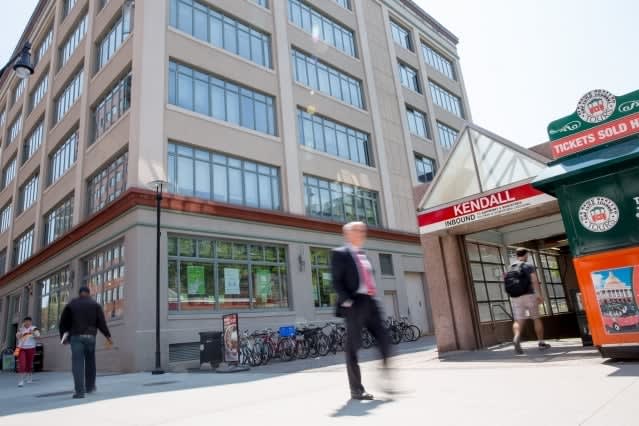
Between now and September, MIT will roll out the Access MIT pass, one of several new commuter benefits for Cambridge campus faculty and staff. The new benefits include free, unlimited subway and local bus usage, and increased subsidies for parking at MBTA stations and commuter rail tickets. Photo: Bryce Vickmark
7 min to read
Between now and September, MIT will roll out the Access MIT pass, one of several new commuter benefits for Cambridge campus faculty and staff. The new benefits include free, unlimited subway and local bus usage, and increased subsidies for parking at MBTA stations and commuter rail tickets. Photo: Bryce Vickmark
Between now and September, MIT will roll out the Access MIT pass, one of several new commuter benefits for Cambridge campus faculty and staff. The new benefits include free, unlimited subway and local bus usage, and increased subsidies for parking at MBTA stations and commuter rail tickets. The Access MIT pass is a reflection of the Institute’s commitment to sustainability and climate action, and will be accompanied by a shift to pay-per-day parking at most lots in an effort to reduce the number of cars on campus.
The Access MIT program is an initiative to create a variety of affordable, low-carbon transportation options and change the way the MIT community thinks about commuting. By connecting programs, education, decision-making, and modes of transportation, Access MIT strives to create a new awareness and shared understanding of transportation choices and their impacts. Detailed information about MIT’s commuter programs, including Hubway, ZipCar, and the AccessMyCommute tool, are available on the commuter benefits webpage.
“Technology offers new strategies to change commuting behavior to the benefit of individuals, the Institute, and surrounding communities,” says Les Norford, the George Macomber Professor in Construction Management in the Department of Architecture, who sits on the Committee for Transportation and Parking. “Access MIT is a significant effort, on the part of many people, to make that change desirable and effective.”
Need for a sustainable commuting solution
In recent years, the area surrounding the MIT campus has become a growing innovation hub, attracting startups and global enterprises from around the world. With these organizations come new researchers, technologists, scientists, students, and entrepreneurs.
In many ways, MIT is at the center of this innovation ecosystem. It is therefore a priority for the Institute to identify innovative ways to proactively address the livability of the area, for both the campus community and the surrounding neighborhoods.
“The question is,” says Julie Newman, director of the Office of Sustainability, and member of the Transportation and Parking Committee, “How does MIT advance its mission in the most sustainable way? And how do we expand our academic initiatives while also minimizing our impact on the community and the environment?”
A commitment to sustainable transit options is part of MIT’s response to questions like these. “MIT works very closely with stakeholders within the Institute, public sector, and in the community to develop smart, sustainable transportation alternatives, from sponsoring transit studies to addressing challenges in the MBTA system to working closely with the Kendall Square Association,” says Michael Owu, chair of the Committee for Transportation and Parking and director of Real Estate at the MIT Investment Management Company (MITIMCo). “We hope that other organizations will follow our lead and implement similar programs.”
In a letter sent today to faculty and staff, Executive VP/Treasurer Israel Ruiz stated, "Access MIT embraces the goals of MIT’s Plan for Action on Climate Change, and is a visible demonstration of our commitment to lowering MIT’s commuter-related emissions.” He added, "With Access MIT, the Institute will be one of the largest employers in the state to provide this level of universal transit benefits.” Ruiz thanked the members of the Committee for Transportation and Parking for their dedication in bringing these new commuting options to MIT’s campus.
Becoming a living lab to change commuter behavior
Over the past seven years, the MIT Transit Lab, in collaboration with the Parking and Transportation Office, has focused on how faculty, staff, students, and visitors travel to and from MIT. One particular challenge was the total cost of building and/or maintaining parking spaces in and around the MIT campus — and whether this could be offset by improving commuter awareness of the problem and incentivizing new behavior.
In 2010 the Parking and Transportation Office, in conjunction with the Transit Lab, launched a pilot program called the MIT Mobility Pass. This represented an exciting, first-of-its-kind collaboration between MIT and the MBTA. The pilot involved approximately 1,000 MIT employees who typically parked on campus, and allowed these employees to access MBTA subways and local buses at no additional cost to them, providing new daily options for commuting to campus.
Based on the success of the pilot, MIT has decided to expand the program to include all benefits-eligible MIT faculty and staff at the Cambridge campus. By becoming a “living lab,” the research team believes that this program may represent a new model for managing commuter demand within densely populated areas.
The Access MIT pass program
Supported by the initial research conducted by the Transit Lab, MIT has set out to reduce parking demand on campus by 10% over the next two years with the launch of the new program, which combines pay-per-day parking for most parkers with free access to MBTA subway and local bus, among other benefits.
“The decision used to be whether to buy an annual pass and drive every day, or not,” notes John Attanucci, research associate and manager of the MIT Transit Research Program. “With this new approach, commuters will be able to drive one day then ride the T the next and save money in parking fees. By having options, we can begin changing the way people think about commuting.”
To make it easy for MIT employees to use the new MBTA benefits through the Access MIT pass program, CharlieCard chips will be embedded directly into new MIT ID cards. In addition to providing free subway and local bus access to all benefits-eligible faculty and staff on the Cambridge campus, the new program eliminates the need for most parkers to purchase the annual permits that financially commit them to driving for the entire year. This gives commuters the flexibility to choose, day-to-day, how they get to campus.
Andrea Campbell, the Arthur and Ruth Sloan Professor and head of the Department of Political Science, and co-chair of the Sustainability Taskforce, comments, “Faculty and staff often ask how they can make an individual contribution to the global climate challenge. This is an exciting opportunity for community members to use their commute as a way to take action toward combatting a big problem.”
The new commuter benefits program will include:
Free MBTA subway and local bus access via CharlieCard chips embedded in new MIT ID cards;
A shift from annual contracts to daily parking at most MIT gated lots, with total maximum expense capped at the annual parking rate (currently $1,760 for 2016-17);
Increased commuter rail subsidy from 50% to 60%;
Subsidized parking of 50 percent at MBTA stations, up to $100 per month.
Monthly LinkPass holders will no longer be required to pay 50 percent of the monthly fee, and employees who bike, walk, or drive to campus will be able to ride the T free anytime.
“By putting people first, we’ve been able to create a collection of programs — everything from unrestricted T passes to emergency ride assistance — that give virtually everyone at MIT more than one way to get to campus,” says Newman. “It’s about developing transportation literacy and providing options so people get to make an informed choice, each day, about how they commute.”
Also launched recently, in collaboration with the Transit Lab, is an online tool that informs and encourages new commuting options. AccessMyCommute is an online dashboard that allows commuters to compare transit modes and analyze their carbon footprint. It also uses points, rewards, and incentives to encourage the use of public transportation and carpooling, as well as walking and biking to work.
Access MIT and the new MIT ID card
The rollout of this program relies on the issuance of new MIT ID cards that have CharlieCard chips embedded in them. All benefits-eligible faculty and staff at the Cambridge campus wishing to take advantage of the new Access MIT pass need to proactively upgrade their ID cards in one of two ways. Over the summer, employees can visit the MIT Card Office in Room W20-021 to obtain their new IDs. Starting in June, the Parking and Transportation Office will offer on-site visits to departments to swap IDs. New IDs will be activated when issued, so credentials and permissions will transfer, and faculty and staff will have immediate access to their MBTA benefits.
More Bus

New York MTA Plans Largest Bus Fleet Upgrade in More Than a Decade
The agency is seeking manufacturers for 650 new CNG buses to replace aging vehicles, improve reliability, and advance its broader fleet modernization strategy.
Read More →
Building a Flexible Path to Transit Electrification
John Hroncich discusses BAE Systems’ modular and scalable approach, lessons learned from decades of real-world operations, and how agencies can identify electrification strategies that fit their fleets.
Read More →
Bus Tech Talk: Keeping Transit Technicians Ahead of the Technology Curve
LA Metro’s Obed Mejia discusses technician training, evolving maintenance technology, fleet replacement, and strategies for getting the most out of today’s transit fleets.
Read More →
Biz Briefs: RIPTA Unveils New Frontrunners, Clevland RTA Adds New Siemens, and More
In METRO's latest installment, we take a look at recent news from Siemens, Prevost, Dodge, and more partnerships making headlines across the transportation sector.
Read More →
People Movement: Holly Arnold Joins Transdev and More
In this edition, we also cover recent appointments and announcements at Pace, CamTran, MCI, and more, showcasing the individuals helping to shape the future of transportation.
Read More →
The High Cost of Transit Buses: Industry Leaders Look to Procurement Reform
Transit leaders and policymakers examine how standardized bus designs, streamlined procurement, and predictable funding could help agencies stretch budgets and deliver better service.
Read More →
The Business Voice Behind Public Transportation
As chair of APTA’s Business Members Board of Governors, Ray Melleady explains how more than 850 business members are partnering with transit agencies to advance funding, innovation, and industry-wide collaboration.
Read More →
From Surviving to Thriving: Building Stronger Transportation Organizations
Bus Business Consultants founder Brian Dickson shares lessons on leadership, organizational health, and creating options for long-term success in a changing transportation industry.
Read More →
Finding the ‘Happy Medium’: Optimizing Maintenance Without Sacrificing Reliability
The key to maintenance optimization isn’t doing less work—it’s doing the right work at the right time on the right assets.
Read More →
LA Metro, City of West Hollywood, and Partners Advance Smarter Bus Lane Enforcement
The award-winning partnership combines AI-powered detection with human oversight to improve bus reliability, accessibility, and enforcement efficiency.
Read More →