



New CTA courtesy campaign shames inconsiderate rider behavior
The campaign, featuring a series of messages to be placed on buses and trains, reflects some of the most commonly heard complaints from riders about the behaviors of fellow public transit passengers.

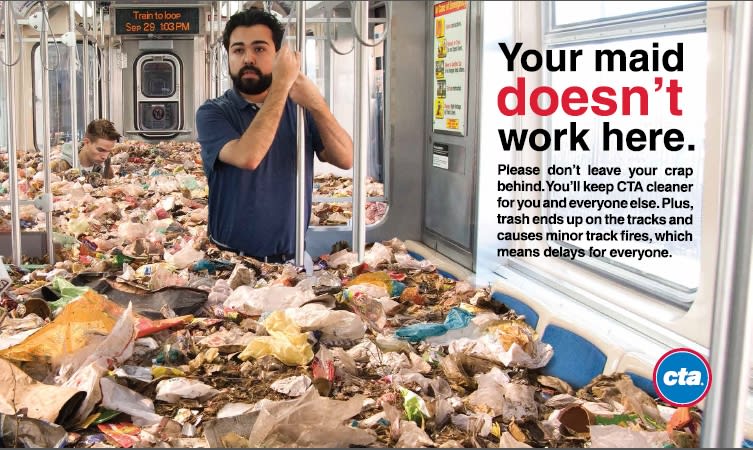
Courtesy: Chicago Transit Authority
Courtesy: Chicago Transit Authority
Standing by the doors and not letting others on or off. Leaving food wrappers on the seat and floor. Playing music so loud you can hear it from 20 feet away.
In an effort to promote more courteous behavior among CTA customers, the agency — using feedback from customers — is launching an informational campaign designed to prompt consideration and discussion of the best ways to be courteous and considerate to fellow riders.
The campaign [Photo Gallery of artwork], featuring a series of messages to be placed on buses and trains, reflects some of the most commonly heard complaints from riders about the behaviors of fellow public transit passengers — not only on the CTA, but on transit systems throughout the world.

Courtesy: Chicago Transit Authority
“The overwhelming majority of CTA customers are considerate of their fellow passengers,” said Graham Garfield, GM, Customer Information. “However, based on feedback we’ve received from passengers, we believe this public-service campaign will help improve the transit experience by continuing the dialogue about courtesy among our customers. We hope it will encourage customers to think more about courteous behavior on CTA trains and buses.”
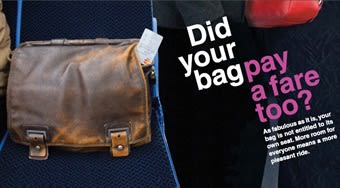
Courtesy: Chicago Transit Authority
The courtesy campaign messages cover a wide range of discourteous passenger behaviors, from littering and eating on trains to not using all available doors on an arriving train. Garfield noted that while many of the behaviors have an obvious impact customer experience — for example, eating can create a mess on seats and floors, as well as unwanted odors — some have impacts that are less obvious, but no less important. For example, customers who crowd around one set of train doors while boarding instead of moving down the platform to other doors can cause delays in service. And a discarded newspaper can not only create a mess inside a bus or rail car, if can cause a minor fire at track level.
CTA used feedback from social media, calls/emails to CTA Customer Service, and observations of CTA personnel to develop the courtesy campaign subject matters. The messages will begin appearing on buses and trains this week.

Courtesy: Chicago Transit Authority
The campaign, developed in-house by CTA staff, is the latest effort by the CTA to improve customer communications and passenger comfort. Among other efforts since 2011, the CTA has expanded digital information screens with bus and train service info, launched a rail-safety reminder campaign, and created the Renew Crew program to bring long-overdue improvements to 100 rail stations.
Transit agencies across the country and throughout the world have launched courtesy campaigns, targeting many of the same behaviors as the CTA campaign. CTA last used a courtesy campaign in the early 2000s.
The CTA is the nation’s second-largest transit agency, providing about 1.6 million rides on an average weekday. Each weekday, CTA provides more than 2,200 train trips and more than 19,000 bus trips.
More information about the campaign is available at www.transitchicago.com/courtesy
More Management

METRO Opens Submissions for 2026 Motorcoach Awards
Nominations are now being accepted for METRO Magazine’s Operator of the Year and Innovative Operator of the Year awards.
Read More →
New York MTA Advances Final Contract for Second Avenue Subway Expansion
Contract Four is the largest in the Second Avenue Subway Phase 2 project and includes construction of station infrastructure, tracks, and signals for the subway expansion, MTA officials said. Work on Contract Four will begin in 2027.
Read More →
Transit Agencies Highlight Safety Gains at National Summit
Leaders from 15 major transit systems shared crime-reduction results and safety initiatives while discussing the role of continued federal support.
Read More →

NITA Names New Leadership, Expands Reduced-Fare Program at First Board Meeting
The new regional transit authority appointed its first board chair and interim executive director while extending reduced fares across CTA, Metra, and Pace for eligible riders.
Read More →
Beyond the Checklist: A Structured Approach to Transit Maintenance
Reliability-Centered Maintenance helps transit agencies move beyond routine checklists to focus limited resources on the assets and failures that have the greatest impact on safety, reliability, and service.
Read More →
APTA 2026 Nominating Committee Selects Leadership Slate, Names Chair and Vice Chair Nominees
Leadership changes will help shape the association’s priorities and its representation of the transportation industry during the 2026–2027 term.
Read More →
DART Launches Major Security, Fare Enforcement Initiative
The 90-day demonstration will deploy coordinated security teams at five light rail stations while testing controlled access and gathering data to guide future investments.
Read More →
Advancing Fare Collection Through Technology and Innovation
Learn about delivering 1300 gates at 91 stations while managing fare evasion. Explore the large scale deployment, solution customization and real-world results that affect the region. Prepare for deployment in your region now.
Read More →
Game Day in Motion: Moving Millions During the 2026 World Cup
Between packed transit stations and team motorcoaches, see how agencies and operators across North America tackled the transportation demands of the 2026 FIFA World Cup.
Read More →
Surface Transportation Extension Averts Shutdown, Leaves Transit Funding Gap
The stopgap keeps federal transportation programs moving, but missing advance funding could complicate the transit and rail projects agencies are planning next.
Read More →