



New Flyer 60-foot electric bus passes Altoona testing
U.S. transit agencies can now use FTA funding in support of their purchases of the company's 60-foot electric bus rapid transit buses.

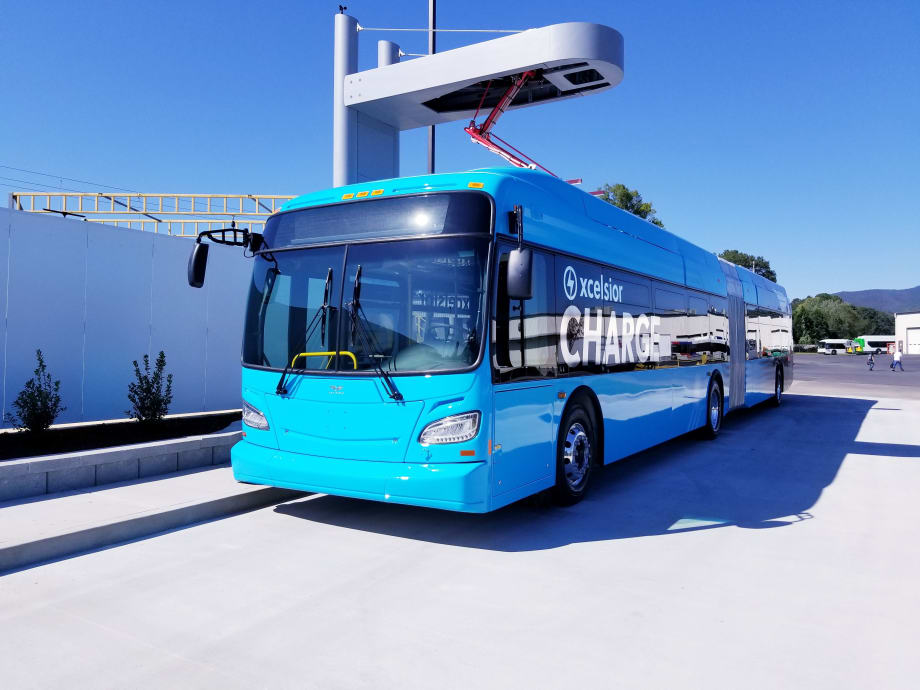
Since 1988, New Flyer has delivered over 7,000 60-foot articulated buses with a variety of propulsion systems.
New Flyer
Since 1988, New Flyer has delivered over 7,000 60-foot articulated buses with a variety of propulsion systems.
New Flyer
New Flyer of America Inc. announced that its 60-foot articulated heavy-duty transit bus has become the first and only 60-foot battery-electric bus to complete the Federal Transit Administration (FTA) Model Bus Testing Program at Altoona, Pa.
With successful completion of Altoona Testing, U.S. transit agencies can now utilize FTA funding in support of their purchases of 60-foot (battery and fuel cell) electric bus rapid transit (eBRT) buses from New Flyer, further enabling smart mobility solutions for cities across North America.
Since 1988, New Flyer has delivered over 7,000 60-foot articulated buses with a variety of propulsion systems. All New Flyer zero-emission bus (ZEB) models, including trolley-electric, battery-electric, and fuel cell-electric, are built on New Flyer’s proven Xcelsior® platform, which recently celebrated the delivery of its 10,000th bus.
“New Flyer’s 60-foot battery-electric and fuel cell-electric model buses are equipped with two driven axles (rear and center) for enhanced traction and control in all weather conditions; an added safety feature of our exclusive electric propulsion system,” explained Chris Stoddart, sr. VP, engineering and customer service, New Flyer. “Combined with regenerative braking from electric motors using Siemens power management to recharge lithium-ion batteries sourced in America, this eBRT assists with reduced traffic congestion, cost effective transit, improved air quality, and greater smart mobility solutions to communities across America.”
More Bus

New York MTA Plans Largest Bus Fleet Upgrade in More Than a Decade
The agency is seeking manufacturers for 650 new CNG buses to replace aging vehicles, improve reliability, and advance its broader fleet modernization strategy.
Read More →
Building a Flexible Path to Transit Electrification
John Hroncich discusses BAE Systems’ modular and scalable approach, lessons learned from decades of real-world operations, and how agencies can identify electrification strategies that fit their fleets.
Read More →
Bus Tech Talk: Keeping Transit Technicians Ahead of the Technology Curve
LA Metro’s Obed Mejia discusses technician training, evolving maintenance technology, fleet replacement, and strategies for getting the most out of today’s transit fleets.
Read More →
Biz Briefs: RIPTA Unveils New Frontrunners, Clevland RTA Adds New Siemens, and More
In METRO's latest installment, we take a look at recent news from Siemens, Prevost, Dodge, and more partnerships making headlines across the transportation sector.
Read More →
People Movement: Holly Arnold Joins Transdev and More
In this edition, we also cover recent appointments and announcements at Pace, CamTran, MCI, and more, showcasing the individuals helping to shape the future of transportation.
Read More →
The High Cost of Transit Buses: Industry Leaders Look to Procurement Reform
Transit leaders and policymakers examine how standardized bus designs, streamlined procurement, and predictable funding could help agencies stretch budgets and deliver better service.
Read More →
The Business Voice Behind Public Transportation
As chair of APTA’s Business Members Board of Governors, Ray Melleady explains how more than 850 business members are partnering with transit agencies to advance funding, innovation, and industry-wide collaboration.
Read More →
From Surviving to Thriving: Building Stronger Transportation Organizations
Bus Business Consultants founder Brian Dickson shares lessons on leadership, organizational health, and creating options for long-term success in a changing transportation industry.
Read More →
Finding the ‘Happy Medium’: Optimizing Maintenance Without Sacrificing Reliability
The key to maintenance optimization isn’t doing less work—it’s doing the right work at the right time on the right assets.
Read More →
LA Metro, City of West Hollywood, and Partners Advance Smarter Bus Lane Enforcement
The award-winning partnership combines AI-powered detection with human oversight to improve bus reliability, accessibility, and enforcement efficiency.
Read More →