




RELATED: All New Flyer facilities now capable of building battery-electric buses
New Flyer, King County Metro celebrate 10,000th Xcelsior bus
The artic is propelled by low-emission, hybrid technologies that reduce air pollution and help evolve KCM’s transit bus fleet with lower emission solutions.
May 23, 2018
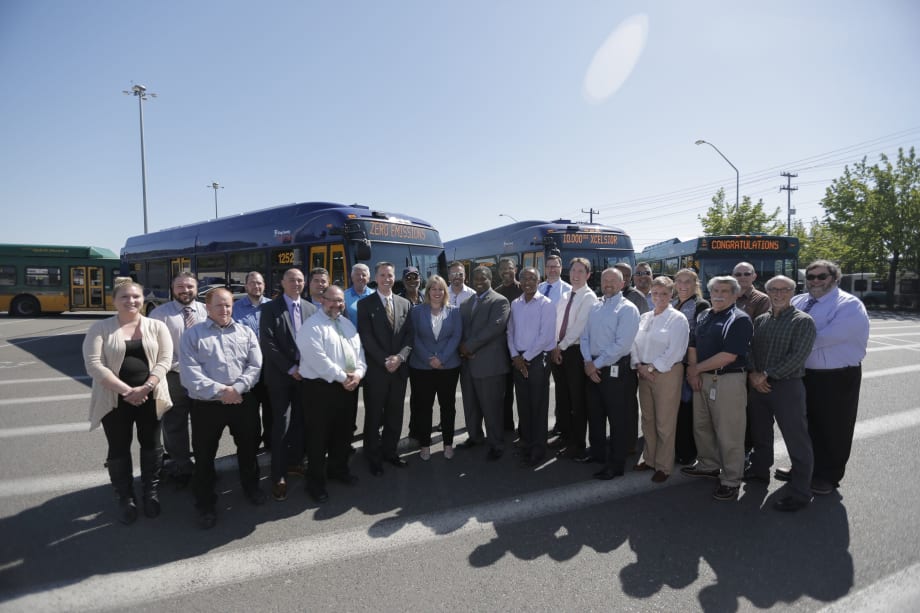
Representatives from New Flyer and King County Metro mark the milestone Xcelsior bus.
King County Metro
2 min to read
Representatives from New Flyer and King County Metro mark the milestone Xcelsior bus.
King County Metro
New Flyer of America Inc., the U.S. subsidiary of NFI Group Inc., celebrated the build and delivery of its 10,000 Xcelsior® heavy-duty transit bus.
New Flyer marked the 10,000th bus with delivery of a 60-foot, hybrid diesel-electric Xcelsior bus to King County Metro (KCM) in Seattle. The articulated bus is propelled by low-emission, hybrid technologies that reduce air pollution and help evolve KCM’s transit bus fleet with lower emission solutions to help achieve its goal of an all-electric bus fleet by 2040. The Xcelsior platform, which was launched in North America in 2010, offers a wide variety of low and zero-emission technologies, of which KCM operates clean diesel, diesel hybrid, and electric trolley buses.
New Flyer has continued to stretch the boundaries of innovation with advancements in onboard communication systems, developments in battery-electric propulsion, and autonomous partnerships displayed through the Vehicle Innovation Center located in Anniston, Ala. New Flyer is also the only North American manufacturer to offer all four types of electric drivetrains on heavy-duty transit vehicles: zero-emission battery-electric, fuel cell-electric, or trolley-electric platforms in addition to low-emission diesel-electric hybrids.
“New Flyer is proud to reach this manufacturing milestone as we continue to drive innovation in low and no-emission transportation,” said Wayne Joseph, president, New Flyer of America. “We are proud of our long-term partnership with Seattle King County Metro, having delivered over 1,500 buses since the late 1970s. Seattle has been a leader and visionary in leading sustainable transportation, and we look forward to advancing public transit in close collaboration with North American leaders like KCM, as it continues to build its zero-emission footprint in the community.”

(From left) Chris Stoddart, sr. VP, engineering and customer service, at New Flyer; Lisa Gehrkee, regional administrator at the FTA; and Terry White, deputy GM at King County Metro.
Seattle King County Metro is one of the nation’s most utilized transit authorities, with 190,000 fewer cars congesting Seattle streets each weekday, saving over 70 million gallons of gasoline and 600,000 metric tons of CO2 from the atmosphere. King County Metro’s strategic use of low and zero-emission vehicles improves quality of life while providing a foundation for further efficiency.
“King County is proud to provide cleaner, quieter transportation for the greater Seattle area and New Flyer has been an essential partner in achieving these goals,” said King County Metro GM Rob Gannon. “We are happy to join New Flyer in celebrating this milestone.”
The NFI Group has over 50 years of experience in manufacturing zero-emission buses and currently has 1,600 of these buses on the road today, the most of any manufacturer in North America.
More Bus

More Than a Summer Job: Building the Next Generation of Transit Talent
The Delaware River Port Authority and PATCO have transformed their internship program into a hands-on professional development experience that introduces students to the breadth of transportation careers — and creates a pipeline for future employees.
Read More →
LA Metro Board Awards 220 Battery-Electric Bus Contract to ENC
The contract, which is the largest base award of battery-electric buses by a U.S. transit agency, will be built in Southern California, sustaining good jobs as LA prepares to welcome the world in 2028
Read More →
Public Transit Conference Returning to GFX in 2027, Call for Papers Now Open
The Call for Papers is now open, allowing transit agency professionals and industry experts to help shape the PTC educational program by submitting session ideas for consideration.
Read More →
Indian River Transit’s Community-Focused Approach Earns National Recognition
Named APTA’s 2026 Outstanding Public Transportation System in its size category, Florida’s Indian River County transit system continues to grow ridership through fare-free service and a focus on evolving community needs.
Read More →
ENC Lands MATA Contract and More in Biz Briefs
In this edition of Biz Briefs, we spotlight the latest developments shaping the future of mobility.
Read More →
From Surviving to Thriving: Building Stronger Transportation Organizations
Bus Business Consultants founder Brian Dickson shares lessons on leadership, organizational health, and creating options for long-term success in a changing transportation industry.
Read More →
Everett Transit, Community Transit Outline Consolidation Agreement
The proposed agreement calls for a 50% increase in bus service in Everett, a new microtransit zone, continued paratransit service, and the transfer of Everett Transit operations to Community Transit.
Read More →
SEPTA Details Accelerate Vision for Transit System
The plan outlines investments in trolley modernization, new Metro and Regional Rail vehicles, accessible stations, and more frequent bus and rail service.
Read More →
Report: Transit Bus Manufacturing Supports 34,100 Jobs, $5.1B in GDP
The “Buses Mean Business” report examines the transit bus manufacturing industry’s economic footprint, supply chain, and rising demand for vehicle replacements.
Read More →
Biz Briefs: New Flyer Delivers in Columbus, Houston, Beep and Freebee Merge, and More
In this edition of Biz Briefs, we spotlight the latest developments shaping the future of mobility.
Read More →