



New L.A. electric car-share service to provide key links to transit, jobs
By the end of 2018, 100 self-service electric vehicles will be available in 40 locations.

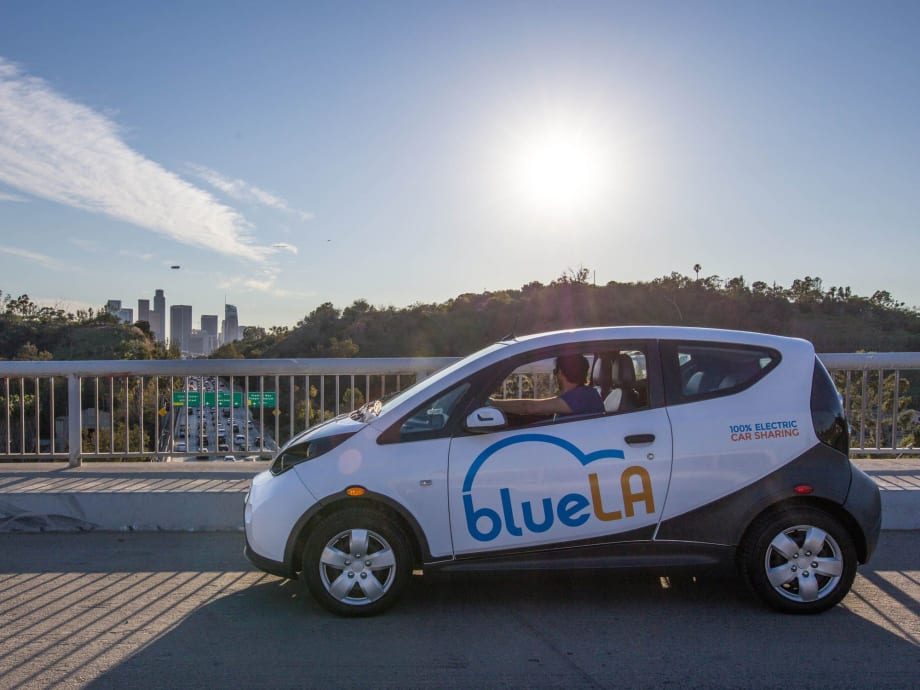
BlueLA has set competitive rates to ensure the service is accessible to all Angelenos, including lower-income families.
Photos courtesy BlueLA
BlueLA has set competitive rates to ensure the service is accessible to all Angelenos, including lower-income families.
Photos courtesy BlueLA
BlueLA, a unique 100% electric vehicle (EV) car-sharing program developed by Blue Solutions launched in the city. The program is the nation’s largest ever to benefit underserved communities.
BlueLA Carsharing’s initial stations are located at key hubs such as Los Angeles City College, Koreatown, MacArthur Park, and downtown Los Angeles. Expansion will continue at Los Angeles Trade Technical College, Echo Park, and Westlake, and the number of stations will continue to increase in all these areas. The program will increase sustainable transportation alternatives and help improve air quality of residents in these areas. By the end of 2018, 100 self-service electric vehicles will be available in 40 locations, and the program should triple in size by the end of 2021.
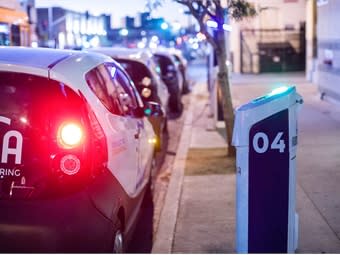
By the end of 2018, 100 self-service electric vehicles will be available in 40 locations, and the program should triple in size by the end of 2021.
BlueLA Carsharing’s vision is to transform mobility and connections between underserved areas of Los Angeles by offering to residents of these areas green transportation options in line with the EV goals set by Los Angeles Mayor Eric Garcetti’s Sustainable City pLAn, the mayor’s roadmap for a cleaner environment and stronger economy.
BlueLA has set competitive rates to ensure the service is accessible to all Angelenos, including lower-income families. The service’s monthly fee is $1 or $5, and usage is $0.15 or $0.20 per minute of drive time. As an introductory offer, all new users will receive the first three hours of drive time for the price of one, $9 for lower-income families or $12 for standard members. Online registration is accessible via the BlueLA website. Users can then book their first ride via the BlueLA app available on app stores.
More Management
People Movement: Dan Dipert Coaches Adds Third-Generation Leader, Keolis Names New Valley Metro VP/GM, and More
In this edition, we also cover recent appointments and announcements at the Wabtec, SilverRide, HNTB, and more, showcasing the individuals helping to shape the future of transportation.
Read More →
METRO Opens Submissions for 2026 Motorcoach Awards
Nominations are now being accepted for METRO Magazine’s Operator of the Year and Innovative Operator of the Year awards.
Read More →
New York MTA Advances Final Contract for Second Avenue Subway Expansion
Contract Four is the largest in the Second Avenue Subway Phase 2 project and includes construction of station infrastructure, tracks, and signals for the subway expansion, MTA officials said. Work on Contract Four will begin in 2027.
Read More →

Transit Agencies Highlight Safety Gains at National Summit
Leaders from 15 major transit systems shared crime-reduction results and safety initiatives while discussing the role of continued federal support.
Read More →
NITA Names New Leadership, Expands Reduced-Fare Program at First Board Meeting
The new regional transit authority appointed its first board chair and interim executive director while extending reduced fares across CTA, Metra, and Pace for eligible riders.
Read More →
Beyond the Checklist: A Structured Approach to Transit Maintenance
Reliability-Centered Maintenance helps transit agencies move beyond routine checklists to focus limited resources on the assets and failures that have the greatest impact on safety, reliability, and service.
Read More →
APTA 2026 Nominating Committee Selects Leadership Slate, Names Chair and Vice Chair Nominees
Leadership changes will help shape the association’s priorities and its representation of the transportation industry during the 2026–2027 term.
Read More →
DART Launches Major Security, Fare Enforcement Initiative
The 90-day demonstration will deploy coordinated security teams at five light rail stations while testing controlled access and gathering data to guide future investments.
Read More →
Advancing Fare Collection Through Technology and Innovation
Learn about delivering 1300 gates at 91 stations while managing fare evasion. Explore the large scale deployment, solution customization and real-world results that affect the region. Prepare for deployment in your region now.
Read More →
Game Day in Motion: Moving Millions During the 2026 World Cup
Between packed transit stations and team motorcoaches, see how agencies and operators across North America tackled the transportation demands of the 2026 FIFA World Cup.
Read More →