



New Memphis transit center opens
The total cost of the project, including property acquisition, demolition and design is about $15 million. The construction cost is approximately $11.5 million. The terminal employs more than 40, which includes people from MATA, Greyhound and other tenants.

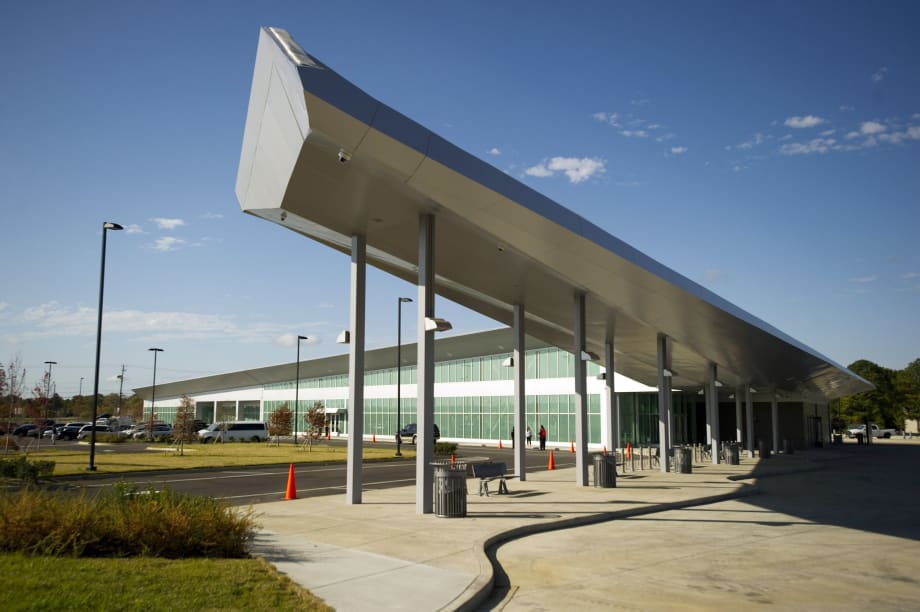
The new, environmentally friendly Airways Transit Center in Memphis, Tenn., celebrated its grand opening this month and now serves as a terminal for both the Memphis Areas Transit Authority (MATA) and Greyhound.
The 30,000-square-foot facility is a hub and customer center in that portion of the city for MATA buses. It also is the new Greyhound terminal for Memphis, replacing its decades-old home downtown on Union Avenue. Greyhound Lines Inc. has moved its entire operation from the downtown facility to the new site.
The new Airways Transit Center is a major focal point for local transit service in the Whitehaven area and improves MATA's ability to make efficient connections to Greyhound's intercity bus services. It serves as a major connection for bus passengers traveling east and west in the southern part of Memphis and provides better connections to the Memphis International Airport which is less than two miles away.
Designed to be as environmentally friendly as possible, the project features flooring made from recycled glass, a roof designed to reflect heat during the summer, landscaping that requires small amounts of water, low-flow lavatories and water closets and interior lighting controlled by sensors to reduce usage.
The project is seeking Leadership in Energy and Environmental Design (LEED) Certification through the United States Green Building Council.
Initially, about four routes and 200 MATA buses enter and exit on a typical weekday. There are four canopy-covered bus berths on the site, allowing customer to exit the terminal and board the bus without getting wet during rainy weather. There is no bus maintenance or bus storage for MATA on the property.
Greyhound operates 24 outbound and 23 inbound schedules daily from the Center. There are 16 canopy-covered bus berths, allowing passengers to move from inside the terminal to the bus completely under roof. Greyhound can perform basic maintenance on site.
The total cost of the project, including property acquisition, demolition and design is about $15 million. The construction cost is approximately $11.5 million. The terminal employs more than 40, which includes people from MATA, Greyhound and other tenants.
More Bus

New York MTA Plans Largest Bus Fleet Upgrade in More Than a Decade
The agency is seeking manufacturers for 650 new CNG buses to replace aging vehicles, improve reliability, and advance its broader fleet modernization strategy.
Read More →
Building a Flexible Path to Transit Electrification
John Hroncich discusses BAE Systems’ modular and scalable approach, lessons learned from decades of real-world operations, and how agencies can identify electrification strategies that fit their fleets.
Read More →
Bus Tech Talk: Keeping Transit Technicians Ahead of the Technology Curve
LA Metro’s Obed Mejia discusses technician training, evolving maintenance technology, fleet replacement, and strategies for getting the most out of today’s transit fleets.
Read More →
Biz Briefs: RIPTA Unveils New Frontrunners, Clevland RTA Adds New Siemens, and More
In METRO's latest installment, we take a look at recent news from Siemens, Prevost, Dodge, and more partnerships making headlines across the transportation sector.
Read More →
People Movement: Holly Arnold Joins Transdev and More
In this edition, we also cover recent appointments and announcements at Pace, CamTran, MCI, and more, showcasing the individuals helping to shape the future of transportation.
Read More →
The High Cost of Transit Buses: Industry Leaders Look to Procurement Reform
Transit leaders and policymakers examine how standardized bus designs, streamlined procurement, and predictable funding could help agencies stretch budgets and deliver better service.
Read More →
The Business Voice Behind Public Transportation
As chair of APTA’s Business Members Board of Governors, Ray Melleady explains how more than 850 business members are partnering with transit agencies to advance funding, innovation, and industry-wide collaboration.
Read More →
From Surviving to Thriving: Building Stronger Transportation Organizations
Bus Business Consultants founder Brian Dickson shares lessons on leadership, organizational health, and creating options for long-term success in a changing transportation industry.
Read More →
Finding the ‘Happy Medium’: Optimizing Maintenance Without Sacrificing Reliability
The key to maintenance optimization isn’t doing less work—it’s doing the right work at the right time on the right assets.
Read More →
LA Metro, City of West Hollywood, and Partners Advance Smarter Bus Lane Enforcement
The award-winning partnership combines AI-powered detection with human oversight to improve bus reliability, accessibility, and enforcement efficiency.
Read More →