



New white paper examines high-speed rail in U.S.
Looks at why the U.S. has been slow to develop HSR and how conditions have changed recently within the U.S. that might affect HSR development going forward.

The Intermodal Transportation Institute (ITI) and the National Center for Intermodal Transportation (NCIT) at the University of Denver published a new white paper that discusses high-speed passenger rail (HSR) and its development globally and in the U.S.
Written by Anthony D. Perl, PhD, professor of Urban Studies and Political Science, Simon Fraser University, Canada, and Andrew R. Goetz, professor and chair, Department of Geography at the University of Denver, the white paper examines why the U.S. has been slow to develop HSR and how conditions have changed recently within the U.S. that might affect HSR development going forward.
“High-speed passenger rail development is a very important issue for our national infrastructure and ITI/NCIT recognized the need to put together a white paper to shed more light on this important topic,” said Goetz. “This white paper is aimed at educating people who want to know why the U.S. has lagged behind in developing this technology and what it would take to change that. HSR is now on the U.S. policy and planning agenda since the Passenger Rail Investment and Improvement Act of 2008 (PRIIA), which created a $10 billion HSR grant program; the American Recovery and Reinvestment Act of 2009 (ARRA), which authorized $8 billion for HSR; and California Proposition 1A, which authorized $10 billion for HSR in California.”
Perl points out that North America needs HSR more than HSR needs North America.
“The U.S. succeeded brilliantly in solving its 1970s freight railroad crisis, but this came partly at the expense of its passenger trains, which were divorced from the railroad industry and left in legal and political limbo under Amtrak,” he said. “Now, with Europe and Asia well along the path toward continental-scale HSR networks, there is a critical mass to keep this technology growing and improving, no matter what the U.S. and Canada decide to do. If we do not begin to close this gap during this decade, the U.S. will risk permanent underdevelopment of this transport mode, much the way that Africa has been behind the curve on 20th century transportation development.”
There is not yet a single right way to develop HSR, determines the white paper. North America has tended to standardize its transportation policies to create a “one size fits all” approach to building highways. The authors state that “if we are smart, we will find more than one way to deploy HSR.”
To view the paper, click here.
More Rail
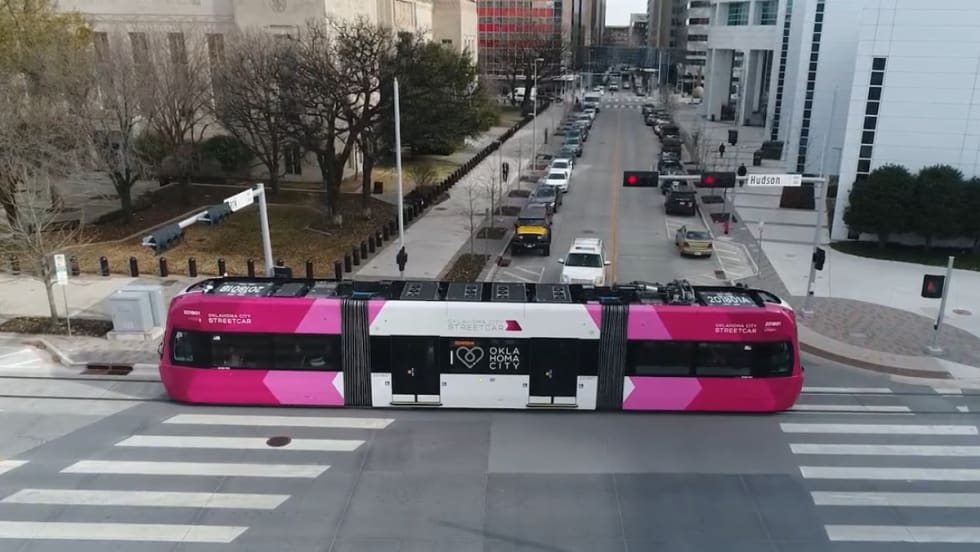
OKC Streetcar Makes Zero-Fare Service Permanent
Ridership increased an average of 71% compared with the same period a year earlier during the fare-free pilot.
Read More →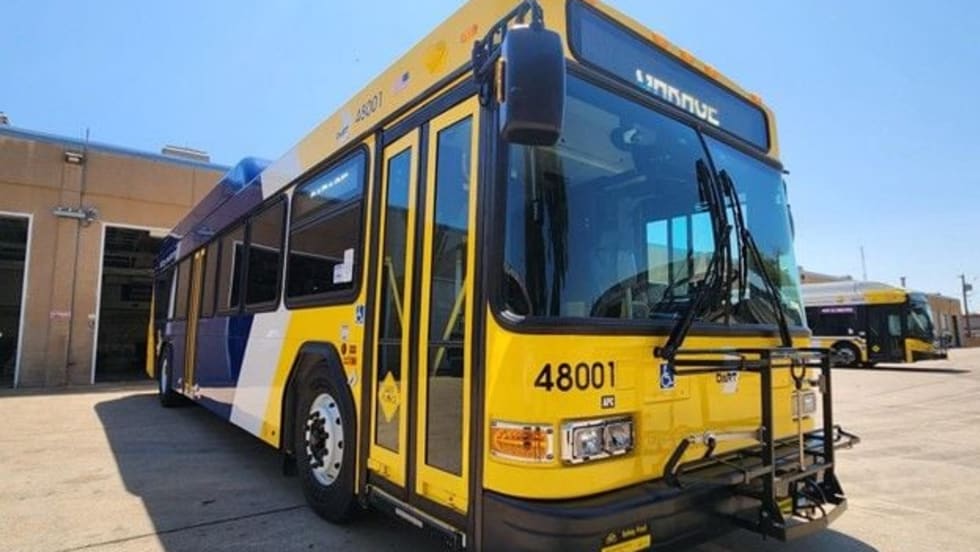
DART Customer Satisfaction Reaches Six-Year High
Overall satisfaction rose to 74.9%, while the agency’s Net Promoter Score reached a record 33.7.
Read More →
How DART's GoPass Is Redefining Regional Mobility
Serving 14 transit agencies, GoPass simplifies multimodal travel by allowing riders to plan, pay for, and manage an entire trip through one app.
Read More →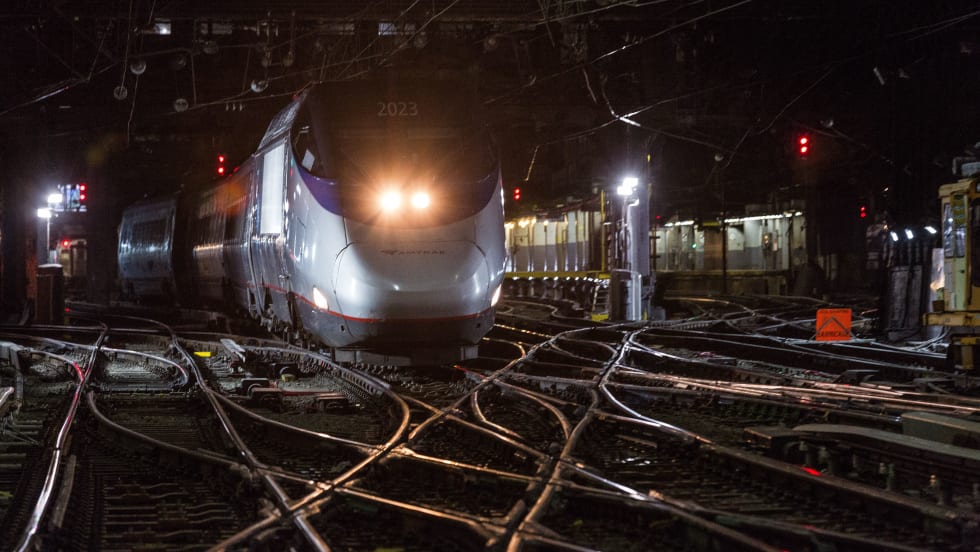
Amtrak Board Advances Plan to Restructure Organization, Seeks Public Input
The proposal, developed by Amtrak management and approved by the board for further consideration, is intended to modernize the organization's structure while improving accountability, operational efficiency, and customer service.
Read More →
Biz Briefs: STV teams with Amtrak, Motorcoach Operators Boost Fleet and Land Contracts, and More
From manufacturers and suppliers to transit agencies and motorcoach operators, these updates offer a snapshot of the projects, partnerships and business moves driving the industry forward.
Read More →
Metra Celebrates 100 Years of Electric Rail, Looks to the Future
The event was also a celebration of recent reforms to public transportation in the Chicago area, changes that could be as transformative in the future as the major civic achievement a century ago, said officials.
Read More →
LA Metro Marks Banner Year, Sets Ambitious Goals for New Fiscal Year
Incoming LA Metro Board Chair and Los Angeles Mayor Karen Bass joined outgoing Board Chair Fernando Dutra and LA Metro CEO Stephanie Wiggins to review accomplishments from fiscal year 2026, which included the opening of new rail extensions, advancement of major transit projects, expanded safety programs, and new rider amenities.
Read More →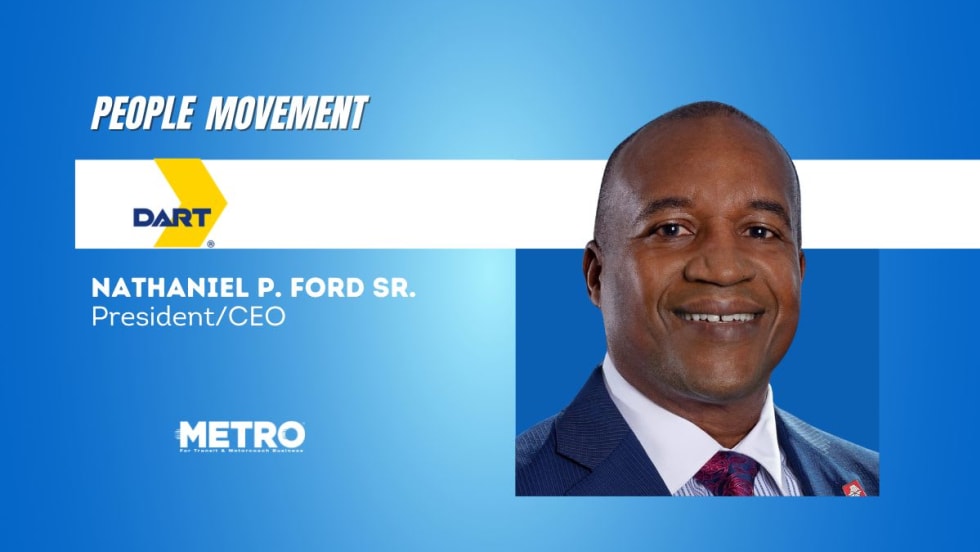
DART Taps Nathaniel P. Ford Sr. as Next President/CEO
Since 2012, Ford has served as the CEO of the Jacksonville Transportation Authority
Read More →
California High-Speed Rail Authority Signs MOU to Advance High Desert Corridor
The agreement deepens collaboration between the California High-Speed Rail Authority and the High Desert Corridor Joint Powers Agency, supporting design integration, cost savings, and faster delivery of a key Southern California rail link.
Read More →
Building the Next Generation of Transit Technology
In this edition of METROspectives, Luminator CEO Magnus Friberg discusses the company's transformation, the growing role of AI and software, and what's next for transit technology.
Read More →