



Phoenix airport shuttle provider adds 3 propane-fueled vehicles
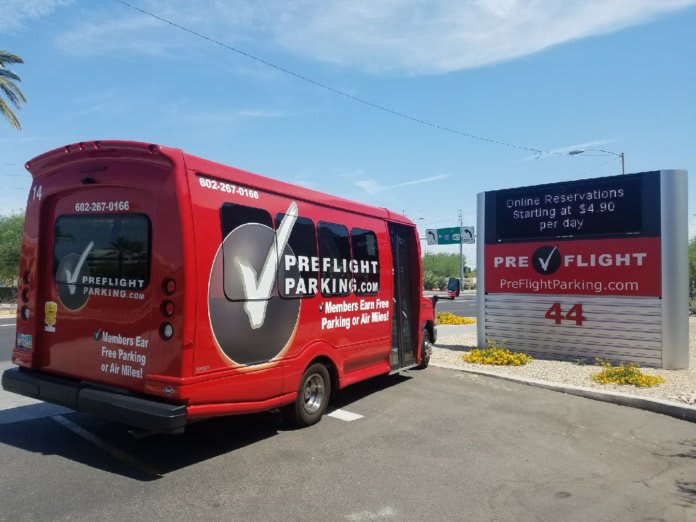
PreFlight Airport Parking first converted three of its Ford E-450 shuttles to propane autogas bi-fuel systems in 2016.

PreFlight
PreFlight
In an effort to save money and reduce its carbon footprint, Phoenix airport parking and shuttle company, PreFlight Airport Parking, converted three of its shuttle buses to propane autogas.
The company first converted three of its Ford E-450 shuttles to propane autogas bi-fuel systems in 2016. Three more of the vehicles, which can use either propane autogas or gasoline at the flip of a switch, will be converted by early summer, with the goal to eventually convert all 14 shuttles used at Sky Harbor International Airport. After experiencing technical issues with other fuels, such as diesel, PreFlight was ready to make the switch to propane autogas.
Avoiding downtime on in-service buses was an important factor to the company in making the switch to propane, both in providing service to its customers and being able to service its vehicles quickly.
A public fueling station that supplies propane autogas is close enough to not inconvenience the fleet, but the company is also working with Blue Star Gas to install an on-site refueling station. Blue Star Gas, a major supplier of propane in the western U.S., introduced PreFlight Airport Parking to propane autogas and helped the company with conversions and training.
“Blue Star Gas provided some ‘How-To’ videos for our mechanic, and helped us get a computer program that we could plug right into the fuel system and it would tell us if everything was running properly or if there were any error codes and what that meant,” said John Walsh, PreFlight market officer. “It was probably the simplest training we’ve ever had to do after a new bus purchase.”
Walsh said the company also wanted to incorporate propane autogas into its fleet for the environmental benefits. Propane releases fewer emissions than diesel and gasoline. This is particularly important to Phoenix, which has struggled with air quality issues. Reducing emissions with propane autogas benefits the business and the community.
More Bus
Biz Briefs: New Flyer Delivers in Columbus, Houston, Beep and Freebee Merge, and More
In this edition of Biz Briefs, we spotlight the latest developments shaping the future of mobility.
Read More →
People Movement: Dan Dipert Coaches Adds Third-Generation Leader, Keolis Names New Valley Metro VP/GM, and More
In this edition, we also cover recent appointments and announcements at the Wabtec, SilverRide, HNTB, and more, showcasing the individuals helping to shape the future of transportation.
Read More →
New York MTA Plans Largest Bus Fleet Upgrade in More Than a Decade
The agency is seeking manufacturers for 650 new CNG buses to replace aging vehicles, improve reliability, and advance its broader fleet modernization strategy.
Read More →
Building a Flexible Path to Transit Electrification
John Hroncich discusses BAE Systems’ modular and scalable approach, lessons learned from decades of real-world operations, and how agencies can identify electrification strategies that fit their fleets.
Read More →
Bus Tech Talk: Keeping Transit Technicians Ahead of the Technology Curve
LA Metro’s Obed Mejia discusses technician training, evolving maintenance technology, fleet replacement, and strategies for getting the most out of today’s transit fleets.
Read More →
Biz Briefs: RIPTA Unveils New Frontrunners, Clevland RTA Adds New Siemens, and More
In METRO's latest installment, we take a look at recent news from Siemens, Prevost, Dodge, and more partnerships making headlines across the transportation sector.
Read More →
People Movement: Holly Arnold Joins Transdev and More
In this edition, we also cover recent appointments and announcements at Pace, CamTran, MCI, and more, showcasing the individuals helping to shape the future of transportation.
Read More →
The High Cost of Transit Buses: Industry Leaders Look to Procurement Reform
Transit leaders and policymakers examine how standardized bus designs, streamlined procurement, and predictable funding could help agencies stretch budgets and deliver better service.
Read More →
The Business Voice Behind Public Transportation
As chair of APTA’s Business Members Board of Governors, Ray Melleady explains how more than 850 business members are partnering with transit agencies to advance funding, innovation, and industry-wide collaboration.
Read More →
From Surviving to Thriving: Building Stronger Transportation Organizations
Bus Business Consultants founder Brian Dickson shares lessons on leadership, organizational health, and creating options for long-term success in a changing transportation industry.
Read More →