




Keep Reading: South Central Extension Debuts, Transforming Transit in South Phoenix
Phoenix’s Valley Metro Highlights Security Progress Across System
Valley Metro reports safer, cleaner rides with incidents down 50% and rider satisfaction up, due to stronger security and partnerships.
November 6, 2025
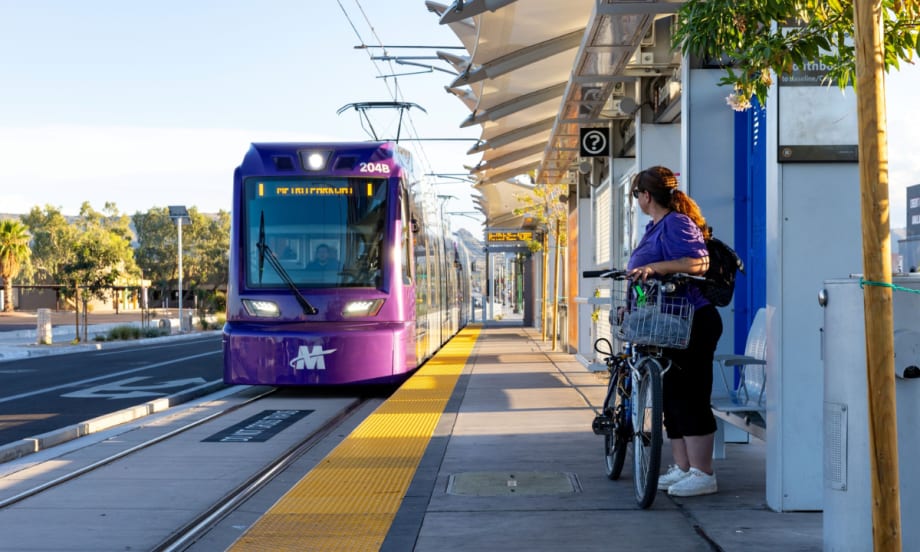
Compared to the 2022 results, riders reported significant improvements across the board, including 81% of riders feeling secure (up from 71% in 2022).
Photo: Valley Metro
3 min to read
Valley Metro riders have reported notable improvements in security, cleanliness, and rider behavior, according to a recent study of more than 1,100 riders. These enhancements also correspond to a year-over-year drop in rail security incidents by over 50%.
“The progress we’re seeing reflects the strong partnerships we’ve built with our police departments and the hard work of our teams to ensure that every rider has a positive experience,” said Valley Metro RPTA Board Chair and Tempe Councilmember Jennifer Adams.
A recent Valley Metro survey found that the vast majority of riders feel safe using the system, citing more visible and professional security officers, cleaner stations, and fewer unsafe situations.
Compared to the 2022 results, riders reported significant improvements across the board, including 81% of riders feeling secure (up from 71% in 2022), 61% seeing more security (was 52%), 82% would recommend Valley Metro (74%), and 78% are satisfied (69%).
“It’s encouraging to have riders tell us they feel safer and more confident using our system,” said Valley Metro Rail Board Chair and Phoenix Councilmember Laura Pastor. “Increased presence of security, partnerships with local law enforcement, and enhanced cleanliness along the system are important factors in increasing ridership and the rider experience.”
Other achievements include:
Bus and rail ridership in September 2025 increased by 21% (year over year), with 45,000 daily weekday riders.
The new rail extension into south Phoenix is seeing more than 9,000 riders each weekday, surpassing a projected 8,000 daily riders.
Metro Parkway station, which opened in January 2024, had 69,000 boardings in September, the second highest in the system. Followed closely by 67,000 boardings at the new end-of-line in south Phoenix at Baseline/Central Ave.
Express and RAPID commuter buses are seeing weekday increases of 18%.
“The ease and convenience of light rail is fantastic and is a safer, more efficient mode of transportation. The increased presence of security on the train has been impactful over the last year,” said Alex Coil, Valley Metro rider. “The refresh of light rail cars and overall cleanliness promote a safe environment for all to enjoy.”
According to Valley Metro security data:
From FY 2024 to FY 2025, the average rail incident rate dropped by 54%.
From January to June 2025, the total number of incidents decreased by 75% compared to the same period in 2024.
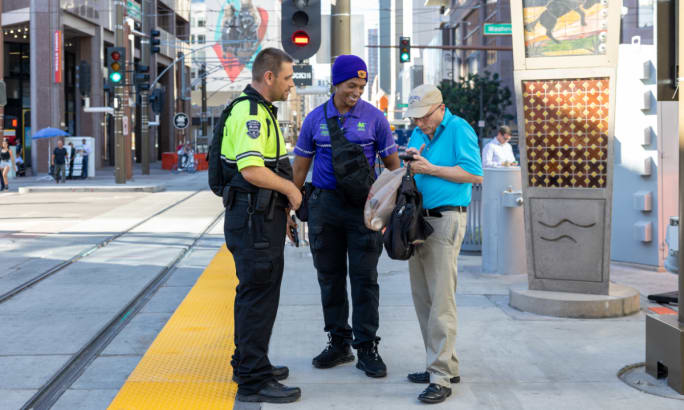
Field Security Officers, who patrol stations, trains, and park-and-rides, are now more visible with a 40% increase in presence.
Photo: Valley Metro
Building a Safer Transit Experience for Every Rider
“Our unwavering focus on security is transforming the transit experience for our riders,” said Jessica Mefford-Miller, Valley Metro CEO. “Whether it’s deepening partnerships with law enforcement or prioritizing safety enhancement at our passenger facilities, every effort contributes to a more confident and enjoyable journey for our community.”
Improvements in security reflect continued investments in both personnel and prevention. Field security officers, who patrol stations, trains, and park-and-rides, are now more visible with a 40% increase in presence, representing 45–50 officers on the rail system during peak hours.
Partnerships with local law enforcement add another layer of security presence, including the Phoenix Transit Police, Tempe Police’s extra-duty program, Mesa Police’s bike squad, and Operation Blue Ride, which offers wellness resources to bus riders.
“Behind this progress are the people who look out for our community,” said Adrian Ruiz, Valley Metro chief, safety and security. “Our police partners, supervisors, customer experience coordinators, alongside our security officers, work together every day to ensure a safe and welcoming experience for all riders. We also rely on our community. If you see something, please say something.”
More Management

METRO Opens Submissions for 2026 Motorcoach Awards
Nominations are now being accepted for METRO Magazine’s Operator of the Year and Innovative Operator of the Year awards.
Read More →
New York MTA Advances Final Contract for Second Avenue Subway Expansion
Contract Four is the largest in the Second Avenue Subway Phase 2 project and includes construction of station infrastructure, tracks, and signals for the subway expansion, MTA officials said. Work on Contract Four will begin in 2027.
Read More →
Transit Agencies Highlight Safety Gains at National Summit
Leaders from 15 major transit systems shared crime-reduction results and safety initiatives while discussing the role of continued federal support.
Read More →

NITA Names New Leadership, Expands Reduced-Fare Program at First Board Meeting
The new regional transit authority appointed its first board chair and interim executive director while extending reduced fares across CTA, Metra, and Pace for eligible riders.
Read More →
Beyond the Checklist: A Structured Approach to Transit Maintenance
Reliability-Centered Maintenance helps transit agencies move beyond routine checklists to focus limited resources on the assets and failures that have the greatest impact on safety, reliability, and service.
Read More →
APTA 2026 Nominating Committee Selects Leadership Slate, Names Chair and Vice Chair Nominees
Leadership changes will help shape the association’s priorities and its representation of the transportation industry during the 2026–2027 term.
Read More →
DART Launches Major Security, Fare Enforcement Initiative
The 90-day demonstration will deploy coordinated security teams at five light rail stations while testing controlled access and gathering data to guide future investments.
Read More →
Sponsored•September 9, 2026
Advancing Fare Collection Through Technology and Innovation
Learn about delivering 1300 gates at 91 stations while managing fare evasion. Explore the large scale deployment, solution customization and real-world results that affect the region. Prepare for deployment in your region now.
Read More →
Game Day in Motion: Moving Millions During the 2026 World Cup
Between packed transit stations and team motorcoaches, see how agencies and operators across North America tackled the transportation demands of the 2026 FIFA World Cup.
Read More →
Surface Transportation Extension Averts Shutdown, Leaves Transit Funding Gap
The stopgap keeps federal transportation programs moving, but missing advance funding could complicate the transit and rail projects agencies are planning next.
Read More →