



Proterra Selects Toshiba Batteries for Zero-Emission Bus Fleet
Proterra buses will use Toshiba’s Rechargeable Batteries (SCiB™), a safe rechargeable battery solution with high-rate performance and long-life capabilities that is used in a wide range of applications, from EVs to grid energy storage.

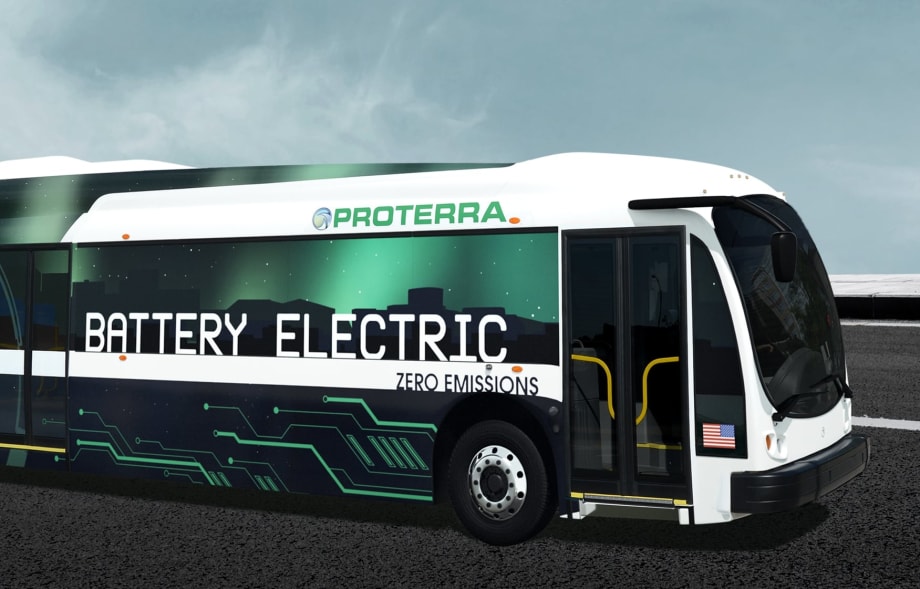
Leading EV transit bus manufacturer Proterra Inc. has selected Toshiba as the battery supplier for its next-generation, all-electric, zero-emission bus. Under terms of the agreement, Proterra buses will use Toshiba’s Rechargeable Batteries (SCiB™), a safe rechargeable battery solution with high-rate performance and long-life capabilities that is used in a wide range of applications, from EVs to grid energy storage.
RELATED:Seattle area transit chooses Proterra for EV program
“With a rapid recharge capability and outstanding life performance, Toshiba’s SCiB battery is ideally suited for zero-emission public transit,” said Greg Mack, Vice President of Toshiba International Corporation’s (TIC) Power Electronics Division. “Toshiba has decades of experience in transportation and we see the SCiB battery as key to expanding environmentally-friendly modes of transportation with optimum power performance in North America.”
Proterra has led the way in creating the quietest, most fuel-efficient and environmentally sustainable transit bus on the market today, helping cities across the U.S. reduce their carbon footprints and improve quality of life for residents, according to the company. In addition to having nearly six times the fuel economy per kilometer/mile (when translated into conventional fuels) of a diesel bus and being a true zero-emission means of transport, Proterra buses feature a fast charge system that takes less than 10 minutes to charge during regularly scheduled route stops, making the buses well-suited to transit applications.
“Because safety and performance are paramount to Proterra, we are very deliberate in each part we select for our buses, putting vendors through a rigorous qualification process,” said Proterra Inc. CEO, Ryan Popple. “Battery quality is critical to the performance of Electric Vehicles; partnering with a world-class team like Toshiba and utilizing SCiB technology will enable Proterra to offer its customers the highest-performance, safest, and most reliable urban transit vehicles.”
The SCiB is part of a wide range of solutions designed to enable smarter communities. Leveraging expertise cultivated since the company’s foundation, Toshiba is committed to being a global leader in smart community solutions that enrich the quality of life for people throughout the world. The Toshiba Group has already participated in more than 30 smart community demonstration projects highlighting battery storage and cloud-based solutions for social infrastructure that satisfy the differing needs in developing and developed countries. With a wide range of experience and know-how acquired from the stable operation of social infrastructure over many years, Toshiba is confident in its ability to present more effective and more sophisticated solutions based on precise simulations and highly accurate predictions.
Toshiba’s SCiB batteries have excellent thermal performance, enabling their high-rate charging capability, according to the company. The lithium-titanate chemistry contained in SCiB makes the batteries highly resistant to thermal runaway and lithium metal plating, providing exceptional battery safety characteristics.
SCiB products also offer minimal capacity degradation and are capable of 10,000 or more charge-discharge cycles, depending on operating conditions. This operational life often exceeds that of the applications in which they are used, eliminating the need for battery replacement and reducing the environmental impact of waste batteries.
More Bus

People Movement: Dan Dipert Coaches Adds Third-Generation Leader, Keolis Names New Valley Metro VP/GM, and More
In this edition, we also cover recent appointments and announcements at the Wabtec, SilverRide, HNTB, and more, showcasing the individuals helping to shape the future of transportation.
Read More →
New York MTA Plans Largest Bus Fleet Upgrade in More Than a Decade
The agency is seeking manufacturers for 650 new CNG buses to replace aging vehicles, improve reliability, and advance its broader fleet modernization strategy.
Read More →
Building a Flexible Path to Transit Electrification
John Hroncich discusses BAE Systems’ modular and scalable approach, lessons learned from decades of real-world operations, and how agencies can identify electrification strategies that fit their fleets.
Read More →
Bus Tech Talk: Keeping Transit Technicians Ahead of the Technology Curve
LA Metro’s Obed Mejia discusses technician training, evolving maintenance technology, fleet replacement, and strategies for getting the most out of today’s transit fleets.
Read More →
Biz Briefs: RIPTA Unveils New Frontrunners, Clevland RTA Adds New Siemens, and More
In METRO's latest installment, we take a look at recent news from Siemens, Prevost, Dodge, and more partnerships making headlines across the transportation sector.
Read More →
People Movement: Holly Arnold Joins Transdev and More
In this edition, we also cover recent appointments and announcements at Pace, CamTran, MCI, and more, showcasing the individuals helping to shape the future of transportation.
Read More →
The High Cost of Transit Buses: Industry Leaders Look to Procurement Reform
Transit leaders and policymakers examine how standardized bus designs, streamlined procurement, and predictable funding could help agencies stretch budgets and deliver better service.
Read More →
The Business Voice Behind Public Transportation
As chair of APTA’s Business Members Board of Governors, Ray Melleady explains how more than 850 business members are partnering with transit agencies to advance funding, innovation, and industry-wide collaboration.
Read More →
From Surviving to Thriving: Building Stronger Transportation Organizations
Bus Business Consultants founder Brian Dickson shares lessons on leadership, organizational health, and creating options for long-term success in a changing transportation industry.
Read More →
Finding the ‘Happy Medium’: Optimizing Maintenance Without Sacrificing Reliability
The key to maintenance optimization isn’t doing less work—it’s doing the right work at the right time on the right assets.
Read More →