




RELATED: Bill protects bus drivers from attacks, requires reporting
Report studies rate of musculoskeletal pain in city bus drivers
Bus drivers experience higher levels of MSDs than both the general population and other employees at transit agencies.
November 27, 2018
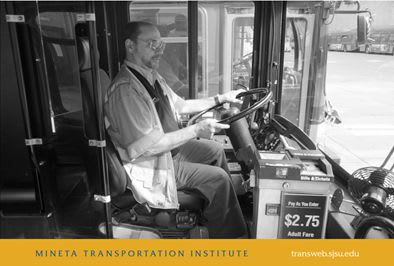
A new Mineta Transportation Institute study recommends high-level interventions at transit agencies to mitigate potential sources of musculoskeletal pain in bus drivers. Photo: MTI
2 min to read
A new Mineta Transportation Institute study recommends high-level interventions at transit agencies to mitigate potential sources of musculoskeletal pain in bus drivers. Photo: MTI
A long road trip is often enough to cause a driver some bodily discomfort, but for city bus drivers for whom driving makes up the greater part of their day, that discomfort could have a lasting impact on their health, according to new research.
Mineta Transportation Institute (MTI) research titled, Not Just and Ache: Examining the Rate of Musculoskeletal Pain in City Bus Drivers, by Jeremy Steele, examines the rates of musculoskeletal discomfort in a sample of 957 city bus drivers at Seattle-based King County Metro. The report also reflects how often such pain prevented drivers from doing their normal work, required treatment from a medical professional, or led to one or more worker’s compensation claims.
The research builds on existing research that consistently shows that bus drivers experience higher levels of musculoskeletal disorders (MSDs) than both the general population and other employees at transit agencies. Recent literature specifically focused on bus drivers’ high exposure to whole-body vibrations (WBVs) as a potential source for musculoskeletal disorders.
Based on surveys using the Nordic questionnaire, the following are key findings:
85% of bus drivers reported having developed an injury or pain in at least one part of the body in the past 12 months;
60% reported lower back pain or injury;
51% reported discomfort in the shoulders;
47% reported knee pain or injury;
and 46% reported neck pain or injury.
Additional findings indicated that rates of pain were higher among women than men with 95% of women reporting pain versus 81% of men. Furthermore, 30 to 40% of respondents who had pain in the last 12 months were prevented from doing their normal work, causing 35 to 45% of that group to seek medical attention for those injuries or pains.
Future research on the subject should consider factors like pre-existing conditions and the potential of other factors that may contribute to the driver’s musculoskeletal health. Perhaps the most important policy recommendation from this study is the need for significant, high-level interventions at transit agencies to mitigate potential sources of musculoskeletal pain in bus drivers. The large gap between the number of workers who visited a medical professional for their pain and the number who applied for worker’s compensation suggests the existence of a large, but yet unrealized, financial burden on King County Metro.
More Rail

New York MTA Advances Final Contract for Second Avenue Subway Expansion
Contract Four is the largest in the Second Avenue Subway Phase 2 project and includes construction of station infrastructure, tracks, and signals for the subway expansion, MTA officials said. Work on Contract Four will begin in 2027.
Read More →
San Diego MTS Breaks Monthly Trolley Ridership Record
Agency officials said July’s ridership indicates MTS’s continued recovery from the pandemic.
Read More →
Report Examines NJ TRANSIT Reliability, Funding Challenges
The Garden State Initiative analysis examines the roles of Amtrak infrastructure, fleet management, and agency operations while recommending a more performance-based approach to improving reliability.
Read More →
Stadler, CapMetro Sign Long-Term Rail Fleet Support Agreement
Beginning in 2027, Stadler will provide on-site technical expertise, spare parts support, training, and obsolescence management to help extend the reliability and longevity of CapMetro’s GTW fleet.
Read More →
Biz Briefs: Alstom Lands Canadian Contract, LYT to Supply California TSP, and More
In METRO's latest installment, we take a look at recent news from Complete Coach Works, Beep, FlixBus, and more partnerships making headlines across the transportation sector.
Read More →
CATS Gold Line Marks 5 Years of Service, 2.8M Passenger Trips
With a six-mile expansion planned, the Charlotte streetcar is positioned to connect more neighborhoods and major transit hubs across the region.
Read More →
Why Simulating Pedestrian Movement Has Become Essential for Modern Rail Stations
Pedestrian microsimulation is helping rail planners identify bottlenecks, test station designs, and prepare complex transit hubs for growing passenger volumes.
Read More →
Amtrak Begins Major Construction at New York’s Sunnyside Yard
The new maintenance facility will support Amtrak’s Airo trainsets while improving maintenance efficiency and turnaround times in New York.
Read More →
Chicago Leaders Unveil Plans for O’Hare Airport Express Train
The privately developed project would offer a 15-minute trip between downtown and O’Hare’s Terminal 2, with trains operating every 15 minutes on a dedicated track. The service would use battery-electric trains and three existing freight rail rights-of-way.
Read More →
OCTA Maps Out 30-Year Strategy to Protect Coastal Rail Corridor
The draft feasibility report identifies strategies to protect the coastal rail line for decades as the agency continues near-term stabilization and sand placement efforts.
Read More →