



San Diego MTS ridership reaches 95M passengers
Trolley ridership increased nearly 34% over the previous year from 29,699,366 in FY 2013 to 39,694,197 trips in FY 2014, while the bus system logged 55,316,353 trips in FY 2014, a 1% decrease over FY 2013 primarily due to construction delays on major routes.

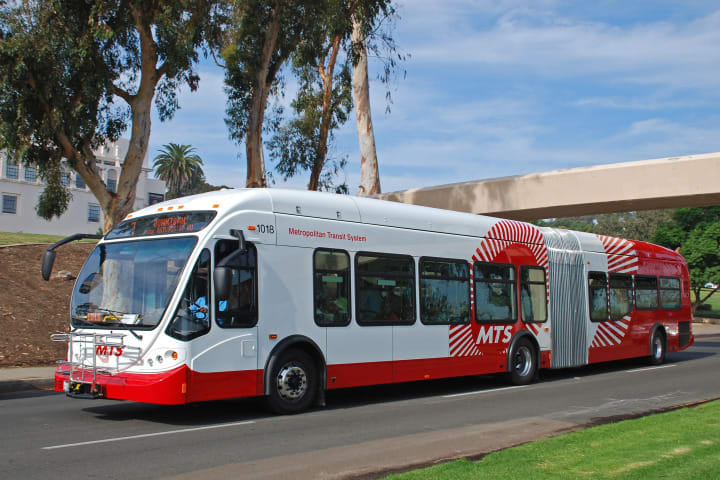
San Diego’s Metropolitan Transit System (MTS) announced more than 95 million trips were taken by passengers on MTS buses and Trolleys in Fiscal Year 2014, shattering the previous record of 91.6 million set in Fiscal Year 2009. It was an 11.5% increase from the 85,193,601 rides taken during Fiscal Year 2013.
“Serving 95 million passengers over a 12-month period is a significant milestone for MTS and the public transportation system in San Diego,” said Paul Jablonski, CEO of MTS.
RELATED:Photos of San Diego MTS Service at Comic-Con
In FY 2014, MTS deployed new low-floor Trolley cars on the Orange Line and realigned the Green Line to provide service all the way to downtown. This made trips faster, more comfortable and more convenient for all passengers. The new trains help speed up the boarding process by allowing direct access and eliminating the need for mechanical lifts for people using mobility devices.
MTS also implemented automated passenger counters (APC) on all trains to tally passengers more accurately. APCs provide an advantage because they collect ridership data through sensors, which increase accuracy over old estimation programs and reduce costs associated with manually collecting the data.
Trolley ridership increased nearly 34% over the previous year from 29,699,366 in FY 2013 to 39,694,197 trips in FY 2014, while the bus system logged 55,316,353 trips in FY 2014, a 1% decrease over FY 2013 primarily due to construction delays on major routes.
MTS operates more than 90 bus routes and three Trolley lines on 53 miles of double-tracked railway. Every weekday more than 285,000 passenger trips are taken on MTS bus and Trolley services
More Bus

New York MTA Plans Largest Bus Fleet Upgrade in More Than a Decade
The agency is seeking manufacturers for 650 new CNG buses to replace aging vehicles, improve reliability, and advance its broader fleet modernization strategy.
Read More →
Building a Flexible Path to Transit Electrification
John Hroncich discusses BAE Systems’ modular and scalable approach, lessons learned from decades of real-world operations, and how agencies can identify electrification strategies that fit their fleets.
Read More →
Bus Tech Talk: Keeping Transit Technicians Ahead of the Technology Curve
LA Metro’s Obed Mejia discusses technician training, evolving maintenance technology, fleet replacement, and strategies for getting the most out of today’s transit fleets.
Read More →
Biz Briefs: RIPTA Unveils New Frontrunners, Clevland RTA Adds New Siemens, and More
In METRO's latest installment, we take a look at recent news from Siemens, Prevost, Dodge, and more partnerships making headlines across the transportation sector.
Read More →
People Movement: Holly Arnold Joins Transdev and More
In this edition, we also cover recent appointments and announcements at Pace, CamTran, MCI, and more, showcasing the individuals helping to shape the future of transportation.
Read More →
The High Cost of Transit Buses: Industry Leaders Look to Procurement Reform
Transit leaders and policymakers examine how standardized bus designs, streamlined procurement, and predictable funding could help agencies stretch budgets and deliver better service.
Read More →
The Business Voice Behind Public Transportation
As chair of APTA’s Business Members Board of Governors, Ray Melleady explains how more than 850 business members are partnering with transit agencies to advance funding, innovation, and industry-wide collaboration.
Read More →
From Surviving to Thriving: Building Stronger Transportation Organizations
Bus Business Consultants founder Brian Dickson shares lessons on leadership, organizational health, and creating options for long-term success in a changing transportation industry.
Read More →
Finding the ‘Happy Medium’: Optimizing Maintenance Without Sacrificing Reliability
The key to maintenance optimization isn’t doing less work—it’s doing the right work at the right time on the right assets.
Read More →
LA Metro, City of West Hollywood, and Partners Advance Smarter Bus Lane Enforcement
The award-winning partnership combines AI-powered detection with human oversight to improve bus reliability, accessibility, and enforcement efficiency.
Read More →