




RELATED: L.A. Metro 'Ups the Ante' with Zero-Emission Fleet Plan
San Francisco commits to all-electric bus fleet by 2035
Muni is developing “Green Zones” to test current hybrid vehicles and their ability to run only on battery power.
May 17, 2018

San Francisco Muni's fleet of low-emissions electric-hybrid vehicles run on battery, as well as clean, renewable diesel. Photo: SFMTA
3 min to read
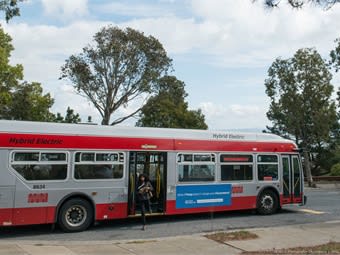
San Francisco Muni's fleet of low-emissions electric-hybrid vehicles run on battery, as well as clean, renewable diesel. Photo: SFMTA
Mayor Mark Farrell and the San Francisco Municipal Transportation Agency (SFMTA), which operates Muni, announced San Francisco’s commitment to have an all-electric bus fleet by 2035. This means that the SFMTA will only purchase all-electric buses starting in 2025 to meet the goal for 2035.
The SFMTA Board of Directors approved a resolution supporting the commitment towards an all-electric bus fleet. Muni currently operates the largest fleet of zero-emissions electric trolley buses. Trolley buses, like all light rail, streetcar, and cable car vehicles, run on 100 percent greenhouse gas-free Hetch Hetchy electricity via overhead wires. Muni also runs a fleet of low-emissions electric-hybrid vehicles. The electric-hybrid vehicles run on battery, as well as clean, renewable diesel.
The SFMTA has been rolling out new electric-hybrid buses with higher-capacity on-board battery systems. The increased on-board battery capacity will allow the SFMTA to run a test program to operate “Green Zones” along several electric hybrid routes that would run only by battery for significant portions of the route. The “Green Zone” signifies an area in which the vehicle will not produce any emissions. The SFMTA is working to identify these zones throughout the city.
The SFMTA is at the ready to move forward with electric bus technology when manufacturers can prove their electric buses can withstand heavy ridership and steep hills. The agency would also have to consider new facilities that can charge a large fleet and developing a systemwide infrastructure to charge vehicles in service or on the street.
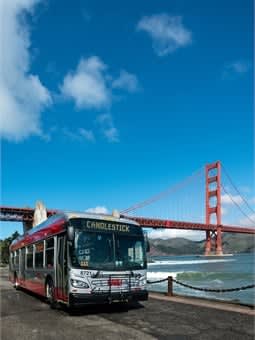
In recent years, the SFMTA has replaced over 90 percent of its older diesel buses with cleaner, more efficient electric hybrid vehicles that run on renewable diesel. Photo: SFMTA
John Haley, SFMTA’s Transit Director said, “While the battery technology is emerging rapidly, it isn’t quite ready for primetime. Manufacturers aren’t yet producing the number of all-electric buses San Francisco and other urban areas would need, nor could we guarantee that the vehicles would work for the required 15 years with heavy ridership and challenging topography.”
In 2019, the SFMTA intends to purchase a limited number of zero-emission battery electric buses and test them in service throughout San Francisco to evaluate how they perform on crowded and hilly routes. The most important step to support the zero-emission goal is to determine the infrastructure needs for electric buses, including upgrades for our existing facilities to accommodate charging requirements and maintenance.
Of the nearly 900 all-electric buses purchased across the country, only 207 are actually in service. By contrast, Muni is currently operating 250 electric trolley vehicles.
In recent years, the SFMTA has replaced over 90 percent of its older diesel buses with cleaner, more efficient electric hybrid vehicles that run on renewable diesel. These electric hybrid vehicles offer dramatically lower fuel consumption, decreased engine idling time while in service, and a substantial reduction in emissions. The SFMTA’s switch from conventional diesel to electric-hybrid vehicles has reduced consumption of fuel by 5.4 million gallons and 82,000 tons of CO2 over the 12-year life of the fleet.
Over 50 percent of the transit fleet, including light rail, cable cars, historic streetcars and electric trolley buses are largely powered by greenhouse gas-free hydropower generated from Hetch Hetchy. Beyond that, the agency's new electric hybrid buses use 100 percent renewable fuel. This eliminates greenhouse gas emissions and petroleum fuel and saves a million gallons of fuel each year. San Francisco’s transportation sector generates approximately 46 percent of the City’s total greenhouse gas emissions mostly generated by the use of private cars and commercial trucks. By contrast, Muni carries 26 percent of all trips in the city, but accounts for less than two percent of these emissions.
On April 19, 2018, in celebration of Earth Day, Mayor Mark Farrell committed San Francisco to net-zero greenhouse gas emission by 2050, a move that will eliminate the City’s carbon footprint.
More Bus

New York MTA Plans Largest Bus Fleet Upgrade in More Than a Decade
The agency is seeking manufacturers for 650 new CNG buses to replace aging vehicles, improve reliability, and advance its broader fleet modernization strategy.
Read More →
Building a Flexible Path to Transit Electrification
John Hroncich discusses BAE Systems’ modular and scalable approach, lessons learned from decades of real-world operations, and how agencies can identify electrification strategies that fit their fleets.
Read More →
Bus Tech Talk: Keeping Transit Technicians Ahead of the Technology Curve
LA Metro’s Obed Mejia discusses technician training, evolving maintenance technology, fleet replacement, and strategies for getting the most out of today’s transit fleets.
Read More →
Biz Briefs: RIPTA Unveils New Frontrunners, Clevland RTA Adds New Siemens, and More
In METRO's latest installment, we take a look at recent news from Siemens, Prevost, Dodge, and more partnerships making headlines across the transportation sector.
Read More →
People Movement: Holly Arnold Joins Transdev and More
In this edition, we also cover recent appointments and announcements at Pace, CamTran, MCI, and more, showcasing the individuals helping to shape the future of transportation.
Read More →
The High Cost of Transit Buses: Industry Leaders Look to Procurement Reform
Transit leaders and policymakers examine how standardized bus designs, streamlined procurement, and predictable funding could help agencies stretch budgets and deliver better service.
Read More →
The Business Voice Behind Public Transportation
As chair of APTA’s Business Members Board of Governors, Ray Melleady explains how more than 850 business members are partnering with transit agencies to advance funding, innovation, and industry-wide collaboration.
Read More →
From Surviving to Thriving: Building Stronger Transportation Organizations
Bus Business Consultants founder Brian Dickson shares lessons on leadership, organizational health, and creating options for long-term success in a changing transportation industry.
Read More →
Finding the ‘Happy Medium’: Optimizing Maintenance Without Sacrificing Reliability
The key to maintenance optimization isn’t doing less work—it’s doing the right work at the right time on the right assets.
Read More →
LA Metro, City of West Hollywood, and Partners Advance Smarter Bus Lane Enforcement
The award-winning partnership combines AI-powered detection with human oversight to improve bus reliability, accessibility, and enforcement efficiency.
Read More →