



Sonoma-Marin, Calif. system selects U.S.-style railcars
Four manufacturers-- Brookville Equipment Corp. of Brookville, Pa.; Nippon-Sharyo Ltd. of Japan; Siemens Corp. of Germany; and U.S. Railcar LLC of Columbus, Ohio -- have expressed interest in building vehicles for this project. All have indicated they would build the district’s fleet of about a dozen vehicles in the U.S., meeting the FTA’s “Buy America” requirements.

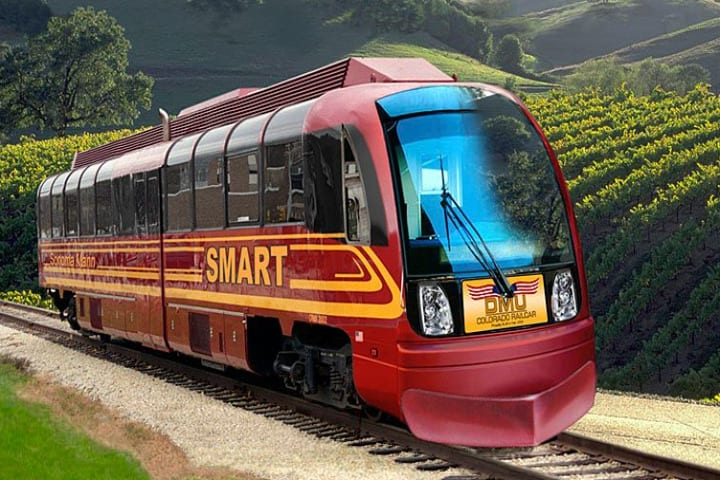
Rendering courtesy of Sonoma-Marin Area Rail Transit.
[IMAGE]SMART-train-full.jpg[/IMAGE]A new generation of environmentally friendly railcars will whisk train passengers through California's Marin and Sonoma counties beginning in late 2014.
The Sonoma-Marin Area Rail Transit board of directors, directed staff on Wednesday to prepare specifications for rail vehicles that meet the most stringent EPA standards; are capable of speeds up to 79 mph; and will provide a first-class passenger experience for commuters, tourists and other travelers in the North Bay.
“This is the vehicle we promised the voters,” said Board Chairman Charles McGlashan. “It gets our service up and running on time, on budget and with room to expand for the future. In the long run, that means our greenhouse gas savings will be even greater.”
Development of vehicle specifications, which will include public input, is expected to be complete by end of March 2010. Bids from the railcar-building industry will be due around Oct. 1, 2010. The first vehicles should arrive in the North Bay for testing on the SMART corridor in the fall of 2013, with the complete fleet due to be ready for service in the fall of 2014.
In making their decision, SMART Board members stressed the importance of vehicles that provide all of the environmental benefits identified in the project’s environmental impact reports, and that also allow for maximum flexibility in operations. That combination is only offered by vehicles that meet Federal Railroad Administration standards for passenger trains that share a rail corridor with freight rail service, as SMART does with the North Coast Railroad Authority.
This type of vehicle has been SMART’s preferred railcar since the agency’s first vehicle selection studies were conducted in 2002. SMART directors then and now favored the compliant vehicle because it needs no special waivers from the federal government to operate in conjunction with freight service. It also avoids the need for “temporal separation” between passenger and freight trains, a requirement that – if imposed – could mean either fewer passenger trains available during the day or forcing freight trains to run only at night.
SMART intends to run DMUs, or diesel multiple units, on the 70-mile corridor between Cloverdale and Larkspur, Calif. Unlike traditional trains with huge locomotives pulling long lines of passenger cars, DMUs are self-propelled units with the engines usually placed underneath the passenger compartments. This allows for relatively compact trains, generally two cars operating together in a “married pair” that seats about 150 passengers and is about 150-170 feet long.
SMART’s specifications likely will require manufacturers to provide a third car that can be added to the “married pair,” increasing the seating capacity to 225 and expanding the area available for bicycles, disabled accommodations and other on-board amenities.
Four manufacturers have indicated to SMART that they are interested in building vehicles for this project. They include Brookville Equipment Corp. of Brookville, Pa.; Nippon-Sharyo Ltd. of Japan; Siemens Corp. of Germany; and U.S. Railcar LLC of Columbus, Ohio. All four have indicated they would build the district’s fleet of about a dozen vehicles in the U.S., meeting the FTA’s “Buy America” requirements.
SMART’s rail vehicles likely will be the first FRA-compliant DMUs in the world to use engines that meet the Environmental Protection Agency’s “Tier 4” emissions requirements, which go into effect beginning in 2011. Tier 4 technology, combined with new “clean-diesel” fuel, greatly reduces the amount of pollutants emitted from diesel engines, virtually eliminating the smoke and odor traditionally associated with old-style diesel.
By getting travelers out of their cars and onto trains, SMART will reduce greenhouse gas emissions in Marin and Sonoma counties by more than 30 million pounds a year, according to the project’s EIR.
Marin and Sonoma county voters in November approved Measure Q, the quarter-cent sales tax to fund the SMART project, by a nearly 70-percent majority. SMART will use the publically owned former Northwestern Pacific Railroad corridor to operate passenger trains and develop a bicycle-pedestrian pathway connecting 14 stations from Cloverdale, in northern Sonoma County, to Larkspur, where the Golden Gate Ferry connects Marin County with San Francisco.
More Rail
Amtrak, CN Reach Agreements to Strengthen Passenger Rail Service, Safety
The agreement resolves a more than decade-long proceeding before the Surface Transportation Board concerning the terms and conditions for Amtrak services, such as the City of New Orleans, Illini/Saluki, and Wolverine.
Read More →
New York MTA Advances Final Contract for Second Avenue Subway Expansion
Contract Four is the largest in the Second Avenue Subway Phase 2 project and includes construction of station infrastructure, tracks, and signals for the subway expansion, MTA officials said. Work on Contract Four will begin in 2027.
Read More →
San Diego MTS Breaks Monthly Trolley Ridership Record
Agency officials said July’s ridership indicates MTS’s continued recovery from the pandemic.
Read More →
Report Examines NJ TRANSIT Reliability, Funding Challenges
The Garden State Initiative analysis examines the roles of Amtrak infrastructure, fleet management, and agency operations while recommending a more performance-based approach to improving reliability.
Read More →
Stadler, CapMetro Sign Long-Term Rail Fleet Support Agreement
Beginning in 2027, Stadler will provide on-site technical expertise, spare parts support, training, and obsolescence management to help extend the reliability and longevity of CapMetro’s GTW fleet.
Read More →
Biz Briefs: Alstom Lands Canadian Contract, LYT to Supply California TSP, and More
In METRO's latest installment, we take a look at recent news from Complete Coach Works, Beep, FlixBus, and more partnerships making headlines across the transportation sector.
Read More →
CATS Gold Line Marks 5 Years of Service, 2.8M Passenger Trips
With a six-mile expansion planned, the Charlotte streetcar is positioned to connect more neighborhoods and major transit hubs across the region.
Read More →
Why Simulating Pedestrian Movement Has Become Essential for Modern Rail Stations
Pedestrian microsimulation is helping rail planners identify bottlenecks, test station designs, and prepare complex transit hubs for growing passenger volumes.
Read More →
Amtrak Begins Major Construction at New York’s Sunnyside Yard
The new maintenance facility will support Amtrak’s Airo trainsets while improving maintenance efficiency and turnaround times in New York.
Read More →
Chicago Leaders Unveil Plans for O’Hare Airport Express Train
The privately developed project would offer a 15-minute trip between downtown and O’Hare’s Terminal 2, with trains operating every 15 minutes on a dedicated track. The service would use battery-electric trains and three existing freight rail rights-of-way.
Read More →