



TOD touted as S. Nevada's best option for economy, mobility, life quality
Former USDOT Sec. Foxx also stressed the importance of public input, similar to the community engagement efforts currently underway with RTC's transit plan.

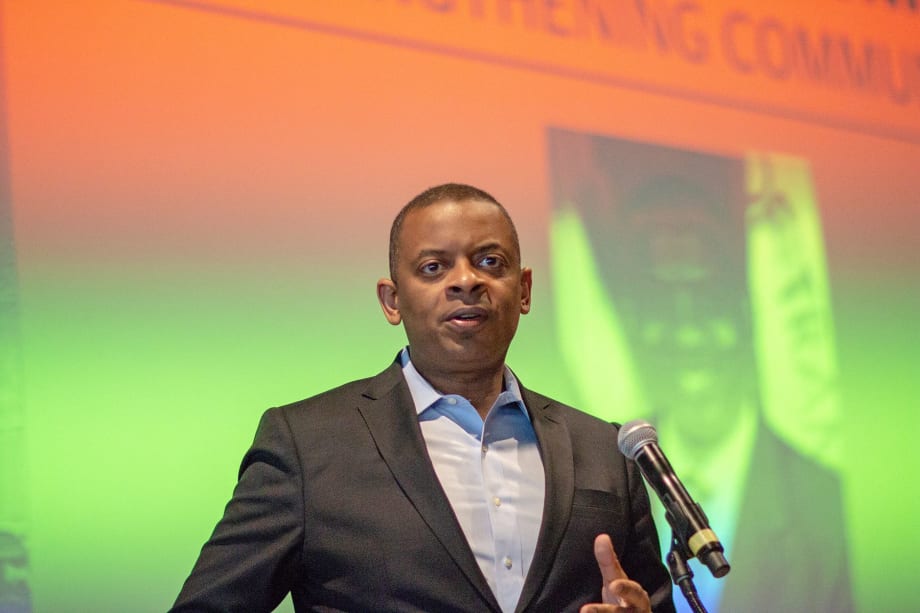
Former U.S. Secretary of Transportation Anthony Foxx shares insights on creating opportunities and strengthening communities through transportation investment.
RTC of Southern Nevada
Former U.S. Secretary of Transportation Anthony Foxx shares insights on creating opportunities and strengthening communities through transportation investment.
RTC of Southern Nevada
As the administrator of Southern Nevada Strong, the region’s federally recognized plan for building complete and sustainable communities, the Regional Transportation Commission of Southern Nevada (RTC) hosted a community symposium with former U.S. Secretary of Transportation Anthony Foxx and other national and local leaders to discuss the importance of transit-oriented development to Southern Nevada’s economy, mobility, and quality of life.
Transit-oriented development (TOD) is a type of community development that includes a mixture of housing, office, retail, and other amenities integrated into a walkable neighborhood and located within a half-mile of quality public transportation. TOD will play an integral role in “On Board,” the RTC’s comprehensive plan for the future of transit in Southern Nevada.
Sponsored by the Las Vegas Global Economic Alliance (LVGEA), Southern Nevada Homebuilders Association (SNHBA), and the University of Nevada, Las Vegas (UNLV) School of Community Health Sciences, Foxx was the keynote speaker at the event that attracted more than 250 attendees. “Today becomes the day when we open the door a little more to the future of this region,” said Foxx.
Specifically regarding high-capacity transit options along Maryland Parkway, one of Las Vegas’ busiest corridors that he toured earlier in the morning with RTC GM Tina Quigley, Foxx noted that the “permanence of rail tells the real estate community that traffic is going to be there forever. That signal, when coupled with smart zoning and land use decisions, is a recipe for revitalizing an area. It is an opportunity to create economic catalysts off the Strip.”
Foxx also stressed the importance of public input, similar to the community engagement efforts currently underway by the RTC with its On Board plan. However, at the same time, he warned “don’t wait too long” to take action, especially given the uncertain future of federal funding.
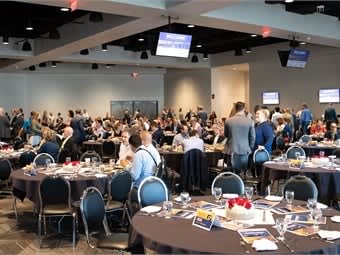
More than 250 Southern Nevada community, business and elected leaders attended the 2018 Transit-Oriented Development Symposium headlined by Former U.S. Secretary of Transportation Anthony Foxx.
RTC of Southern Nevada
The event also included a panel of nationally and locally renowned development experts who discussed the importance and benefits of TOD, including their first-hand experiences in cities like Denver. According to Chris Nevitt, manager for TOD for the city and county of Denver, they were able to successfully pass one of the nation’s largest initiatives for expansion of its transit system and have since seen a double-digit return on its investment.
“Go big” was a recurring theme of many of the speakers. Foxx advised that a community needs to “go big” and obtain necessary funding now to fully achieve long-term goals. “Make a bold decision now,” added Jeff Tumlin, TOD expert with Nelson/Nygaard.
Seleta Reynolds, GM of the Los Angeles Department of Transportation (LADOT) closed the event highlighting the visionary TOD efforts underway in Southern California to “build the streets and communities of the future that promote cohesion, equity, and not displacement.” The Los Angeles regional transit plan is funded from the passage of Measure M, a ballot initiative that garnered more than 71% voter approval in 2016 to indefinitely authorize a half-cent sales tax increase to build out the city’s transit system.
“The RTC will continue to bring together and work with local leaders, businesses, stakeholders, and residents to determine how best to build our community, support economic development, and ensure the millions of people who travel the valley, including busy corridors like Maryland Parkway, can get around efficiently and safely,” said Quigley after the event. “What we heard at today’s event is that transit-oriented development is the future, and we need to look at transportation as one element of an overall economic plan.”
More Management

METRO Opens Submissions for 2026 Motorcoach Awards
Nominations are now being accepted for METRO Magazine’s Operator of the Year and Innovative Operator of the Year awards.
Read More →
New York MTA Advances Final Contract for Second Avenue Subway Expansion
Contract Four is the largest in the Second Avenue Subway Phase 2 project and includes construction of station infrastructure, tracks, and signals for the subway expansion, MTA officials said. Work on Contract Four will begin in 2027.
Read More →
Transit Agencies Highlight Safety Gains at National Summit
Leaders from 15 major transit systems shared crime-reduction results and safety initiatives while discussing the role of continued federal support.
Read More →

NITA Names New Leadership, Expands Reduced-Fare Program at First Board Meeting
The new regional transit authority appointed its first board chair and interim executive director while extending reduced fares across CTA, Metra, and Pace for eligible riders.
Read More →
Beyond the Checklist: A Structured Approach to Transit Maintenance
Reliability-Centered Maintenance helps transit agencies move beyond routine checklists to focus limited resources on the assets and failures that have the greatest impact on safety, reliability, and service.
Read More →
APTA 2026 Nominating Committee Selects Leadership Slate, Names Chair and Vice Chair Nominees
Leadership changes will help shape the association’s priorities and its representation of the transportation industry during the 2026–2027 term.
Read More →
DART Launches Major Security, Fare Enforcement Initiative
The 90-day demonstration will deploy coordinated security teams at five light rail stations while testing controlled access and gathering data to guide future investments.
Read More →
Advancing Fare Collection Through Technology and Innovation
Learn about delivering 1300 gates at 91 stations while managing fare evasion. Explore the large scale deployment, solution customization and real-world results that affect the region. Prepare for deployment in your region now.
Read More →
Game Day in Motion: Moving Millions During the 2026 World Cup
Between packed transit stations and team motorcoaches, see how agencies and operators across North America tackled the transportation demands of the 2026 FIFA World Cup.
Read More →
Surface Transportation Extension Averts Shutdown, Leaves Transit Funding Gap
The stopgap keeps federal transportation programs moving, but missing advance funding could complicate the transit and rail projects agencies are planning next.
Read More →