



Tolar completes California shelter design, fabrication contract
Design embraces Mexican folk art known as “papel picado,” which is created from cutting colorful sheets of tissue paper.

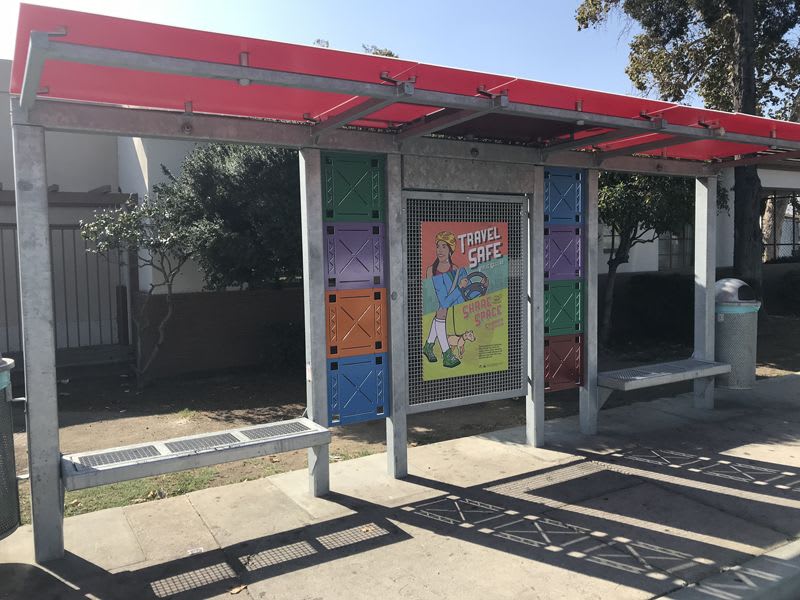
The vision for the transit shelters was to take the rugged steel structure and enhance and soften the lines with colorful acrylic roof panels and other artistic elements.
The vision for the transit shelters was to take the rugged steel structure and enhance and soften the lines with colorful acrylic roof panels and other artistic elements.
Tolar Manufacturing Co. completed the design and fabrication of 41 custom-built, “papel picado”-themed, transit shelters for the City of Santa Ana, California.
Working closely with ND Construction Inc., Tolar Manufacturing brought to life the vision of Suzi Furjanic, an associate planner with the City of Santa Ana Public Works department. Her concept was to embrace the popular Mexican folk art known as “papel picado,” the elaborate designs created from cutting colorful sheets of tissue paper.
Furjanic’s vision for the transit shelters was to take the rugged steel structure and enhance and soften the lines with colorful acrylic roof panels and other artistic elements. Tolar Manufacturing was up for the challenge of blending form and function so as to not lose the important durable integrity of the shelter while effectively bringing the artistic elements to life.
The shelters are now installed throughout the city, fabricated in four sizes from 14 feet to 27 feet long.
Each includes distinct branding elements highlighted by colorfully tinted polycarbonate roof panels to create a Sense of Place™ tying into the heritage and culture of the unique neighborhoods in which each shelter resides.
The shelters also include comfortable seating and security lighting that doubles as decorative up-lighting provided by energy-saving, dusk-to-dawn solar-powered LED illumination from Urban Solar.
More Management
New York MTA Launches Historic $1.9B Signal, Track Modernization Project
Funded in part by congestion pricing revenue, the project will replace nearly century-old signals along the A and C lines in Brooklyn and Queens.
Read More →
Brian Dickson on Building Stronger, More Resilient Transportation Organizations
Bus Business Consultants Founder Brian Dickson discusses the leadership principles, operational discipline, and strategic planning that separate transportation companies positioned for long-term success from those stuck in survival mode.
Read More →
LA Metro Breaks Ground on Vermont BRT Project
The 12.4-mile corridor is projected to serve 66,200 daily riders, reduce travel times by up to 24%, and create the nation's busiest bus rapid transit corridor.
Read More →
Building Stronger Leaders, More Resilient Transit Teams
Dr. Carol Parker Walsh discusses leadership development, employee retention, workplace culture, and preparing transit’s workforce for AI and automation.
Read More →
Roman Cornell on ABC Companies’ Evolution and the Future of Passenger Transportation
The company’s CEO discusses carrying forward a third-generation family legacy, ABC’s continued evolution in passenger transportation, support for increasingly complex fleets, and how technology and continued investment could help operators improve uptime.
Read More →
CATS Launches West Charlotte Microtransit Zone, Expands Transit Services
The new microtransit zone connects residents to key destinations as Charlotte Area Transit System rolls out the first phase of its 2055 Transit System Plan.
Read More →
VIA Bus Ridership Grows 10.1% Through August 2026
San Antonio's VIA Metropolitan Transit reported the highest bus ridership growth among major Texas transit systems. Federal Transit Administration data ranked it second among the nation's 50 largest transit systems.
Read More →
CSA Group Releases Climate Resilience Standard for Transit, Passenger Rail
Developed with support from the Standards Council of Canada, CSA D700 guides assessing climate-related risks and planning adaptation measures for transit and passenger rail systems.
Read More →
ETA CEO John Maglio on Transit Technology, Innovation, and Building Agency Trust
ETA founder and CEO John Maglio explores the evolution of transit technology, the importance of reliable systems, and how stronger partnerships can help agencies improve operations and the passenger experience.
Read More →
COTA Launches First Customer Experience Action Plan to Improve Transit Service
The new plan outlines improvements to service reliability, accessibility, communication, and the overall rider experience across Central Ohio's transit system.
Read More →