



UC Berkeley, Zipcar study finds 30% fewer vehicles on campuses with carsharing
Respondents also report saving money on transportation after joining and having the freedom to go “where they want, when they want,” according to a joint press release.

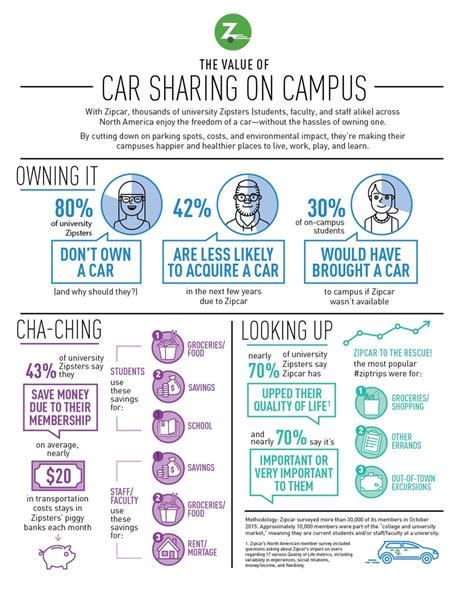
Zipcar and the University of California, Berkeley’s Transportation Sustainability Research Center (TSRC), released the findings of a first-of-its kind study of Zipcar car sharing on North American college and university campuses.
The results, which were vetted by a group of university administrators earlier this month, show that car sharing programs enable 30% of students who live on campus to leave their car at home, freeing up valuable real estate on campuses. Respondents also report saving money on transportation after joining and having the freedom to go “where they want, when they want,” according to a joint press release.
To view the report, click here.
“Traffic and the lack of parking are growing problems on college and university campuses as student car owners continue to outnumber available parking,” said Susan Shaheen, co-director, UC Berkeley TSRC. “This first-ever study of Zipcar car sharing on college and university campuses shows that implementing an on-campus car sharing program can help to alleviate these concerns and improve the well-being of students, faculty, and staff, providing greater accessibility and mobility without the burden of circling for a spot, feeding a meter, or obtaining a permit.”
More than 10,000 university students, faculty and staff participated in the survey, with students making up the bulk (90%) of the respondents. Key findings include:
Zipcar’s college and university members are freeing up precious campus space that could otherwise be used for classroom buildings, science labs and athletic fields.
The majority of members don’t own a car.
Taking advantage of other mobility options around campus.
Zipcar membership has directly improved quality of life and given members the freedom to go where they want, when they want.
Nearly 70 percent of university Zipcar members say Zipcar has improved their quality of life, and the same proportion say Zipcar is important or very important to them.
Experienced financial savings.
More Bus
People Movement: Dan Dipert Coaches Adds Third-Generation Leader, Keolis Names New Valley Metro VP/GM, and More
In this edition, we also cover recent appointments and announcements at the Wabtec, SilverRide, HNTB, and more, showcasing the individuals helping to shape the future of transportation.
Read More →
New York MTA Plans Largest Bus Fleet Upgrade in More Than a Decade
The agency is seeking manufacturers for 650 new CNG buses to replace aging vehicles, improve reliability, and advance its broader fleet modernization strategy.
Read More →
Building a Flexible Path to Transit Electrification
John Hroncich discusses BAE Systems’ modular and scalable approach, lessons learned from decades of real-world operations, and how agencies can identify electrification strategies that fit their fleets.
Read More →
Bus Tech Talk: Keeping Transit Technicians Ahead of the Technology Curve
LA Metro’s Obed Mejia discusses technician training, evolving maintenance technology, fleet replacement, and strategies for getting the most out of today’s transit fleets.
Read More →
Biz Briefs: RIPTA Unveils New Frontrunners, Clevland RTA Adds New Siemens, and More
In METRO's latest installment, we take a look at recent news from Siemens, Prevost, Dodge, and more partnerships making headlines across the transportation sector.
Read More →
People Movement: Holly Arnold Joins Transdev and More
In this edition, we also cover recent appointments and announcements at Pace, CamTran, MCI, and more, showcasing the individuals helping to shape the future of transportation.
Read More →
The High Cost of Transit Buses: Industry Leaders Look to Procurement Reform
Transit leaders and policymakers examine how standardized bus designs, streamlined procurement, and predictable funding could help agencies stretch budgets and deliver better service.
Read More →
The Business Voice Behind Public Transportation
As chair of APTA’s Business Members Board of Governors, Ray Melleady explains how more than 850 business members are partnering with transit agencies to advance funding, innovation, and industry-wide collaboration.
Read More →
From Surviving to Thriving: Building Stronger Transportation Organizations
Bus Business Consultants founder Brian Dickson shares lessons on leadership, organizational health, and creating options for long-term success in a changing transportation industry.
Read More →
Finding the ‘Happy Medium’: Optimizing Maintenance Without Sacrificing Reliability
The key to maintenance optimization isn’t doing less work—it’s doing the right work at the right time on the right assets.
Read More →