



Wash. agency adds Apollo surveillance system
The system, complete with digital video recorders and camera health and video management capabilities, will ensure C-TRAN officials have access to reliable, high-quality video footage for monitoring, and responding to events taking place on and around its vehicles.


Photo courtesy Jasondubya
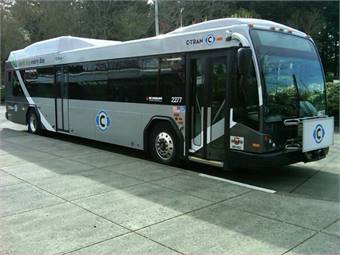
Photo courtesy Jasondubya
Vancouver, Wash.-based Clark County Public Transit Benefit Area Authority (C-TRAN) selected the RoadRunner on-board video surveillance system and Vehicle Information Management (ViM) Software from Apollo Video Technology for its fleet of fixed-route and paratransit vehicles.
The system, complete with digital video recorders (DVR) and camera health and video management capabilities, will ensure C-TRAN officials have access to reliable, high-quality video footage for monitoring, and responding to events taking place on and around its vehicles.
Apollo Video will complete the installation — funded in part by a Federal Transit Administration State of Good Repair Grant — by the end of 2014. The 12- and eight-camera systems will be installed on the interior and exterior of C-TRAN’s 88 fixed-route and 45 paratransit vehicles.
The ViM Software, accessible to authorized C-TRAN personnel, features seamless fleet-wide management of video and vehicle information with automatic downloading of video clips, tools for managing and classifying video events and access to on-board equipment, health notification and reports.
The move to Apollo Video equipment and ViM software comes as C-TRAN replaces its current DVR system to streamline the security process, cut down video inquiry time for C-TRAN supervisors and provide law enforcement with pertinent footage in response to incidents on-board C-TRAN vehicles, and in surrounding areas, in a timely manner. All future additions to the fleet will be equipped with the new system as well.
In addition, Apollo Video has been awarded a service contract to provide maintenance and additional services including fleet-wide system checks.
More Bus

New York MTA Plans Largest Bus Fleet Upgrade in More Than a Decade
The agency is seeking manufacturers for 650 new CNG buses to replace aging vehicles, improve reliability, and advance its broader fleet modernization strategy.
Read More →
Building a Flexible Path to Transit Electrification
John Hroncich discusses BAE Systems’ modular and scalable approach, lessons learned from decades of real-world operations, and how agencies can identify electrification strategies that fit their fleets.
Read More →
Bus Tech Talk: Keeping Transit Technicians Ahead of the Technology Curve
LA Metro’s Obed Mejia discusses technician training, evolving maintenance technology, fleet replacement, and strategies for getting the most out of today’s transit fleets.
Read More →
Biz Briefs: RIPTA Unveils New Frontrunners, Clevland RTA Adds New Siemens, and More
In METRO's latest installment, we take a look at recent news from Siemens, Prevost, Dodge, and more partnerships making headlines across the transportation sector.
Read More →
People Movement: Holly Arnold Joins Transdev and More
In this edition, we also cover recent appointments and announcements at Pace, CamTran, MCI, and more, showcasing the individuals helping to shape the future of transportation.
Read More →
The High Cost of Transit Buses: Industry Leaders Look to Procurement Reform
Transit leaders and policymakers examine how standardized bus designs, streamlined procurement, and predictable funding could help agencies stretch budgets and deliver better service.
Read More →
The Business Voice Behind Public Transportation
As chair of APTA’s Business Members Board of Governors, Ray Melleady explains how more than 850 business members are partnering with transit agencies to advance funding, innovation, and industry-wide collaboration.
Read More →
From Surviving to Thriving: Building Stronger Transportation Organizations
Bus Business Consultants founder Brian Dickson shares lessons on leadership, organizational health, and creating options for long-term success in a changing transportation industry.
Read More →
Finding the ‘Happy Medium’: Optimizing Maintenance Without Sacrificing Reliability
The key to maintenance optimization isn’t doing less work—it’s doing the right work at the right time on the right assets.
Read More →
LA Metro, City of West Hollywood, and Partners Advance Smarter Bus Lane Enforcement
The award-winning partnership combines AI-powered detection with human oversight to improve bus reliability, accessibility, and enforcement efficiency.
Read More →