




RELATED: Detroit's SMART installing digital bus stops along main corridor
West Hollywood's 'smart' bus shelter, stop loaded with tech amenities
Both prototypes include innovative interactive features, such as Wi-Fi and USB charging ports.
May 6, 2019
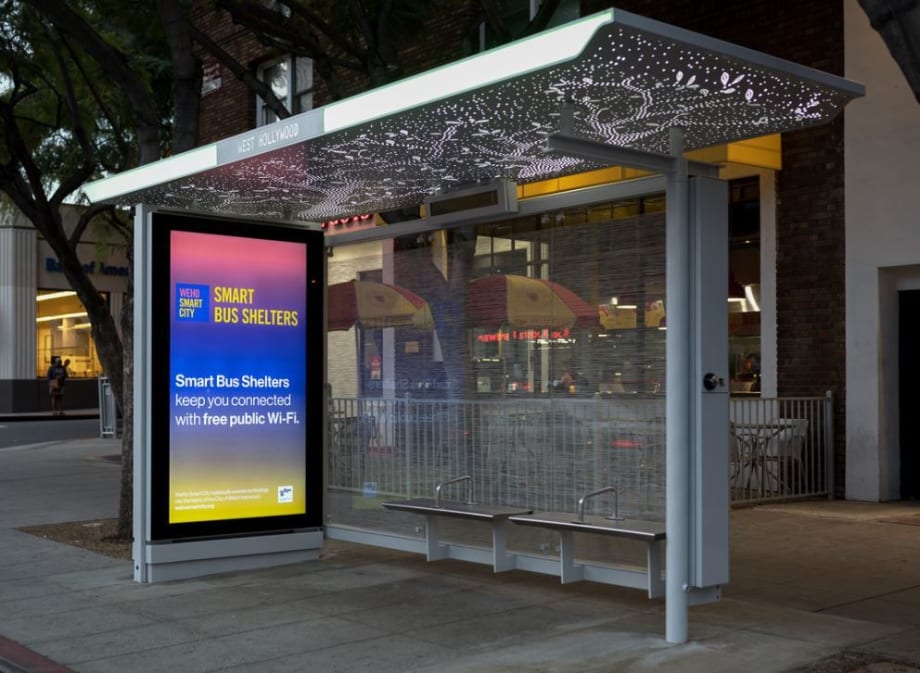
The city of West Hollywood, California's, new "smart" bus shelter incorporates an ADA Wheelchair Zone and its ambient ceiling lighting was designed to look as if standing underneath a leafy tree canopy.
West Hollywood
2 min to read
The city of West Hollywood, California's, new "smart" bus shelter incorporates an ADA Wheelchair Zone and its ambient ceiling lighting was designed to look as if standing underneath a leafy tree canopy.
West Hollywood
With the goal of enhancing urban design and promoting the use of public transit options, such as Los Angeles' Metro and the local shuttle service, the city of West Hollywood, California, has installed two prototype "smart" bus shelters/stops.
The Smart Bus Shelter prototype features a large shade canopy, integrated seating with enhanced armrests, and vibrant digital and print advertising and public service announcement panels. The shelter incorporates an ADA Wheelchair Zone and its ambient ceiling lighting was designed to look as if standing underneath a leafy tree canopy.
The Smart Bus Stop prototype accommodates existing trees and space constraints in the public right-of-way where a bus shelter cannot fit. The prototype features a freestanding feature-rich bus stop kiosk and adjacent ergonomic wood bench seating with armrests.
Both prototypes, located on Santa Monica Boulevard, equipped with innovative interactive features, such as:
Visual real-time bus arrival information on a digital text screen
Audio real-time bus arrival information operated by push button aimed at assisting people with vision impairment
Bus stop street name with six-inch letter height
USB charging ports
Wi-Fi
Energy-efficient LED edge lighting
The City of West Hollywood’s Smart bus shelters/stops project integrates existing infrastructure and adds technology that people rely on while getting around; the project reimagines the digital urban experience. This project is a public private partnership between the city of West Hollywood and Outfront Decaux Street Furniture LLC.
Following a period of testing and refinement of the two prototypes, a citywide rollout of the new bus shelters/stops is anticipated throughout 2019 and early 2020.
More Bus

New York MTA Plans Largest Bus Fleet Upgrade in More Than a Decade
The agency is seeking manufacturers for 650 new CNG buses to replace aging vehicles, improve reliability, and advance its broader fleet modernization strategy.
Read More →
Building a Flexible Path to Transit Electrification
John Hroncich discusses BAE Systems’ modular and scalable approach, lessons learned from decades of real-world operations, and how agencies can identify electrification strategies that fit their fleets.
Read More →
Bus Tech Talk: Keeping Transit Technicians Ahead of the Technology Curve
LA Metro’s Obed Mejia discusses technician training, evolving maintenance technology, fleet replacement, and strategies for getting the most out of today’s transit fleets.
Read More →
Biz Briefs: RIPTA Unveils New Frontrunners, Clevland RTA Adds New Siemens, and More
In METRO's latest installment, we take a look at recent news from Siemens, Prevost, Dodge, and more partnerships making headlines across the transportation sector.
Read More →
People Movement: Holly Arnold Joins Transdev and More
In this edition, we also cover recent appointments and announcements at Pace, CamTran, MCI, and more, showcasing the individuals helping to shape the future of transportation.
Read More →
The High Cost of Transit Buses: Industry Leaders Look to Procurement Reform
Transit leaders and policymakers examine how standardized bus designs, streamlined procurement, and predictable funding could help agencies stretch budgets and deliver better service.
Read More →
The Business Voice Behind Public Transportation
As chair of APTA’s Business Members Board of Governors, Ray Melleady explains how more than 850 business members are partnering with transit agencies to advance funding, innovation, and industry-wide collaboration.
Read More →
From Surviving to Thriving: Building Stronger Transportation Organizations
Bus Business Consultants founder Brian Dickson shares lessons on leadership, organizational health, and creating options for long-term success in a changing transportation industry.
Read More →
Finding the ‘Happy Medium’: Optimizing Maintenance Without Sacrificing Reliability
The key to maintenance optimization isn’t doing less work—it’s doing the right work at the right time on the right assets.
Read More →
LA Metro, City of West Hollywood, and Partners Advance Smarter Bus Lane Enforcement
The award-winning partnership combines AI-powered detection with human oversight to improve bus reliability, accessibility, and enforcement efficiency.
Read More →