
Metro Magazine

 MENU
MENU SEARCHMENUSEARCH
The company converted all of its shuttle buses to biodiesel at airport locations within five miles of a biodiesel fueling station. Overall, more than 70% of its buses now run on biodiesel, with approximately 50% using 5% biodiesel (B5) and more than 20% using B20.
Read More →Key initiatives highlighted include bringing the region’s system to a state of good repair; expanding real-time bus and train arrival information; modernizing fare payment systems; expanding technical assistance and funding efforts related to TOD; studying and piloting more efficient locomotives, trains and buses; and installing additional pollution control technologies on buses and trains.
Read More →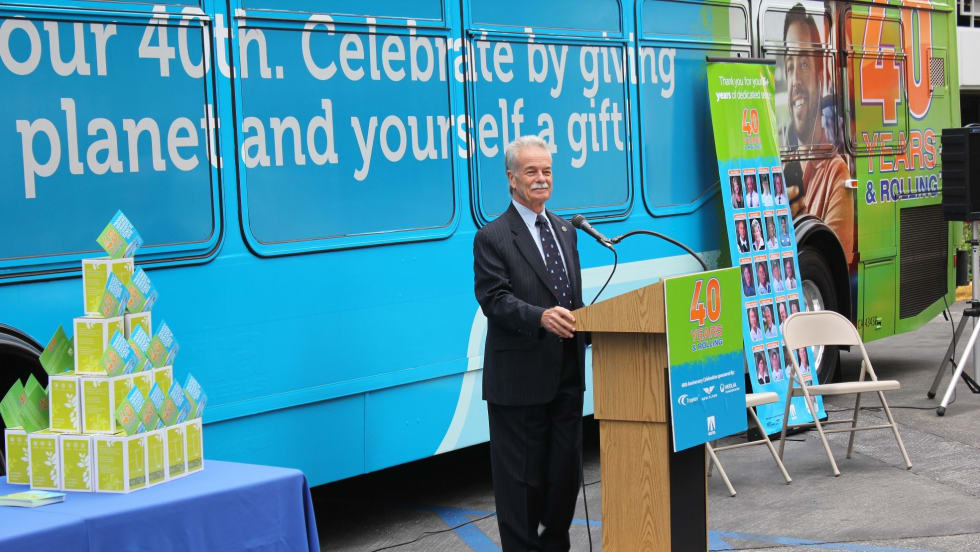
Began bus service in 1972 with eight buses along three routes. Forty years later, the agency operates a fleet of 550 buses along 77 routes throughout Orange County, California.
Read More →New program to allow buses to travel on the shoulders of selected highways in times of heavy traffic congestion to help maintain transit schedules and bypass problem areas. They would only be allowed to use the shoulders when travel speed in the highway lanes fell below 35 miles per hour.
Read More →Touts revisions of new business plan and urges state Legislature to immediately approve funding for the project.
Read More →At least 100 buses a day visit the area leading to double-parking, blocked driveways, sideswiping of parked cars and slow moving buses to accommodate photo-taking.
Read More →The joint venture between the Utah Transit Authority, Summit County and Park City only averaged only about 38% ridership. It needed to hit 90% to break even. However, officials are committed to the route for at least one more year.
Read More →While at the coffee bar, I was approached by a transit professional who asked where I thought it was safer to place bus stops, at the nearside or farside of an intersection? We agreed that agencies, over the years for safety reasons, have been favoring the farside bus stops as opposed to the nearside stops.
Read More →With the recent federal shutdown of 26 bus companies, it appears that the era of the Chinatown bus has come to a close. Fast Company magazine weighs in on what these companies did wrong and what they did right.
Read More →The Ohio Department of Transportation’s new Ohio Transit Preservation Partnership Program will enable the agency to buy five of these vehicles, which have advanced thermal cooling systems that provide a cost savings of $2,000 a year in fuel savings and improved operational performance per bus.
Read More →