
Metro Magazine

 MENU
 SEARCHMENUSEARCH
Loading data...

The measure, known as TEA-LU, authorizes $52.3 billion in guaranteed funding for the federal transit program.
Read More →

Implementation is mandated for all rail providers by 2015 by the federal Rail Safety Improvement Act.
Read More →Sen. Charles Schumer called for Congress to renew the federal tax break that allows workers to use up to $230 a month of their salaries for transit costs. Nearly 3 million commuters nationwide take advantage of the benefit.
Read More →Updated federal safety regulations is the main culprit for the delay, in addition to weather and the timetable for delivery of M-1's streetcars.
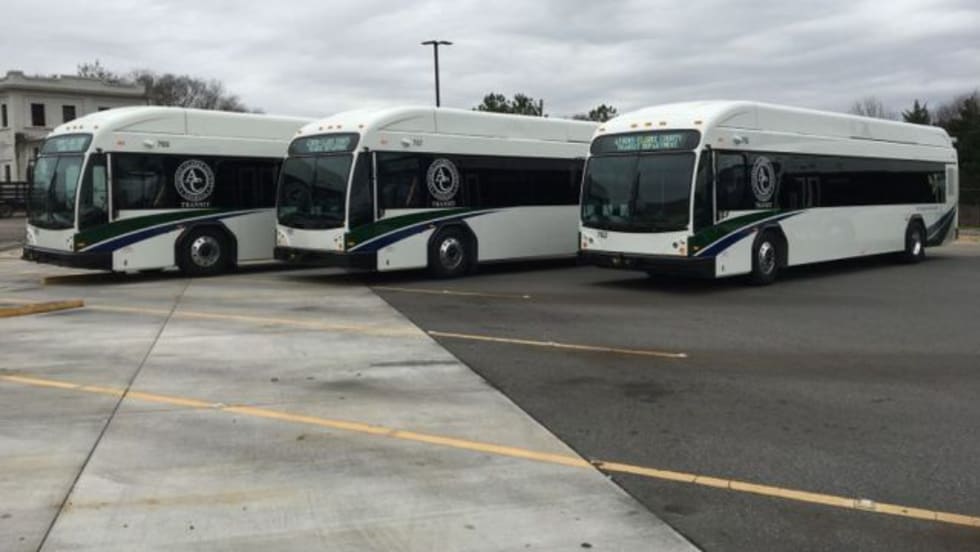
Read More →Purchased with a combination of local, state, and federal funds for $8.4 million, the new Athens-Clarke County Transit buses will replace 12 older buses that have exceeded their useful lifespan and are experiencing increased operating and maintenance costs.
Read More →Washington Metropolitan Area Transit Authority (Metro) and Belgian bank, KBC Group, reached a settlement, ending a long-term leasing deal after nearly three days of talks in federal court.
Read More →New bus facility will cost an estimated $4.2 million. About $2.2 million in federal funds were awarded to MAX in 2006 and 2007 and will fund the first two phases of the project.
Read More →Greater Lynchburg Transit Co. is responding to the university’s concerns over possibly getting shortchanged on its share of federal and state subsidies provided to the agency. Both sides agreed to work on a simpler approach to determine costs.
Read More →Milwaukee protesters gathered again, this time at City Hall, to oppose Gov.-elect Scott Walker’s decision to rescind federal high-speed rail funds. They are demanding job creation alternatives.
Read More →Eighty percent of private sector businesses indicated that the level of federal investment in public transportation has a large influence on business revenue. Survey also showed that if federal surface transportation authorization is further delayed, 84 percent of respondents predict revenue losses, 50 percent may need to lay off employees and 49 percent may implement hiring freezes.
Read More →