
Metro Magazine

 MENU
 SEARCHMENUSEARCH
Loading data...

Campus Connections’ new service helps students get home for the holidays and other breaks. A former motorcoach driver for Northfield Lines who now works for Campus Connections came up with the idea, saying he wanted to help students attending smaller schools in smaller towns.
Read More →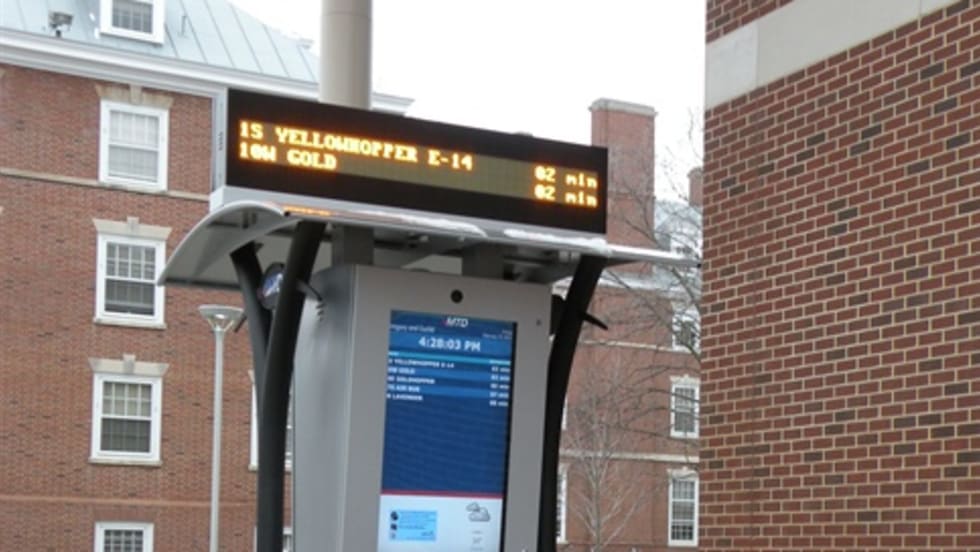


Five information kiosks, displaying scheduled bus arrivals, anticipated wait times and re-routes, are currently in operation along routes on campus. The transit district will eventually install 22 kiosks.
Read More →The university started planning for the Weekend Circulator in December in an effort to increase safety after several violent crimes occurred on and near campus. Running the service during the spring semester will cost about $125,000.
Read More →Changed to Connect Transit. Added amenities such as bathrooms and a covered building. Repainting buses with the new name and offering a real-time arrival information app.
Read More →The former driver, who was fired two years before, pleaded guilty to receiving and concealing stolen property — a lesser offense than what he was charged with — in October. He is scheduled to be sentenced next month.
Read More →As part of its Bongo transportation project, the University of Iowa recently installed a number of monitor screens featuring real-time arrival information for Cambus and Iowa City Transit across the city and the campus.
Read More →The new bus is part of the university’s Safe Ride Home program. It will be able to carry 13 riders at a time, more than double the number of riders that the program’s minivans can carry.
Read More →In addition to the $1.5 million The COMET will receive from the contract, it is estimated that close to a million passenger trips will be added to The COMET transit system and the Columbia Urbanized Area, as well as an additional 250,000 revenue vehicle miles.
Read More →The university has developed a proposal to bring in bids from potential contractors for a shuttle system to be paid for with student fees.
Read More →The Tompkins Consolidated Area Transit reportedly sees an annual deficit of more than $700,000, partially caused by an increase in first-year students who use the service, which has driven down the subsidy amount the agency receives per student.
Read More →