



How the Tokyo Metro Handles Rush Hour to Operate On Time
To help alleviate the crowding during rush hour, the company developed a promotion that incentivized people to use the train during off-peak hours instead
Bobby Van Der List
Bobby Van Der List
Tokyo Metro is responsible for transporting eight million people on a daily basis. The metro company of the Japanese capital ranks third on the list of largest metro companies, in terms of passenger numbers, stations, and the total length of railway tracks — just behind New York and Paris. With the responsibility of having to operate on such a grand scale, time is of the essence.
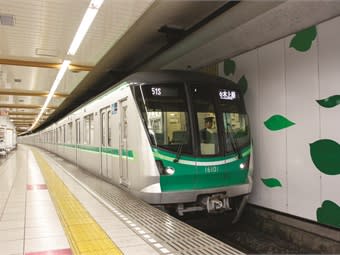
The most common means of transportation in Tokyo is the subway, which is operated by two independent companies, Toei Subway and the aforementioned Tokyo Metro. The metro network consists of 13 lines, with the Toei Subway operating four and the Tokyo Metro responsible for nine lines, which are 120-plus miles in length.
Prioritizing punctuality
One of the greatest challenges for Tokyo Metro is to ensure they keep up with their image as one of the most punctual transportation companies in the world. Keeping delays to a minimum is priority number one, says Tokyo Metro’s Public Relations Manager Noboru Ishikawa.
According to Ishikawa, keeping delays to a minimum is crucial considering the enormous number of people that depend on Tokyo Metro’s services. Few people in Tokyo use a car to commute to and from work. The latter is reflected by the headways.
“Depending on the line, the headways are five minutes on average. The shortest headway is one minute and 50 seconds in the morning during rush hour,” Ishikawa explains.
That begs the question, how do they deal with delays?
“Because we work with different transportation companies, we have to deal with our own issues as well as theirs,” says Ishikawa. “If there is one issue, all cars are affected. Essentially, we slow down the pace of the car in the back, as well as the car in front. We try to even out the delay over the total number of the trains on the track.”
Changing behavior
Rather than trying to resolve delays, Tokyo Metro has initiated campaigns to prevent them from happening in the first place. Around 10 years ago, the rail company launched a campaign with the aim to change people’s behavior.
“Back then, the board was struggling with the ever-increasing number of passengers during rush hour [7 a.m. to 10 a.m.],” Ishikawa explains.
To help alleviate the crowding during peak hours, the company developed a promotion that incentivized people to use the train during off-peak hours instead. Hajaoki, as the campaign is called, is the Japanese term for “to wake up early.”
“So now, people can earn points based on how many hours they take the train before or after rush hour — the further away, the more points they collect,” Ishikawa says.
For example, once you have earned 250 points, which takes about a month to collect, a passenger can apply for a lottery to win 10,000 yen, around $90. “We might change the way we do it,” Ishikawa says. “But, we know that when people can save money, they will try to change their behavior. Otherwise, it is difficult and we get fewer results.”
Another challenge Tokyo Metro is facing, is how to handle the increase of tourists visiting Tokyo in 2020 when the Japanese capital will host the Summer Olympic Games.
Tozai Line
At the moment, the Hajaoki campaign is only valid for the Tozai line, running from Chiba (East of Tokyo) to central Tokyo. Considering the extremely high rent prices in central Tokyo, many Tokyoites moved out of central Tokyo to suburbs such as Chiba. As a consequence, huge crowds need to commute from Chiba to central Tokyo each morning. During rush hour, an estimated 480,000 people take the Tozai Line. So far, 15,000 people have signed up for the Hajaoki campaign.
When asked whether the Tokyo Metro company is satisfied with the results of the campaign and if it’s had a significant impact on people’s behavior, Ishikawa says, “That is difficult to say. So far, a relatively small number of people have signed up.”
It won’t always be necessary implement this peak hour deterrent. Tokyo Metro will only activate it in winter months between December and February, he explains. “This is the time people wear more clothes, so trains get more crowded. Even though there aren’t much more people using the metro, thicker clothes make the trains fuller, which can lead to dangerous situations,” Ishikawa says.
Control room reality
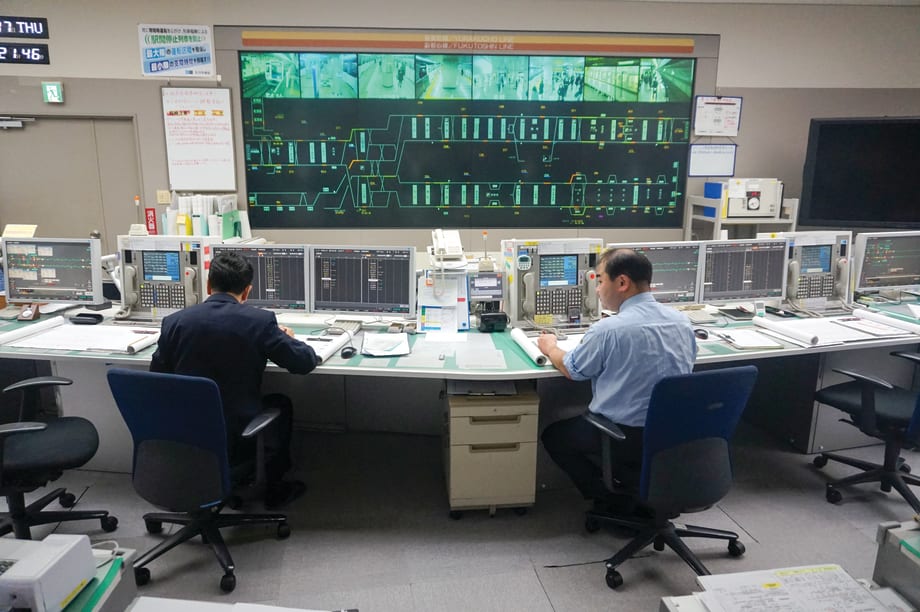
A visit to the company’s control room gives a detailed visual overview of the various lines, with the largest screen devoted to the Tozai line. Figures in red suggest delays, while the green numbers indicate trains that are ahead of schedule. The latter of which gives Tokyo Metro the room to even out delays on the different trains on each line, in case a delay occurs for one train. The control room displays show how the dwell times can vary per line.
“Usually dwell times are less than a minute. But less crowded stations have dwell times of 15 seconds, which is typically during the day,” Ishikawa says. “But in central Tokyo that is unrealistic, here dwell times are more likely to be one minute.”
Large-scale events
Another challenge Tokyo Metro is facing, is how to handle the increase of tourists visiting Tokyo in 2020 when the Japanese capital will host the Summer Olympic Games. “We visited London two years ago already, because it is comparable to Tokyo, more so than Rio,” says Ishikawa.
Unlike London, the Tokyo Metro is faced with the lack of barrier-free routes inside stations.
“We want to have at least one barrier-free route per station. Therefore, we will need at least one elevator per station,” he says. Although most of the stations have a stairlift to accommodate people with disabilities using mobility devices, it takes a lot of time to assist people using it, Ishikawa explains. “So, it is easier if an elevator can be used instead to save station staff time.”
Language can be another issue for Tokyo Metro during the Olympics. Although the company is working hard on language training for the station staff, there are still concerns that there might be difficulties providing information to customers. To amend this, Tokyo Metro plans on increasing the visibility of pictograms inside stations and their metros. “So we can make it clearer how to lead people in the right direction, or inform them about restrooms, or other public facilities,” Ishikawa says.
This story originally appeared in April 2017
More Rail

USDOT Awards $416 Million for Florida Rail Crossing Safety Upgrades, New Brightline Station
The projects aim to reduce risks for motorists and pedestrians at rail crossings while expanding passenger rail access along Florida’s Space Coast.
Read More →
OCTA Declares Emergency to Protect Rail Corridor From Coastal Erosion
The California agency is accelerating shoreline protection and plans to place approximately 690,000 cubic yards of sand along the San Clemente coast to protect a key passenger and freight rail link.
Read More →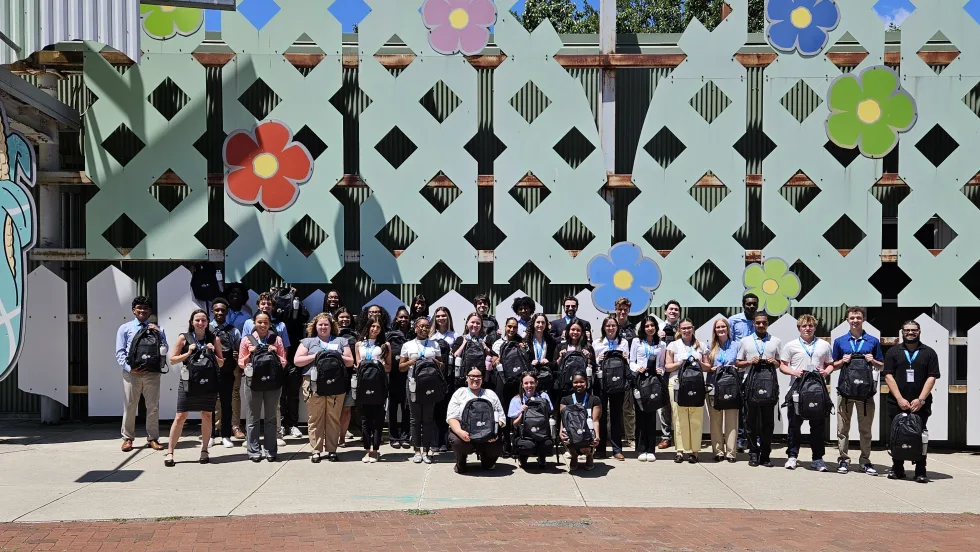
More Than a Summer Job: Building the Next Generation of Transit Talent
The Delaware River Port Authority and PATCO have transformed their internship program into a hands-on professional development experience that introduces students to the breadth of transportation careers — and creates a pipeline for future employees.
Read More →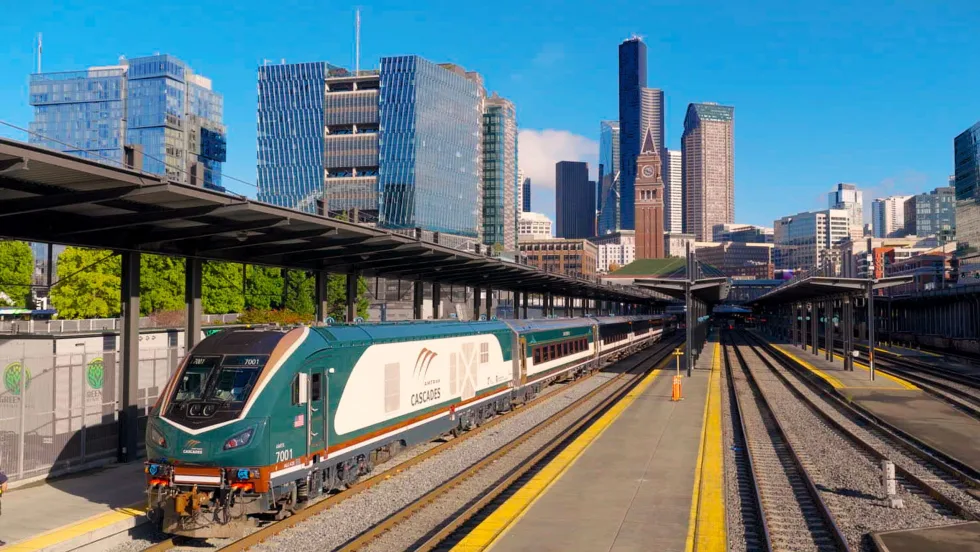
Airo Trains Make Their Amtrak Cascades Debut in the Pacific Northwest
Effective immediately, two cutting-edge Airo trainsets will join the Amtrak Cascades route, operating four daily trips between Vancouver, B.C., Seattle, Portland, and Eugene, Oregon, marking the first introduction of Airo trains into passenger service anywhere in the country.
Read More →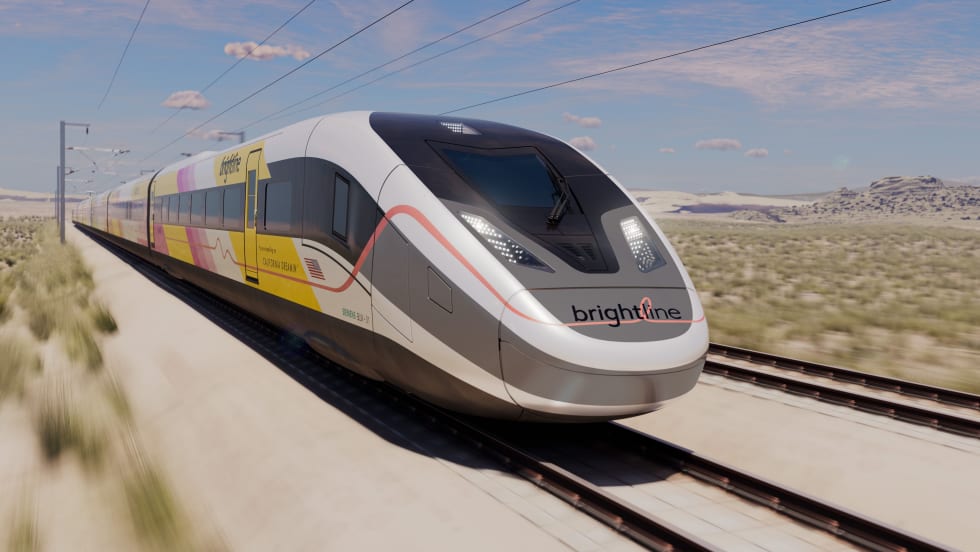
Florida's Brightline Announces Financial Restructuring
Brightline Florida says train operations will continue as normal as certain parent entities enter Chapter 11 and financial stakeholders provide $490 million in new long-term capital.
Read More →
ENC Lands MATA Contract and More in Biz Briefs
In this edition of Biz Briefs, we spotlight the latest developments shaping the future of mobility.
Read More →
Strada360’s Steve Lassey on Turning Transit Data Into Better Decisions
From breaking down data silos to preparing for AI, Strada360 CEO Steve Lassey discusses how transit agencies can use technology to improve operations, customer information, and long-term decision-making.
Read More →
SEPTA Details Accelerate Vision for Transit System
The plan outlines investments in trolley modernization, new Metro and Regional Rail vehicles, accessible stations, and more frequent bus and rail service.
Read More →
FTA Ends Direct Oversight of MBTA Safety Actions
The federal agency closed its remaining special directive to the Massachusetts Department of Public Utilities following a safety review that began in 2022.
Read More →
Amtrak, CN Reach Agreements to Strengthen Passenger Rail Service, Safety
The agreement resolves a more than decade-long proceeding before the Surface Transportation Board concerning the terms and conditions for Amtrak services, such as the City of New Orleans, Illini/Saluki, and Wolverine.
Read More →