



Sonoma County Strengthens Commitment to CNG with New Fleet
With intercity routes forming the core of the agency's route network, the new fleet features high-back reclining seats and Wi-Fi.


Photo by Shelby Erickson
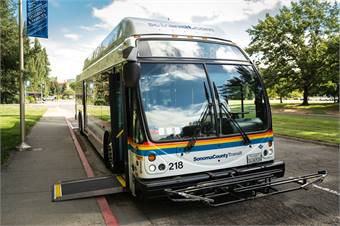
Photo by Shelby Erickson
Northern California-based Sonoma County Transit has been at the forefront of alternative-fuel use since 1996, when it began deploying compressed natural gas (CNG) vehicles. While the use of CNG has been more prevalent in other parts of the state, most notably Southern California, the San Francisco Bay Area has been an exception, says SCT Transit System Manager Bryan Albee.
“As far as I know, we are the only operator, albeit a smaller operator, that runs an all-natural gas fleet,” Albee says.
To that end, earlier this year, the transit agency took delivery of nine CNG-fueledElDorado National-California Axess model buses — the first deliveries of a multi-year contract sold through Creative Bus Sales.
The new 40-foot model buses, which were placed into service in April, feature state-of-the-art electronic equipment such as a Next Bus/Next Stop integrated voice announcement system and automatic passenger counter. The buses also include high-back, reclining passenger seats, overhead parcel racks with individual reading lights and onboard WiFi.
“Intercity routes form the core of Sonoma County Transit’s route network, which serves a mix or rural, suburban and urban communities. Many passenger trips are in excess of forty-five minutes in length, so the new Axess bus’ [amenities] are welcomed by our passengers,” Albee says.
Natural gas fleet
Fixed-route service is provided with 45 heavy-duty CNG coaches and four gasoline-powered, minibuses that operate on rural-area routes. SCT began its CNG bus program in 1996 with the purchase of 15 40-foot Orion V buses. By 2006, the heavy-duty fleet made the transition to natural gas, as all diesel buses were retired, Albee explains.
SCT operates within the jurisdiction of two air districts, the Bay Area Air Quality Management District and the Northern Sonoma County Air Pollution Control District, which in the mid-1990’s supported the agency’s transition to CNG with grant funding programs that encouraged the replacement of diesel buses with natural gas buses, Albee explains.
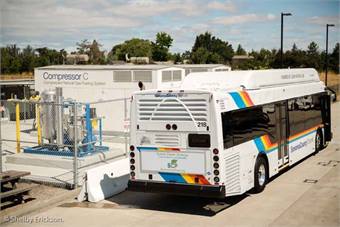
The use of natural gas has providedSCT a considerable cost savings.
“The availability of air district funding, the lower cost of fuel and the positive environmental aspects of natural gas, led to Sonoma County Transit’s move to natural gas buses in the mid 1990’s,” he says.
Prior to delivery of its original 1996 CNG fleet, the agency built a natural gas fueling facility consisting of two natural gas-powered 300scfm compressors and a 20-post slow-fill fueling island. In March, 2014, construction of a second slow-fill island, containing 30 fuel posts, was completed. The new slow-fill island is powered by two natural gas-powered 450scfm compressors. Combined, Sonoma County Transit’s four compressors can fuel over 100 buses overnight and provide sufficient “fueling redundancy” to ensure that no service interruptions will occur due to having a compressor down for maintenance, Albee says.
In recent years, the use of natural gas has provided Sonoma County Transit a considerable cost savings, according to Albee. Taking advantage of the low cost of natural gas and a Federal incentive program for the use of natural gas as a vehicle fuel, SCT’s net natural gas fuel cost for 2012 was less than $20,000.
“We procure our own gas and we keep the costs down to a fraction of what it would be by other means,” Albee says.
Future initiatives
SCT was established in July 1980 to provide intercity transit service linking the County’s nine incorporated cities with Santa Rosa, the County seat. In addition to intercity service, SCT is the local transit provider for the cities of Rohnert Park, Cotati, Sebastopol, Sonoma/Sonoma Valley, Windsor, Healdsburg and the Russian River communities of Rio Nido, Guerneville and Monte Rio. The transit agency’s service area covers over 390 square miles and has a population of 493,000 residents.
In late 2016, commuter rail service is expected to begin that will serve Sonoma and Marin Counties. The service, which will be operated by the Sonoma Marin Area Rail Transit District (SMART), will initially operate between downtown San Rafael and the Sonoma County Airport, north of Santa Rosa. In addition to Sonoma County Transit, local bus operators Santa Rosa CityBus and Petaluma Transit, are working with SMART to ensure that coordinated schedules and fare policies are in place prior to startup, Albee says. “I suspect that over the first year of operation we’ll go through some changes to fine tune the service,” he adds.
In addition to the rail service, 2016 will also see the local introduction of the Bay Area’s Clipper Card. The Clipper Card is a program of the Metropolitan Transportation Commission and offers a one-pass fare payment option for the region’s multi-modal transit systems including bus, ferry and rail operators.
More Technology
California Law Extends AC Transit’s Bus Lane Camera Enforcement
The new law allows AC Transit to continue using forward-facing bus cameras to enforce parking violations in bus-only lanes and at bus stops.
Read More →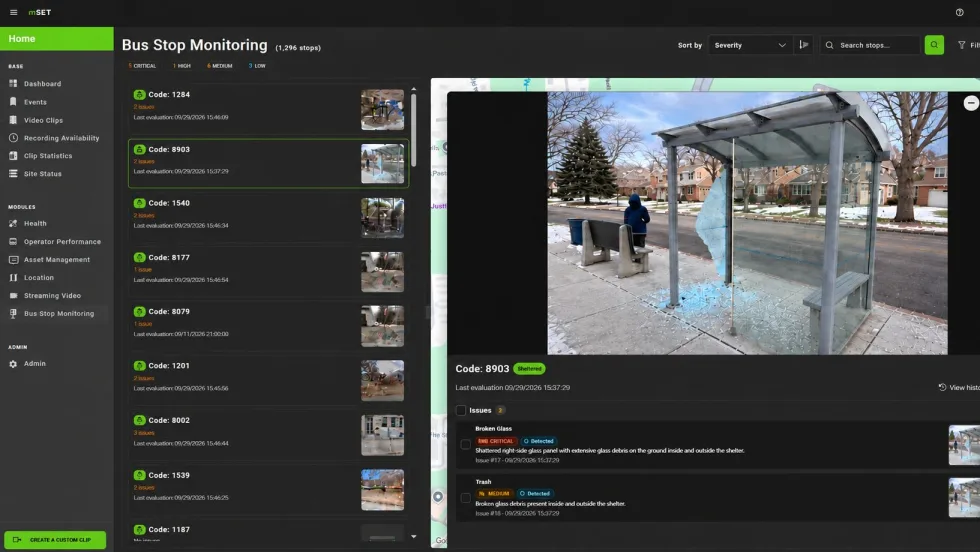
Biz Briefs: Luminator Launches AI Technology to Monitor Bus Stop Conditions and More
In METRO's latest installment, we also take a look at recent news from Masabi, Troman Industries, ioki, CCW, and more partnerships making headlines across the transportation sector.
Read More →
Public Transit Conference Returning to GFX in 2027, Call for Papers Now Open
The Call for Papers is now open, allowing transit agency professionals and industry experts to help shape the PTC educational program by submitting session ideas for consideration.
Read More →

ENC Lands MATA Contract and More in Biz Briefs
In this edition of Biz Briefs, we spotlight the latest developments shaping the future of mobility.
Read More →
Strada360’s Steve Lassey on Turning Transit Data Into Better Decisions
From breaking down data silos to preparing for AI, Strada360 CEO Steve Lassey discusses how transit agencies can use technology to improve operations, customer information, and long-term decision-making.
Read More →
Almaviva Looks to Open Architecture to Advance Transit Technology
Eric Reese discusses how interoperability, open architecture, and modular design can help transit agencies control costs, reduce vendor lock-in, and upgrade technology without starting over.
Read More →
Driving Smarter Paratransit
John Hanlon shares how AlphaRoute is leveraging AI-powered technology to help paratransit providers optimize operations, support frontline staff, and enhance the rider experience.
Read More →
From Hardware to Digital Partner: Luminator Charts Its Next Chapter
CEO Magnus Friberg discusses Luminator’s shift toward becoming a digital partner, the growing importance of software and interoperability, and how AI can help agencies improve operations and passenger experience.
Read More →
Beyond the Checklist: A Structured Approach to Transit Maintenance
Reliability-Centered Maintenance helps transit agencies move beyond routine checklists to focus limited resources on the assets and failures that have the greatest impact on safety, reliability, and service.
Read More →
NJ TRANSIT Advances Bus Technology Upgrades Across Statewide Fleet
More than 1,500 buses now feature upgraded technology designed to improve arrival predictions and provide free Wi-Fi, with deployment expected to reach nearly 2,000 buses by the end of 2026.
Read More →