




Related: How Transit Systems Are Embracing Smarter, Cleaner, and More Convenient Interfaces
Smith System Launches Trainer Center to Scale Fleet Safety Programs
The new hub digitizes trainer-led safety programs, reducing admin work and giving fleets clearer insight into driver behavior.
February 2, 2026
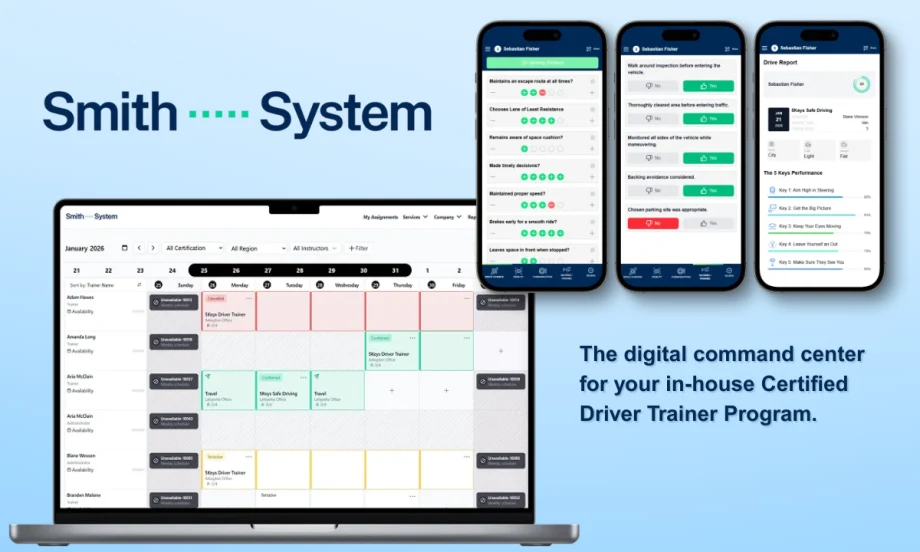
Trainer Center centralizes scheduling, assessments, documentation, and reporting while digitizing behind-the-wheel observations and Smith5Keys scorecards.
Credit: Smith System/METRO
2 min to read
Smith System, a provider of driver risk management solutions and the originator of the Smith5Keys, recently announced the launch of Trainer Center, a new digital platform designed to modernize and scale its Smith System Certified Trainer Program.
According to the company, Trainer Center addresses long-standing operational challenges fleets face when running trainer-led safety programs. “Most fleets were not failing at training,” said Rebecca Oistad, vice president of marketing at Smith System. “The main problem is that most do not use a consistent program to manage their training. As such, the breakdowns in driver training are operational, not philosophical.”
Trainer Center centralizes scheduling, assessments, documentation, and reporting while digitizing behind-the-wheel observations and Smith5Keys scorecards. The goal, according to Smith System, is to reduce administrative burden and improve visibility into driver behavior and program effectiveness.
“Fleets don’t struggle with commitment to safety — they struggle with running safety programs at scale with consistent execution and real visibility,” said Derek Dunaway, CEO of Smith System.
Dunaway described Trainer Center as “the missing operating layer that turns trainer-led instruction into a connected system — capturing assessments, producing Smith5Keys-based driver scorecards, and creating the insights safety leaders need to coach proactively and reduce risk over time.” The platform also provides dashboards and reporting tools that track trends by driver, trainer, location, or fleet, shifting training from one-time events to an ongoing risk management process.
Trainer Center provides dashboards and reports that show:
Which drivers have been trained, assessed, or coached.
How drivers are performing against specific Smith5Keys behaviors.
Trends by trainer, location, cohort, or time period.
Where risk is improving and where additional coaching is needed.
“Scores, comments, and coaching notes automatically flow into a driver’s scorecard,” Oistad explained. “That creates an immediate feedback loop: trainers can clearly show drivers what behaviors need to change and why, then reinforce those behaviors consistently over time.”
“This is not about replacing trainers — it’s about enabling them,” Dunaway added. “Great trainers create behavior change. Trainer Center gives them the tools to run programs more efficiently, document them consistently, and clearly demonstrate results.”
More Technology

From Hardware to Digital Partner: Luminator Charts Its Next Chapter
CEO Magnus Friberg discusses Luminator’s shift toward becoming a digital partner, the growing importance of software and interoperability, and how AI can help agencies improve operations and passenger experience.
Read More →
Beyond the Checklist: A Structured Approach to Transit Maintenance
Reliability-Centered Maintenance helps transit agencies move beyond routine checklists to focus limited resources on the assets and failures that have the greatest impact on safety, reliability, and service.
Read More →
NJ TRANSIT Advances Bus Technology Upgrades Across Statewide Fleet
More than 1,500 buses now feature upgraded technology designed to improve arrival predictions and provide free Wi-Fi, with deployment expected to reach nearly 2,000 buses by the end of 2026.
Read More →

Building a Flexible Path to Transit Electrification
John Hroncich discusses BAE Systems’ modular and scalable approach, lessons learned from decades of real-world operations, and how agencies can identify electrification strategies that fit their fleets.
Read More →
Biz Briefs: Alstom Lands Canadian Contract, LYT to Supply California TSP, and More
In METRO's latest installment, we take a look at recent news from Complete Coach Works, Beep, FlixBus, and more partnerships making headlines across the transportation sector.
Read More →
Sponsored•September 8, 2026
From Legacy Silos to Conversational Intelligence
What if transit leaders could ask any operational question and get a trusted answer in seconds? Conversational AI is transforming how agencies use their data.
Read More →
USDOT Announces Rail Vehicle Replacement Grants, Chattanooga AV Shuttle Funding
More than $191 million in federal funding will help three transit agencies replace aging rail vehicles and support a new autonomous shuttle service in Chattanooga.
Read More →
Bus Tech Talk: Keeping Transit Technicians Ahead of the Technology Curve
LA Metro’s Obed Mejia discusses technician training, evolving maintenance technology, fleet replacement, and strategies for getting the most out of today’s transit fleets.
Read More →
Biz Briefs: RIPTA Unveils New Frontrunners, Clevland RTA Adds New Siemens, and More
In METRO's latest installment, we take a look at recent news from Siemens, Prevost, Dodge, and more partnerships making headlines across the transportation sector.
Read More →
Why Simulating Pedestrian Movement Has Become Essential for Modern Rail Stations
Pedestrian microsimulation is helping rail planners identify bottlenecks, test station designs, and prepare complex transit hubs for growing passenger volumes.
Read More →