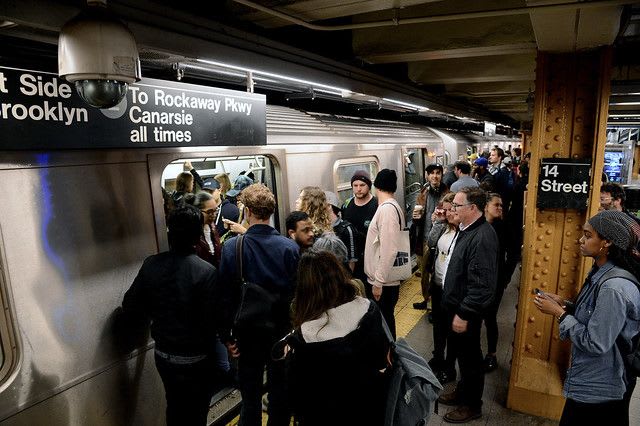
NY MTA/NYCT's L Line (pictured) was the first line in the system to feature automated train operation.
Marc A. Hermann/MTA NYCT
2 min to read
NY MTA/NYCT's L Line (pictured) was the first line in the system to feature automated train operation.
Marc A. Hermann/MTA NYCT
MTA New York City Transit announced that it completed the implementation of “automatic train operation," a technology that helps enable faster and more reliable service, on the Flushing 7 Line in Queens. It is the second such line in the system, after the L line.
The news comes just months after the introduction of a modern, computerized signaling system called Communications Based Train Control (CBTC) on the line that has already led to dramatic increases in on-time performance and other metrics associated with good service. Automatic Train Operation (ATO) is expected to further improve customer commutes on the line.
Ad Loading...
Under manual train operation, individual train operators with varying degrees of experience and confidence control the rates of speed including braking and acceleration.
Under ATO, the train is programmed to automatically provide optimal acceleration, braking and cruising speeds, providing more regular and evenly spaced service and smoother, faster trips. Operators continue to instruct the train to depart a station, make sure that tracks are clear throughout the ride, and control emergency braking in the case of obstacles.
Since CBTC was installed in December 2018, service has improved steadily each month.
ATO and CBTC have also helped NYC Transit increase the number of peak trains per hour on the line, to 29 from 25-27, providing service for an additional 2,400 to 4,800 people per hour.
On-time performance numbers have gone from 74.7% the month before CBTC was installed to 91.% in March 2019. A year ago in March 2018, on-time performance was just 55.5%.
Ad Loading...
In November 2018, service delivered (the percentage of scheduled trains that are actually provided during peak hours) on the line was 89.3%. The month after CBTC was installed it rose to 95%, increasing further to 96.8% in March.
Major incidents, or those that delay 50 or more trains, have also decreased drastically. There were an average 8 monthly major incidents between January and November 2018. December 2018 to March 2019 there was a monthly average of 2.75.
Additional train time, a metric detailing the average time customers spend onboard a train beyond their scheduled travel time, has gone down dramatically, from 1m40s in November 2018 to just 31 seconds in March 2019.
The nearly $1 billion FrontRunner 2X project is a transformative investment to modernize and expand the 89-mile commuter rail corridor between Ogden and Provo.
A multiparty investigation, led by the NTSB and that included WMATA and KRC, found that wheel migration in the 7000-series railcars contributed to the derailment.
In this episode of METROspectives, METRO’s Executive Editor Alex Roman sits down with Ana-Maria Tomlinson, Director of Strategic & Cross-Sector Programs at the Canadian Standards Association (CSA Group).
In this edition, we cover recent appointments and announcements at HDR, NCTD, STV, and more, showcasing the individuals helping to shape the future of transportation.
The region’s fixed-route system finished out the year with a total of 373.5 million rides. Adding 12.3 million rides over 2024 represents an increase that is equal to the annual transit ridership of Kansas City.
The priorities are outlined in the 2026 Board and CEO Initiatives and Action Plan, which serves as a roadmap to guide the agency’s work throughout the year and ensure continued progress and accountability on voter-approved transportation investments and essential mobility services.