
Related: How VTA Built an Employee Mental Health Care Program


 MENU
MENU SEARCH
Mentorship programs at VTA and King County Metro are transforming the experience of new bus operators — boosting retention, improving safety, and strengthening connections among frontline workers, unions, and management.

Both VTA and King County Metro say one of the key drivers of success for their mentorship programs has been visible support from top leadership and genuine joint ownership with the union.
*Summarized by AI
When a new bus operator at San Jose, California’s Santa Clara Valley Transportation Authority (VTA), or Seattle’s King County Metro climbs behind the wheel for the first time, they’re not doing it alone.
At both agencies, structured operator mentorship programs are helping new hires navigate far more than turning radius and timepoints. They are learning to build a career, protect their health, and balance a job that rarely looks like a nine-to-five with the rest of their lives, with a seasoned peer in their corner.
The results for both programs have far exceeded expectations. Not only have both boosted operator retention, but they have also helped new operators forge close partnerships with their peers and increase interaction with management beyond the initial hiring process.
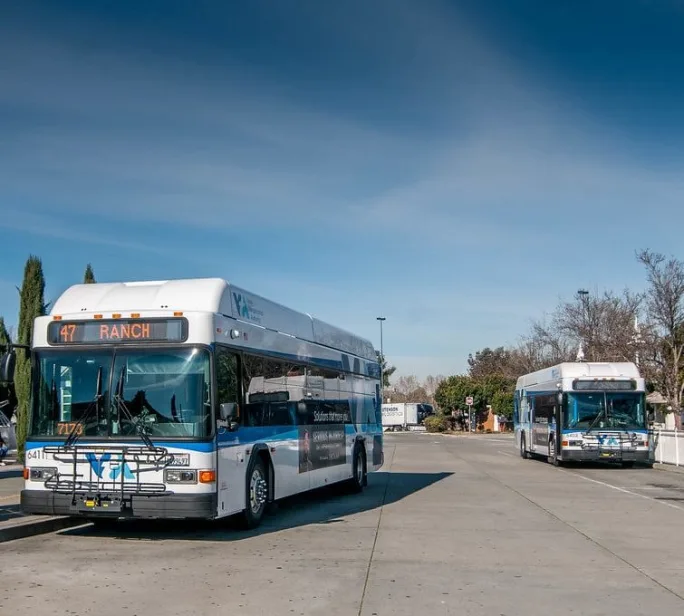
VTA’s mentoring program grew out of a moment of reckoning almost two decades ago.
VTA
VTA’s mentoring program grew out of a moment of reckoning almost two decades ago.
“Back in 2006, we were facing several challenges,” says Steve Jovel, operations manager of workforce development at VTA. “There was a decline in the sense of honor and professionalism in the role of being a coach operator. Their role is critical to providing service in the community, but it wasn’t being treated that way.”
At the time, Jovel was a coach operator and an ATU executive board member. Then-ATU Political Director Tom Fink pushed both sides to try something different.
“Tom brought this idea that labor and management are always adversarial in the classic relationship, but there has to be a better way to do business,” Jovel says. “There was recognition that both sides really had some common, aligned goals.”
Those early conversations led to what is now known as Joint Workforce Investment (JWI), a formal labor–management partnership anchored by peer mentoring.
Small focus groups of handpicked operators from both sides helped define the framework. From those talks emerged three foundational pillars: workplace solutions, career development, and public service. A fourth, health and well-being, was added as the program continued to evolve.
For Harpreet Singh, coach operator at VTA and JWI program director for the Amalgamated Transit Union(ATU), the mentoring program’s power starts with listening to the people who actually do the work.
“Before, when people were hired as coach operators, they were expected to just come to work, take the bus out, bring it back, and that was it,” he says. “Their input wasn’t really taken or valued. If they said something isn’t working, maybe it got fixed eventually, but they felt left out of that process.”
Through JWI, operators were told that if they came with a problem, they should also come with one or two possible solutions. That seemingly small shift gave them much-needed ownership.
“Worker voice brought in a lot of value, and over time, you could feel a culture change in the agency,” explains Singh. “When I came in 2008, as an operator, you didn’t go into the office; they only called you in to discipline you. Now, we ask new employees to come into the office and introduce themselves. Office staff are here to help as well. Everybody has a part to play.”
Mentors meet with new operators multiple times during their first six to nine months, including ride-alongs that focus less on technical driving skills and more on judgment, communication, and confidence.
“Our training department does a great job teaching the technical part of operating a bus or train,” Singh says. “But the soft skills — how to deal with passengers, how to take care of your health, how to sleep well, and how to balance work and family — those aren’t taught anywhere. That’s where mentors step in.”
Singh adds that, with operators' schedules sometimes starting at 2 a.m. or running late into the night, agency mentors can help new operators understand what that means for them and their families.
“You have to let your family know how the schedule works,” he explains. “When you say, ‘I start work at 4:36,’ nobody else starts work at 4:36, but bus drivers do.”
What began as a small peer-mentoring experiment in one division has grown into a broader workforce development engine at VTA.
From 2006 to 2016, the program expanded across several divisions at the agency. In 2016, VTA and its partners took the next step: transitioning from standalone mentoring to a registered apprenticeship model.
“In 2016, we officially transitioned from only peer mentoring into a full-blown apprenticeship for coach operators, which is the first in the country,” Jovel says.
Through a partnership with Mission College, operators now earn a certificate of completion and 18 college units, with the apprenticeship registered with both California’s Division of Apprenticeship Standards and the U.S. Department of Labor.
VTA has since added apprenticeships for service mechanics, track workers, overhead line workers, and, in 2023, light rail operators.
“From 2006 to 2023, we’ve transitioned into apprenticeship programs through our partnership with Mission College,” Jovel says. “But really, the core remains the peer mentoring piece.”
The numbers bear out the impact.
Before the program, operator retention was in the low 80% range. However, the immediate returns kept VTA’s retention rate for coach operators above 90% to 93% for about 12 years, explains Jovel.
Singh notes that the actual value is even greater than what can be captured in a spreadsheet.
“Some things you just can’t measure,” he says. “How do you put a KPI on passing along the knowledge of an operator who’s been here 40 years? Or on helping someone go from entry-level operator to track worker or overhead line worker because you told them, ‘Take these next steps, and you can build a better career?’ Workers helping other workers be successful. That is the value that these programs add.”
At King County Metro in Seattle, the Mentors Moving Metro program was founded on a simple idea: the informal peer support that naturally develops in bus bases should be available to all operators—not just those who happen to find it.
King County Metro
At King County Metro in Seattle, the Mentors Moving Metro program was built on a similar belief: informal support, already available in bus bases, should be accessible to everyone, not just the operators who happen to find it.
“Bus bases, by nature, have a lot of camaraderie,” Phil DeVault, director of bus operations at King County Metro, says. “There is a lot of natural mentoring and peer support that goes on in those spaces. The job is so challenging — in some ways similar to fire and police, with frontline contact with communities of need — that people really bond together.”
The problem? Not everyone connects with that support equally.
“You might have someone who’s an extrovert or hangs around the base to pick up overtime,” DeVault says. “They build those relationships and have a kind of mentoring experience. But you’ll have someone else who’s an introvert who comes in and leaves. They don’t connect as easily.”
For DeVault, the program's aim is straightforward: to formalize the positive practices that have always existed there and ensure they apply to everyone.
“It means nobody falls through the cracks,” he says.
Metro drew inspiration from the ATU’s national work on mentorship and apprenticeship.
“When we first heard from ATU’s national leadership, it was inspiring,” DeVault says. “They showed the downstream effects on safety, customer complaints, and operator well-being, which are all things we care about.”
On the union side, Patrick Brady, bus operator and ATU co-coordinator for Mentors Moving Metro, views the program as a way to guide new operators through the most stressful stages of onboarding.
“When I think about getting this job, the scariest thing is if you are going to pass your CDL test,” Brady says. “Then it’s what happens when I’m the one behind the seat, and what happens when I’m on my own in the coach?”
To ease that transition, Metro matches students with mentors two weeks before they graduate from training.
“We’re engaging with students earlier in their process,” Brady says. “So when they’re going out for their experiences of driving for the first time, they are paired with someone who can tell them what it’s really like to be on the road.”
Brady explains that most of the mentoring relationship takes place during everyday check-ins.
“Two-thirds of it happens over text messages,” he says. “It’s a quick, ‘How’s it going out there?’ Or, ‘There was nowhere to park my coach at the layover — what should I do?’ Over time, people say, ‘I think I’ve made a friend I’ll have for my whole career here.’”
The team at Metro explains that the program is especially valuable for operators whose first language isn’t English or who are new to working for a large public agency.
Brady notes that only about one in five new hires are native English speakers, and many are navigating the benefits, policies, and procedures of a large organization for the first time. As a result, mentors play a crucial role in helping them understand both the job and the broader system.
“Mentors help them understand not just the work, but the whole system they are coming into,” he says.
Although the program launched just a few years ago, the agency has already trained about 130 mentors and placed around 300 operators.
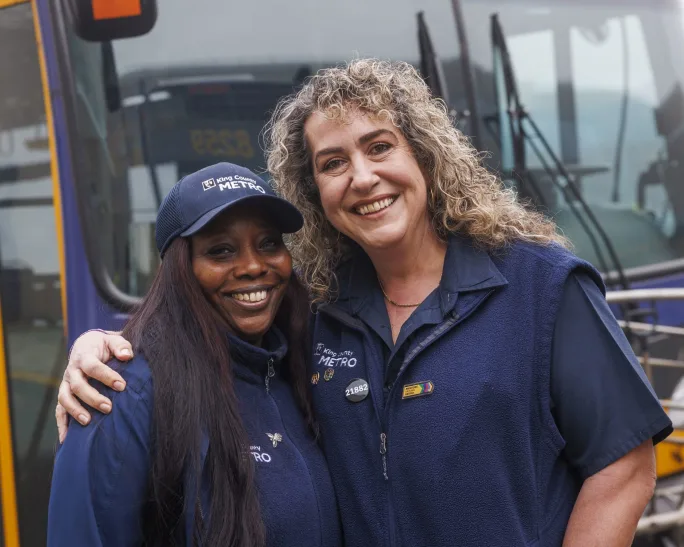
King County Metro’s mentorship program pairs experienced drivers with new hires to foster support, retention, and safety.
King County Metro
Metro treated the program as a pilot and brought in its internal research team to conduct an evaluation.
The program evaluation included surveys sent to 160 mentors and mentees, as well as about a dozen in-person interviews.
The results showed overwhelming support. Mentors rated the program in the low 90s when asked whether they would recommend it to other senior operators, while mentees rated their experience even higher, with mid-90s scores for recommending participation.
Much of the feedback focused on job satisfaction and understanding the unwritten rules of the job.
While Metro is still adjusting its training and onboarding model post-pandemic, DeVault says he doesn’t see mentoring going away.
“This has been such a hiring blitz for us — we are graduating close to 60 people a month now,” he says. “Mentorship has become a cornerstone of how we welcome operators into the workforce. It’s hard to imagine going back and taking it out.”
Making It Stick — Keys to Implementation
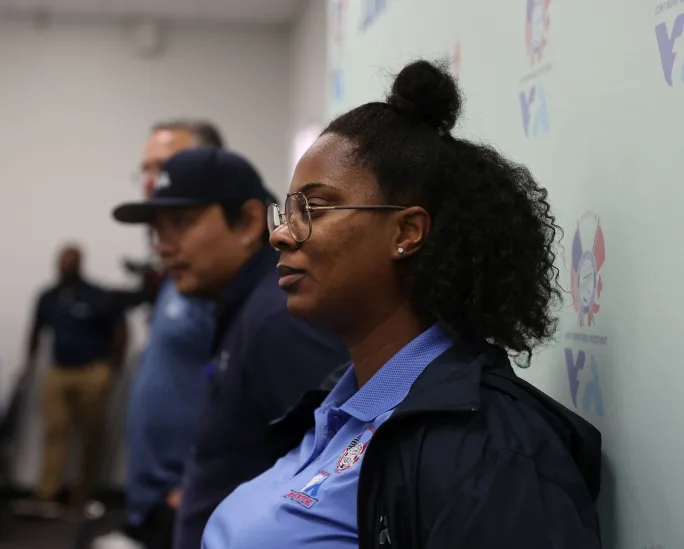
For agencies considering similar programs, VTA officials recommend starting small and keeping the partnership simple.
VTA
Both agencies say one of the key drivers of success has been visible support from top leadership and genuine joint ownership with the union.
“There were several points where we could have gone off the track,” DeVault says. “But our general manager insisted we stick with the program and continue to develop it.”
Metro also chose to house the program in HR, not just bus operations, to support future expansion to rail and facilities.
On the compensation side, Brady says Metro has deliberately avoided making mentoring a paid, premium role.
“We have mentors because they want to be,” he explains. “We are very clear that we don’t want anyone working off the clock, but the emotional energy and relationship energy is something they are volunteering. We’d rather keep it about community and paying it forward than about earning extra money.”
DeVault acknowledges that it’s been a delicate line to walk.
“We have a history here where if an operator contributes in some way, they get paid — even if it’s three minutes,” he says. “It took a lot of conversation, but we’ve gotten to a place where people don’t have to work off the clock, and they’re not joining the program just to make extra money.”
For agencies considering similar programs, the VTA’s Jovel suggests starting small and keeping the partnership simple.
“Think pilot,” he says. “Start with something that fits what your agency can support, then grow from there. First, solidify the labor–management partnership and trust; then move into mentoring and apprenticeship. Sometimes people see funding sources for apprenticeships and want to go straight there, and that can be a mistake.”
Singh agrees that the program must be worker-led to be effective.
“Don’t try to cookie-cutter someone else’s program,” he says. “Let the workers who are going to be mentors build it. If they take ownership, they won’t let it fall apart. Worker voice has a lot of power.”
From Metro’s standpoint, Brady says good jobs are the foundation, with mentorship the key to helping people keep those career-building roles.
“King County is a good employer,” he says. “These are jobs people feel grateful to have. I always tell students that this could be the last job you ever have.’ People send their kids to college with this job. They buy houses. Our role is to cradle them through that probation period so they can build that kind of future.”
For both VTA and King County Metro, mentorship is no longer a side project. It’s becoming part of the culture and part of what it means to be a bus operator.
Mentorship programs significantly enhance new bus operators' experiences by boosting retention, improving safety, and fostering stronger relationships among frontline workers, unions, and management.
*Summarized by AI
Loading data...

Management
The Delaware River Port Authority and PATCO have transformed their internship program into a hands-on professional development experience that introduces students to the breadth of transportation careers — and creates a pipeline for future employees.

Management
Behind the seamless trips were months of planning, multimodal partnerships, and lessons agencies and operators can carry into the next mega-event.
Management
Once viewed primarily as transit operators, agencies are now leveraging land, partnerships, and long-term planning to boost ridership, expand housing, and strengthen communities.

Management
An Urban Institute evaluation found that a fare-free transit program increased ridership, reduced transportation barriers, and improved access to jobs, healthcare, and other essential services.
Security and Safety
Transit agencies are redefining safety with care-based response models. See how leaders are improving trust and operations.

Management
Advances in data and analytics are giving transit agencies new opportunities to refine maintenance practices, improve efficiency and make more informed decisions about asset performance.
Technology
The farebox is no longer just a payment machine. Learn how agencies are using new tech and pricing strategies to rethink how riders pay for transit.
Management
How stress, unresolved trauma, and chronic burnout can impact operator performance—and the steps agencies can take to improve safety and well-being.

Management
Mentorship programs at VTA and King County Metro are transforming the experience of new bus operators — boosting retention, improving safety, and strengthening connections among frontline workers, unions, and management.
Motorcoach
With more operators nearing retirement and investor interest on the rise, now is the time to plan your exit strategy. Here’s how to prepare your business for a successful sale that avoids leaving money on the table.