



German transit supplier visits Greater Dayton RTA
Kiepe Electric is in the production process to deliver a total of 41 dual-mode electric trolley NexGen buses to Dayton by the end of 2020.

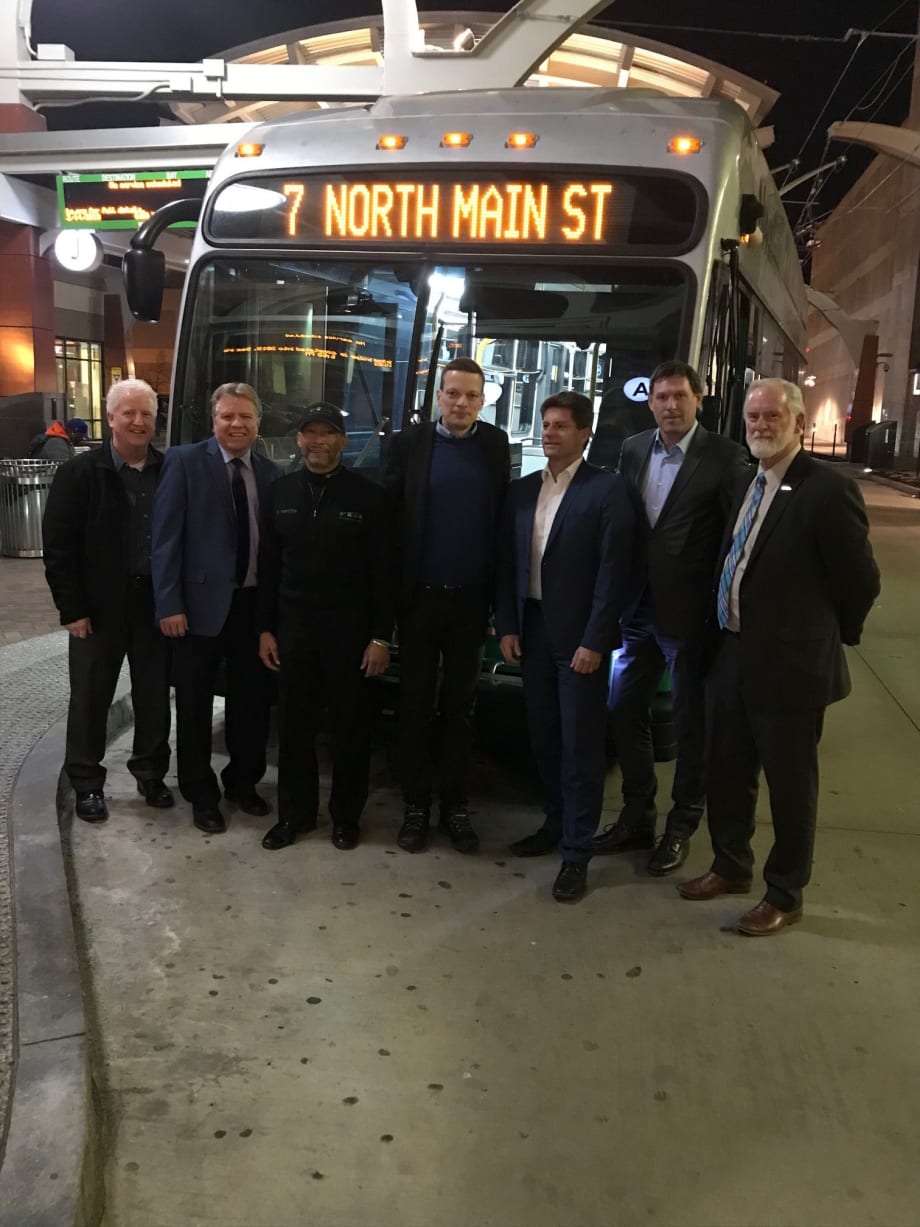
Kiepe representatives visited Dayton RTA in advance of its future trolley bus delivery.
Greater Dayton RTA
Kiepe representatives visited Dayton RTA in advance of its future trolley bus delivery.
Greater Dayton RTA
Leaders from the German electric bus manufacturer Kiepe Electric visited Dayton ahead of the upcoming delivery of NexGen electric trolley buses to replace the agency’s fleet.
Representatives from the North American branch of Kiepe and leaders from the headquarters in Dusseldorf, Germany, toured Dayton’s network of electric-trolley routes aboard the NexGen — a dual-mode electric bus RTA commissioned as a prototype in 2014 and is now working with Kiepe in purchasing an entire fleet.
Kiepe is in the production process to deliver a total of 41 dual-mode electric trolley NexGen buses to Dayton by the end of 2020. As part of that order, 12 to 17 of the NexGens should arrive in Dayton this year, with the first dual-mode electric trolley expected to hit the streets in June, said RTA Director, Maintenance, Daron Brown. The buses will replace RTA’s current electric trolley bus fleet, which is 20 years old.
RTA officials said the new trolleys will be more dependable, meaning a more reliable service for customers. The NexGen buses will be the ability to travel off wire for up to 15 miles using the built-in battery, which charges while the trolleys are traveling on RTA’s network of electric wire. Off-wire travel will allow NexGens to take alternate routes around construction, accidents or traffic-related situations by dropping their poles and operating in battery mode, something RTA’s current trolleys cannot do. The interior of the NexGen fleet will also feature RTA’s new composite seating, a new seat design that will allow for easier upkeep, resulting in a cleaner bus, Brown said.
Electricity first started powering public transit in the city in 1888, with streetcars then the main mode of transportation. Dayton’s rich history of electric trolley buses began with a fleet in 1932, when “new” technology of electric trolley buses replaced streetcars. In the decades since, Dayton’s continued to operate electric trolley buses, and RTA remains only one of five cities in the nation to do so. The RTA utilizes 124 miles of electric overhead wire infrastructure to power its seven trolley routes, which provide more than two million passenger trips a year. That number is expected grow as the new NexGen buses are received and placed into service.
These “green” electric vehicles both reduce RTA’s carbon footprint and save on fuel costs. Each NexGen electric trolley bus has up to a 20-year life expectancy, compared to a diesel bus’s 12-year lifespan.
More Technology

From Hardware to Digital Partner: Luminator Charts Its Next Chapter
CEO Magnus Friberg discusses Luminator’s shift toward becoming a digital partner, the growing importance of software and interoperability, and how AI can help agencies improve operations and passenger experience.
Read More →
Beyond the Checklist: A Structured Approach to Transit Maintenance
Reliability-Centered Maintenance helps transit agencies move beyond routine checklists to focus limited resources on the assets and failures that have the greatest impact on safety, reliability, and service.
Read More →
NJ TRANSIT Advances Bus Technology Upgrades Across Statewide Fleet
More than 1,500 buses now feature upgraded technology designed to improve arrival predictions and provide free Wi-Fi, with deployment expected to reach nearly 2,000 buses by the end of 2026.
Read More →

Building a Flexible Path to Transit Electrification
John Hroncich discusses BAE Systems’ modular and scalable approach, lessons learned from decades of real-world operations, and how agencies can identify electrification strategies that fit their fleets.
Read More →
Biz Briefs: Alstom Lands Canadian Contract, LYT to Supply California TSP, and More
In METRO's latest installment, we take a look at recent news from Complete Coach Works, Beep, FlixBus, and more partnerships making headlines across the transportation sector.
Read More →
From Legacy Silos to Conversational Intelligence
What if transit leaders could ask any operational question and get a trusted answer in seconds? Conversational AI is transforming how agencies use their data.
Read More →
USDOT Announces Rail Vehicle Replacement Grants, Chattanooga AV Shuttle Funding
More than $191 million in federal funding will help three transit agencies replace aging rail vehicles and support a new autonomous shuttle service in Chattanooga.
Read More →
Bus Tech Talk: Keeping Transit Technicians Ahead of the Technology Curve
LA Metro’s Obed Mejia discusses technician training, evolving maintenance technology, fleet replacement, and strategies for getting the most out of today’s transit fleets.
Read More →
Biz Briefs: RIPTA Unveils New Frontrunners, Clevland RTA Adds New Siemens, and More
In METRO's latest installment, we take a look at recent news from Siemens, Prevost, Dodge, and more partnerships making headlines across the transportation sector.
Read More →
Why Simulating Pedestrian Movement Has Become Essential for Modern Rail Stations
Pedestrian microsimulation is helping rail planners identify bottlenecks, test station designs, and prepare complex transit hubs for growing passenger volumes.
Read More →