



SacRT, TransLoc to expand microtransit pilot project
The agency implemented the first phase of SmaRT Ride in February and its resounding success was the catalyst for service expansion beginning sooner than anticipated on Monday, April 23.

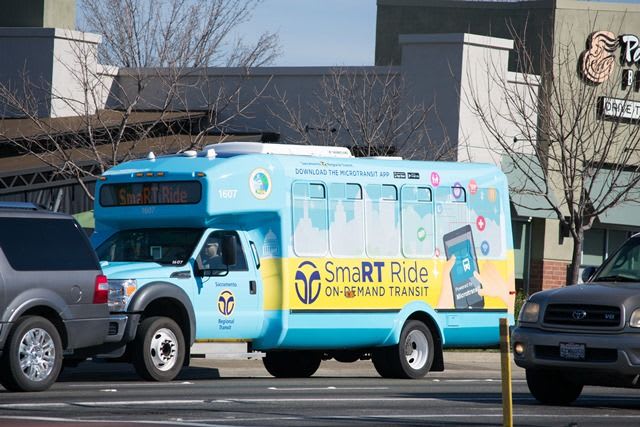
Using TransLōc’s free Microtransit app, the software creates a flexible route for bus operators to follow as they pick up and drop off passengers on smaller, neighborhood-friendly sized buses.
SacRT
Using TransLōc’s free Microtransit app, the software creates a flexible route for bus operators to follow as they pick up and drop off passengers on smaller, neighborhood-friendly sized buses.
SacRT
After the successful debut of SmaRT Ride in Citrus Heights, the Sacramento Regional Transit District’s (SacRT) new on-demand microtransit service will be expanded to serve two more communities with a connection to the Historic Folsom light rail station.
Also, due to increased requests, the service hours will be expanded an additional three hours to operate from 6 a.m. to 9 p.m. SacRT implemented the first phase of SmaRT Ride in February and its resounding success was the catalyst for service expansion beginning sooner than anticipated on Monday, April 23.
SmaRT Ride is similar to other ride-share services where customers can use a smartphone app to request a ride that will pick up and drop off passengers wherever they wish to travel within the service boundaries. Using TransLōc’s free Microtransit app, the software creates a flexible route for bus operators to follow as they pick up and drop off passengers on smaller, neighborhood-friendly sized buses. This is one of several pioneering efforts that will likely transform the way public transit is delivered locally and throughout the nation in the years to come.
“We doubled our ridership in the first month of the pilot project so we know that SmaRT Ride is a viable solution to serve our customers who may not have easy access to fixed-route service,” said SacRT GM/CEO Henry Li. “We are excited to begin phase two of this innovative service.”
SacRT is looking to secure funding to expand SmaRT Ride service into additional areas in the Sacramento region after phase 2 of the pilot is complete.
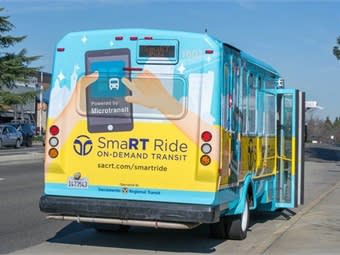
Following a ride request, the Microtransit app will provide passengers with an estimated pick-up time, track their bus in real-time, and be alerted when their ride is about to arrive.
SacRT
Following a ride request, the Microtransit app will provide passengers with an estimated pick-up time, track their bus in real-time, and be alerted when their ride is about to arrive. Passengers will also be alerted when their ride is about to reach their desired destination.
The cost to ride SmaRT Ride is only $2.75 per trip, $1.35 for those eligible for discount fare (seniors, students, and persons with disabilities). All SacRT fare media is accepted, including single ride tickets, daily and monthly passes, smart card (Connect Card), mobile fare app (ZipPass), and cash. The low-cost makes this service much more affordable than a traditional ride-hailing service, which could cost riders more than five times the amount.
More New Mobility

From Hardware to Digital Partner: Luminator Charts Its Next Chapter
CEO Magnus Friberg discusses Luminator’s shift toward becoming a digital partner, the growing importance of software and interoperability, and how AI can help agencies improve operations and passenger experience.
Read More →
Biz Briefs: Alstom Lands Canadian Contract, LYT to Supply California TSP, and More
In METRO's latest installment, we take a look at recent news from Complete Coach Works, Beep, FlixBus, and more partnerships making headlines across the transportation sector.
Read More →
CharterUP’s Armir Harris on Technology, AI, and the Future of Group Mobility
In a recent episode of METROspectives, CharterUP Founder/CEO Armir Harris discussed the company’s evolution from an online charter bus marketplace into a technology platform supporting public- and private-sector mobility and much more.
Read More →
Jacksonville’s NAVI Project Charts a New Course for Autonomous Public Transportation
Through its NAVI program, JTA is showing how autonomous vehicles, intelligent infrastructure, and coordinated operations can work together to deliver everyday public transportation.
Read More →
Biz Briefs: Luminator Marks Milestone and More
From manufacturers and suppliers to transit agencies and motorcoach operators, these updates offer a snapshot of the projects, partnerships and business moves driving the industry forward.
Read More →
New Tricks for Old Bureaucracies: Joshua Schank on Making Transit Innovation Stick
Former LA Metro Chief Innovation Officer Joshua Schank discusses why good ideas aren't enough, how transit agencies can overcome resistance to change, and why today's challenges demand more innovation.
Read More →
How DART's GoPass Is Redefining Regional Mobility
Serving 14 transit agencies, GoPass simplifies multimodal travel by allowing riders to plan, pay for, and manage an entire trip through one app.
Read More →
Biz Briefs: OCTA Taps Clean Energy for Hydrogen Station, Stadler to Supply Via Rail Vehicles, and More
From manufacturers and suppliers to transit agencies and motorcoach operators, these updates offer a snapshot of the projects, partnerships and business moves driving the industry forward.
Read More →CharterUP Expands Into New Mobility and Autonomous Transportation
Vice President of New Mobility Stephen Joos discusses how CharterUP is leveraging its nationwide transportation network, technology platform, and autonomous vehicle partnerships to expand into workforce mobility, campus shuttles, and transit solutions.
Read More →
METRO Magazine Announces 2026 Innovative Solutions Awards Winners
Projects Recognized for Advancing Mobility Through Technology, Accessibility, Workforce Innovation, and Operational Excellence
Read More →