



Coach Atlantic Maritime Bus first to test all-electric MCI coach in Canada
The operator has committed to green strategies throughout its offices, maintenance hubs, and service routes, and anticipates introducing battery electric to its operation by 2022.

Coach Atlantic Maritime Bus will also test MCI’s latest safety and fleet management technology on the new 54-seat MCI D45 CRTe LE model, including the benefits of MCI Connect Telematics. MCI
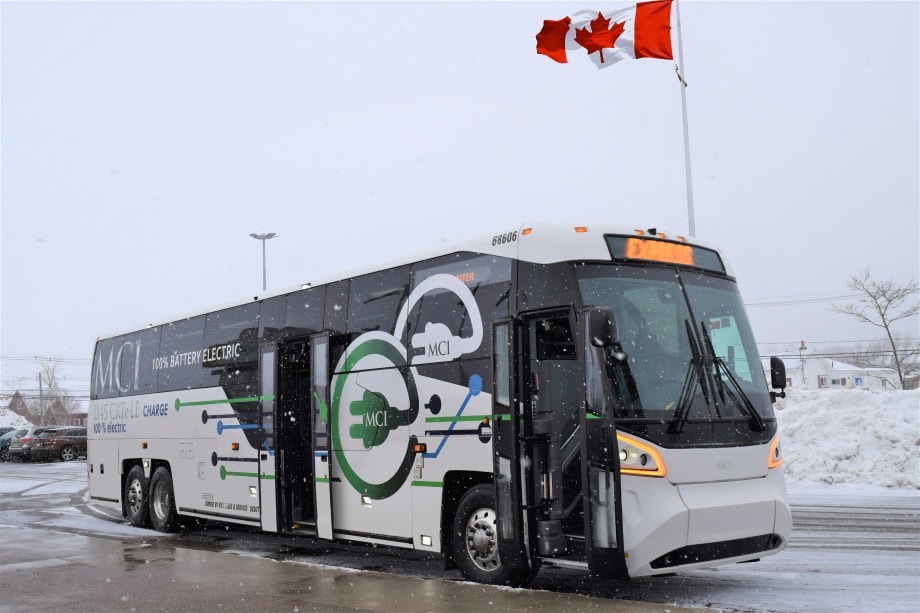
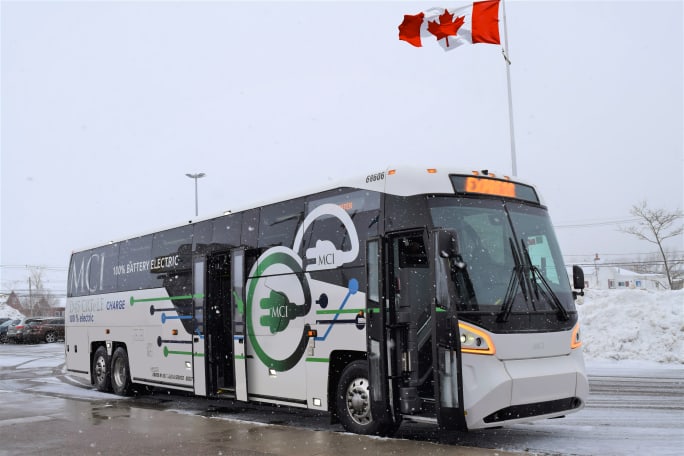
Coach Atlantic Maritime Bus is the first to bring environmental sustainability to long-distance travel in Canada with the test of Motor Coach Industries’ (MCI) first all-electric coach — the MCI D45 CRTe LE CHARGE, designed for long-range express routes and setting a new standard in accessibility.
MCI and Coach Atlantic Maritime Bus will pair for a March 9 to 11 demonstration tour on Maritime Bus regular routes, inviting passengers to ride along and comment on the performance and comfort of MCI’s first-ever, battery-electric Commuter Coach. Government officials, transportation stakeholders, and sustainability experts will also take part in the tour.
Cassidy Group's T3 Transit was the first to test a battery-electric, low-floor transit bus made by MCI sister company New Flyer on municipal transit routes serving greater Charlottetown on Prince Edward Island in 2018. Coach Atlantic Maritime Bus has committed to green strategies throughout its offices, maintenance hubs and service routes, and anticipates introducing battery electric to its operation by 2022.
MCI offers two battery-electric models. The J4500e, bringing all-electric capability to the industry’s best-seller in the tour, charter, and employee shuttle markets, will deliver later this year and due to the high-floor configuration the coach can be configured for more than 370 km at the top end by adding more batteries to achieve a capacity of 544 kWh. The D45 CRTe LE, which features a revolutionary patented LE vestibule with a seating area and ramp that significantly improves dwell times and the boarding and ride experience for passengers with disabilities and mobility, will be available in 2021.
Both models share the same electric platform. Michael McDonald, MCI’s sustainable transportation specialist, and the engineering team at MCI have spent the past two years testing the company’s first battery-electric vehicles in varied road and weather conditions including extreme cold and snow in Michigan’s Northern Peninsula during 2019’s polar vortex.
Coach Atlantic Maritime Bus will also test MCI’s latest safety and fleet management technology on the new 54-seat MCI D45 CRTe LE model, including the benefits of MCI Connect Telematics. MCI’s new diagnostic system, standard on 2021 coaches, will measure key performance metrics including distance and time on route, auxiliary systems and battery efficiency related to grade and ambient temperature in real time. According to McDonald, the data collected will be used to help Coach Atlantic Maritime Bus plan its future fleet needs.
Coach Atlantic Maritime Bus said its consideration of battery-electric also includes savings and maintenance costs compared to diesel coaches. With battery-electric buses, engine oil and filter changes, emissions, and transmission systems are eliminated, and there is less brake wear due to the electric motor’s regenerative braking capability.
More Zero Emissions
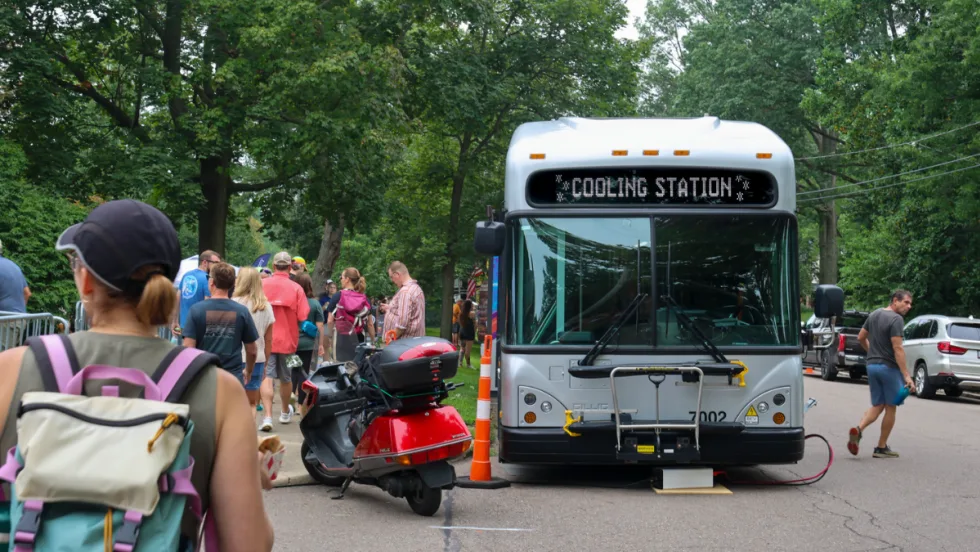
Ohio’s METRO RTA Turns Electric Buses into Mobile Power Sources at PorchROKR
See how three Gillig battery-electric buses powered festival stages while the agency’s new Park & Ride service carried approximately 1,000 attendees, demonstrating another potential use for transit agencies’ electric fleets.
Read More →
CALSTART and Forth Combine to Form Catalyst Mobility
The new name represents a renewed vision for the nonprofit focused on advancing clean, equitable, and affordable transportation solutions that move people and goods.
Read More →
Building a Flexible Path to Transit Electrification
John Hroncich discusses BAE Systems’ modular and scalable approach, lessons learned from decades of real-world operations, and how agencies can identify electrification strategies that fit their fleets.
Read More →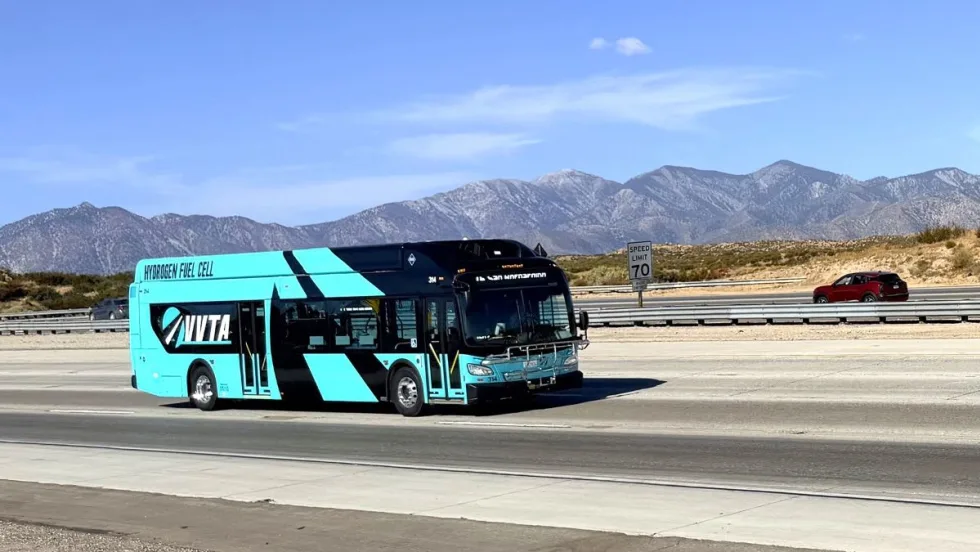
California's VVTA Begins Phased Rollout of Hydrogen Fuel Cell Buses
The agency is introducing 13 zero-emission buses into revenue service while evaluating performance across its urban, rural, and long-distance routes.
Read More →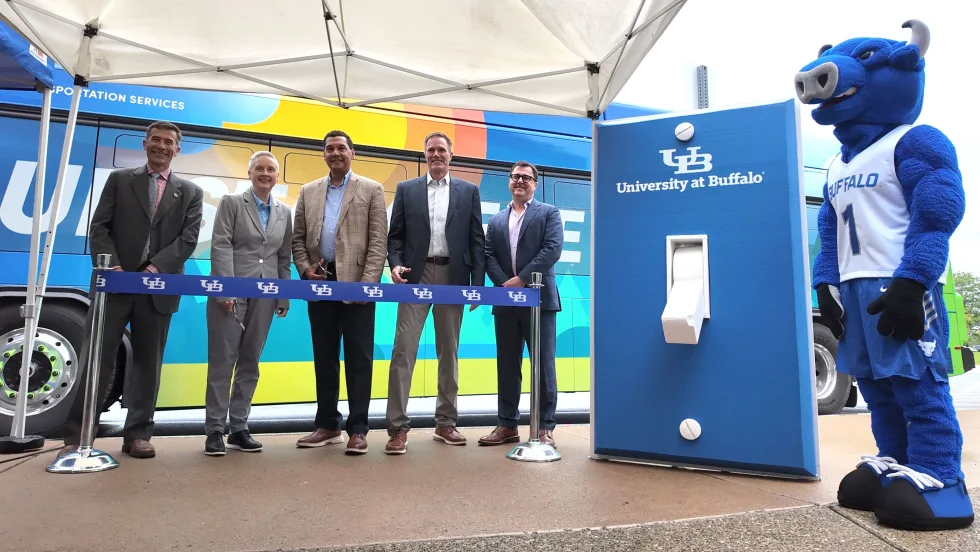
Inside Look: University at Buffalo Puts First 8 Electric Buses Into Stampede Service
UB, transportation solutions provider WeDriveU, and fleet electrification specialist Zenobē marked the deployment in the presence of students, university administrators, and local officials.
Read More →
Biz Briefs: OCTA Taps Clean Energy for Hydrogen Station, Stadler to Supply Via Rail Vehicles, and More
From manufacturers and suppliers to transit agencies and motorcoach operators, these updates offer a snapshot of the projects, partnerships and business moves driving the industry forward.
Read More →
AC Transit’s Cecil Blandon on Building the Next Generation of Transit Maintenance Leaders
The agency’s maintenance chief discusses leadership, workforce development, zero-emission technology, and preparing technicians for the future of public transportation.
Read More →
CTDOT Taps STV for Electric Bus Facility Design
The firm will work with CTDOT and RVT to define the facility layout, operational requirements, and long-term flexibility for RVT’s growing electric fleet.
Read More →
Chicago’s Pace Deploys 24 Hybrid-Electric Buses in Will County
The new buses reduce emissions and fuel consumption while advancing the agency's long-term goal of transitioning to a fully zero-emission fleet.
Read More →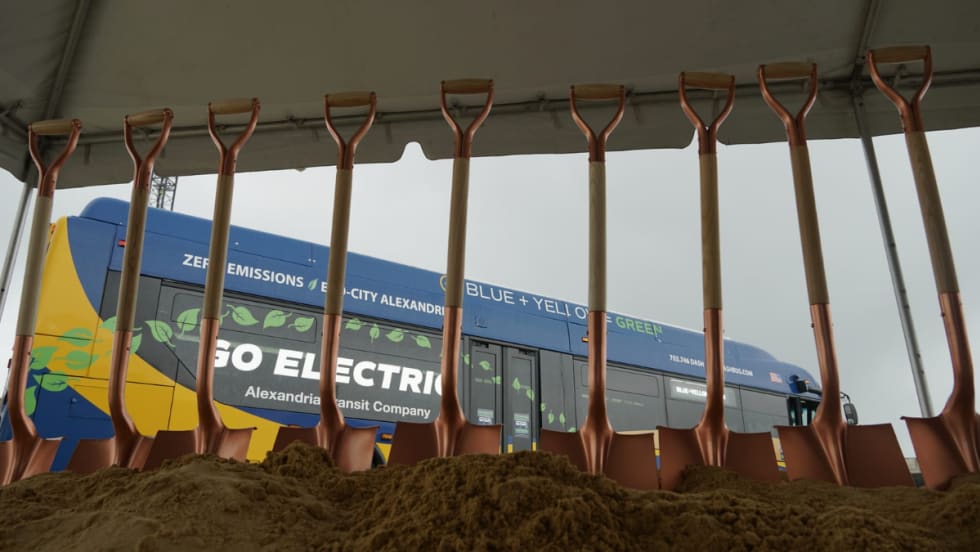
DASH Breaks Ground on First On-Route Electric Bus Chargers in D.C. Region
The fast-charging infrastructure will help extend electric bus range, improve fleet utilization, and support DASH's goal of transitioning to a fully zero-emission fleet.
Read More →