




Miss This? BAE Systems, Cummins To Team for Transit Bus Hybrid Drivetrain
Why Some Transit Agencies Are Re-Examining Hybrid Buses
As zero-emission goals advance, hybrid buses remain part of fleet strategies, offering reliability and operational flexibility.
January 19, 2026
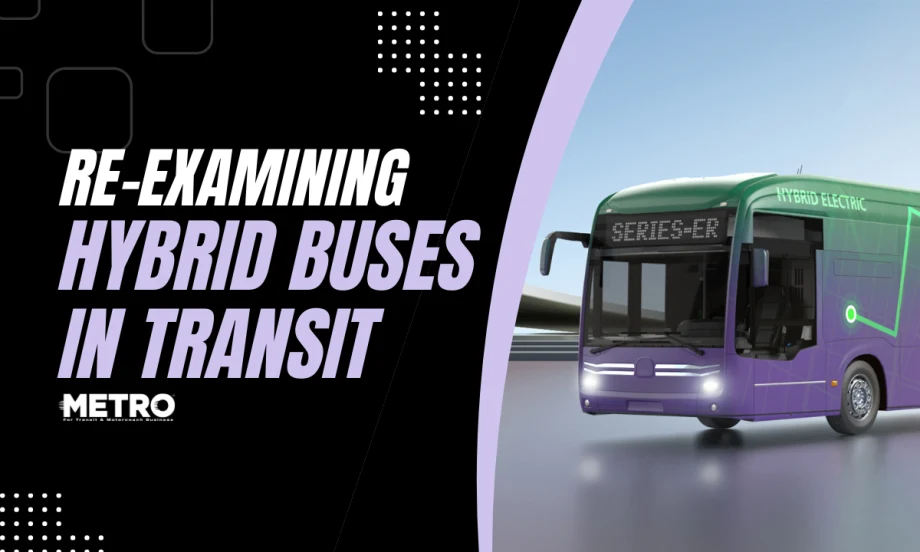
For transit systems balancing near-term emissions reductions with workforce readiness and infrastructure constraints, hybrids remain one of several available tools.
Photo: BAE Systems/METRO
5 min to read
Despite the transit industry’s primary focus on procuring zero-emission buses, some large transit agencies are again incorporating hybrids into their fleet strategies.
One recent example comes from New York City Transit (NYCT), which announced a procurement for 161 hybrid buses at its MTA board meeting in November. This is the agency’s first such award since late 2019.
NYCT’s experience illustrates how hybrids continue to play a role in fleet electrification plans, particularly for agencies managing large, complex operations, where reliability, workforce readiness, and total cost of ownership remain central concerns.
Over the past two decades, NYCT has operated a substantial number of hybrid buses supplied by multiple manufacturers and technology providers, including propulsion systems from BAE Systems. At peak deployment, BAE Systems had as many as 1,600 hybrids in the MTA’s fleet, representing roughly one-third of the agency’s active buses.
From BAE Systems’ perspective, that operational history demonstrates how hybrid platforms can meet demanding service requirements while delivering measurable fuel-economy improvements and emissions reductions.
“The hybrid buses have proven to be very reliable,” says John Hroncich, BAE Systems director of North American transit sales. “I call it a workhorse of their fleet.”
The recent NYCT procurement reflects a continued use of a technology the agency has experience maintaining and deploying at scale, rather than a shift in policy or endorsement of any single supplier.
Newer Hybrid Technology Builds on Earlier Lessons
The latest hybrid buses procured by NYCT will feature a Gen3 hybrid propulsion system from BAE Systems, marking the company’s first central-system refresh in roughly a decade.
According to Hroncich, the Gen 3 system was designed as a fully integrated package that combines propulsion, energy storage, power electronics, and accessory power management into a single architecture.
“It’s one system integrated, designed to work together to drive maximum efficiency and simplicity,” he says.
One of the more notable updates is the use of silicon carbide switching technology, which is increasingly common in the broader electric vehicle market but remains new in transit hybrid applications. The technology is intended to improve efficiency and reduce energy losses.
A defining feature of the hybrid system described by Hroncich is its use of ultra-capacitor-based energy storage instead of lithium-ion batteries. Ultra-capacitors store energy via static electricity rather than chemically, allowing them to handle millions of charge and discharge cycles without degradation.
In practice, this means the energy storage system is designed to last the bus's entire service life, typically 12 years or longer, without requiring midlife replacement.
For large agencies, eliminating the need to budget for battery replacements can significantly affect the total cost of ownership.
“What that allows for is a unique, industry-first, life of the bus energy storage system,” Hroncich says.
BAE Systems cites multi-year service data from bus deployments as evidence that ultra-capacitor systems can remain reliable even under high utilization, particularly in environments such as New York City.
“These buses are running 12 to 16 hours a day, 300-plus days a year,” says Hroncich.
Long-term deployments also tend to generate feedback from frontline maintenance staff, which suppliers may incorporate into future product iterations. In the case of BAE Systems’ Gen3 hybrid system, design updates include features intended to improve technician safety and serviceability.
One such feature is a ground-level high-voltage checkpoint that allows technicians to verify the presence of voltage before working on high-voltage components. While developed in response to input from large transit agencies, the feature is now standard across BAE Systems’ Gen3 product line.

Over the past two decades, NYCT has operated a substantial number of hybrid buses supplied by multiple manufacturers and technology providers, including propulsion systems from BAE Systems.
Photo: BAE Systems
Expanding Zero-Emission Operation Within Hybrid Fleets
Hybrid buses increasingly rely on software-driven features to extend electric-only operation. BAE Systems’ hybrid system includes a function called “Arrive and Go,” which allows buses to arrive at stops, idle, and depart on electric power alone.
According to Hroncich, this capability enables hybrid buses to operate with their engines shut off for a significant portion of their service time, particularly in congested urban environments. This feature reduces noise and localized emissions without requiring charging infrastructure.
“If you're standing at a bus stop, the bus arrives with its engine off, and it departs from the bus stop with its engine off [or using electric mode]. So, it's a zero-emission bus stop experience,” says Hroncich.
From a rider and community perspective, this approach can improve the street-level experience while still maintaining the flexibility of a conventional bus.
Many transit agencies, including NYCT, are pursuing long-term goals to transition to fully zero-emission fleets. Hybrids are often positioned as complementary technologies rather than replacements for battery-electric buses.
Because hybrid and battery-electric buses share core electric-drive components (motors, power electronics, and diagnostic software), hybrids can help agencies prepare their workforces for high-voltage systems while allowing them to continue operating without range limitations.
Independent Performance Validation
BAE Systems’ Gen3 hybrid system recently completed Federal Transit Administration testing in Altoona, a standardized evaluation used across the U.S. transit industry.
According to Hroncich, the system demonstrated improvements in fuel economy and emissions across multiple duty cycles, setting new benchmarks for hybrid performance at the test facility.
“Across all three duty cycles, we averaged a full mile per gallon higher than any other hybrid that’s been through Altoona,” Hroncich says.
While Altoona results do not dictate procurement decisions, they provide agencies with an independent data point when evaluating different propulsion technologies.
NYCT’s recent procurement demonstrates that large agencies continue to evaluate hybrid technology alongside battery-electric and other zero-emission options.
For transit systems balancing near-term emissions reductions with workforce readiness and infrastructure constraints, hybrids remain one of several available tools.
As agencies continue to refine their electrification strategies, examples like these illustrate how hybrid technology is being applied in real-world operations.
Subscribe to Our Newsletter
More Zero Emissions
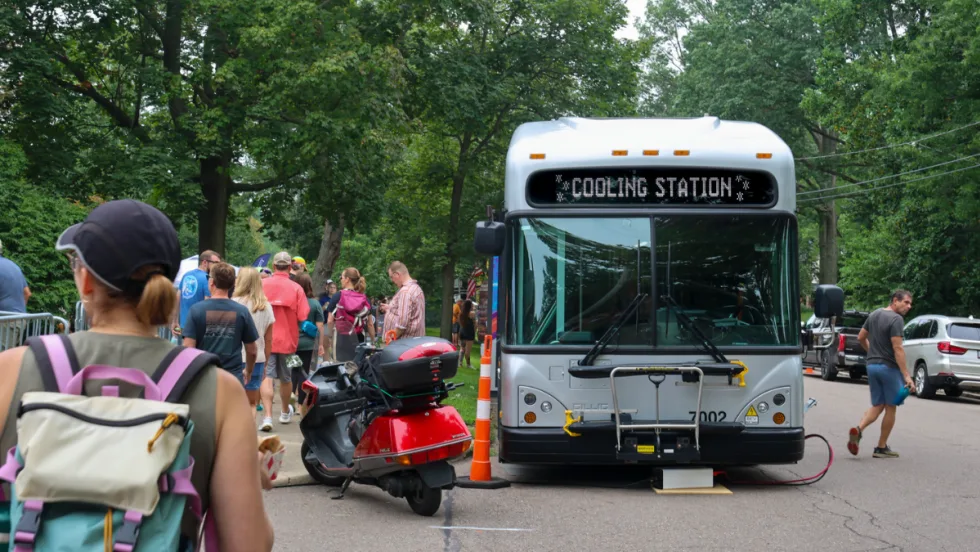
Ohio’s METRO RTA Turns Electric Buses into Mobile Power Sources at PorchROKR
See how three Gillig battery-electric buses powered festival stages while the agency’s new Park & Ride service carried approximately 1,000 attendees, demonstrating another potential use for transit agencies’ electric fleets.
Read More →
CALSTART and Forth Combine to Form Catalyst Mobility
The new name represents a renewed vision for the nonprofit focused on advancing clean, equitable, and affordable transportation solutions that move people and goods.
Read More →
Building a Flexible Path to Transit Electrification
John Hroncich discusses BAE Systems’ modular and scalable approach, lessons learned from decades of real-world operations, and how agencies can identify electrification strategies that fit their fleets.
Read More →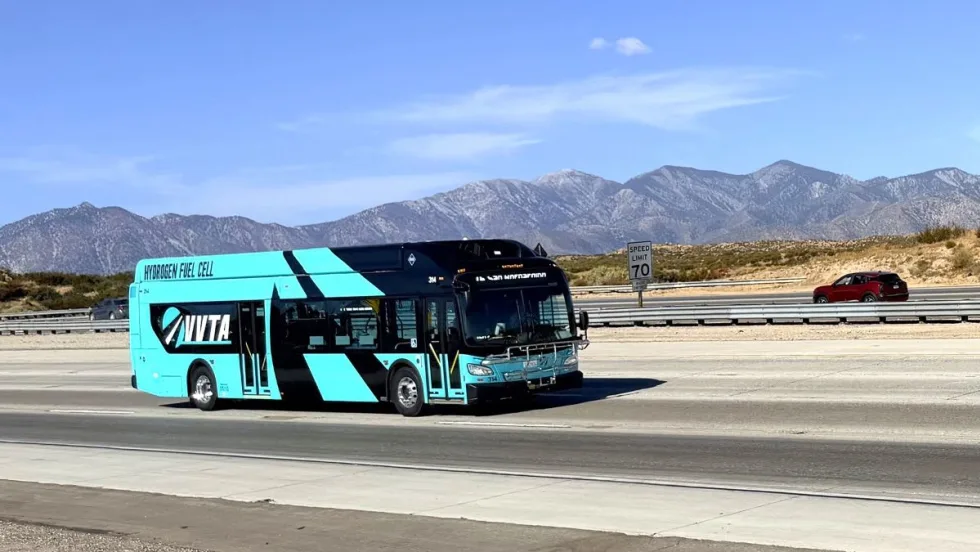
California's VVTA Begins Phased Rollout of Hydrogen Fuel Cell Buses
The agency is introducing 13 zero-emission buses into revenue service while evaluating performance across its urban, rural, and long-distance routes.
Read More →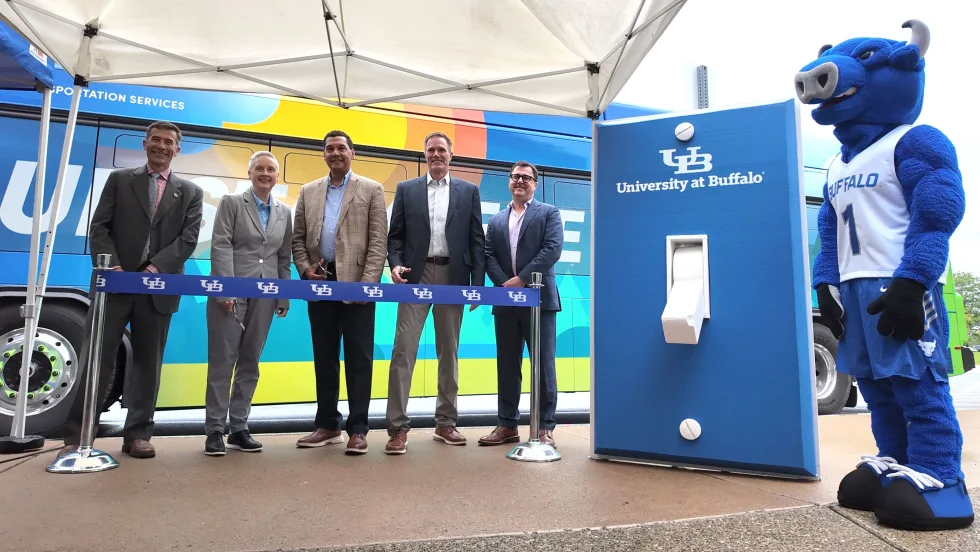
Inside Look: University at Buffalo Puts First 8 Electric Buses Into Stampede Service
UB, transportation solutions provider WeDriveU, and fleet electrification specialist Zenobē marked the deployment in the presence of students, university administrators, and local officials.
Read More →
Biz Briefs: OCTA Taps Clean Energy for Hydrogen Station, Stadler to Supply Via Rail Vehicles, and More
From manufacturers and suppliers to transit agencies and motorcoach operators, these updates offer a snapshot of the projects, partnerships and business moves driving the industry forward.
Read More →
AC Transit’s Cecil Blandon on Building the Next Generation of Transit Maintenance Leaders
The agency’s maintenance chief discusses leadership, workforce development, zero-emission technology, and preparing technicians for the future of public transportation.
Read More →
CTDOT Taps STV for Electric Bus Facility Design
The firm will work with CTDOT and RVT to define the facility layout, operational requirements, and long-term flexibility for RVT’s growing electric fleet.
Read More →
Chicago’s Pace Deploys 24 Hybrid-Electric Buses in Will County
The new buses reduce emissions and fuel consumption while advancing the agency's long-term goal of transitioning to a fully zero-emission fleet.
Read More →
DASH Breaks Ground on First On-Route Electric Bus Chargers in D.C. Region
The fast-charging infrastructure will help extend electric bus range, improve fleet utilization, and support DASH's goal of transitioning to a fully zero-emission fleet.
Read More →