



New Flyer, Robotic Research Unveil Heavy-Duty Automated Bus
The Xcelsior AV™ unveiling follows New Flyer’s launch of its Automated Technology Program first announced in May 2019, and the subsequent announcement of partnership with artificial intelligence and automation leader Robotic Research also announced in May 2019.
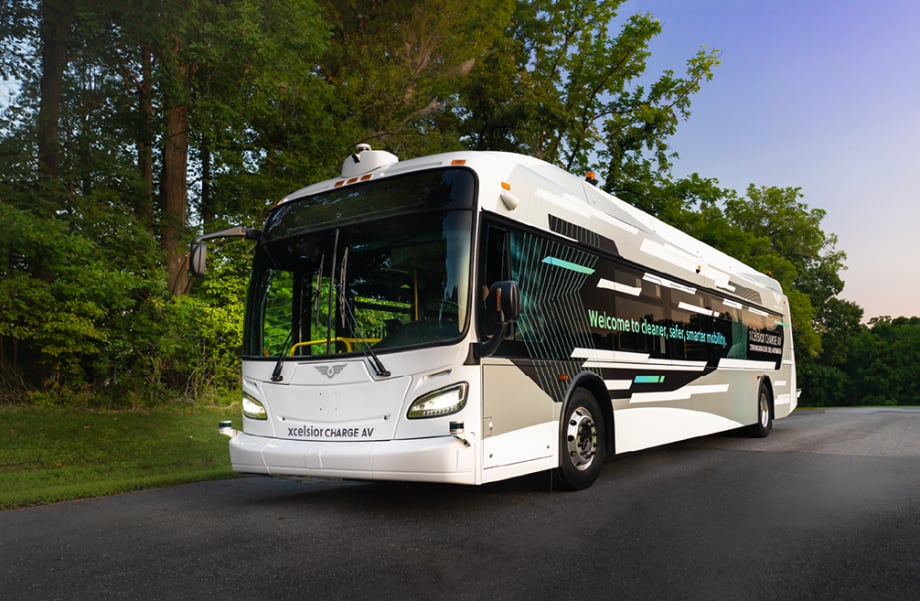
The Xcelsior AV™ furthers the FTA Strategic Transit Automation Research Plan to assess potential risks, barriers, and mitigation strategies associated with the implementation of automation technologies in transit buses.
New Flyer
New Flyer of America Inc. unveiled its Xcelsior AV™ automated transit bus, now in motion at Robotic Research LLC (Robotic Research) in Maryland. The Xcelsior AV™ unveiling follows New Flyer’s launch of its Automated Technology Program first announced in May 2019, and the subsequent announcement of partnership with artificial intelligence and automation leader Robotic Research also announced in May 2019.
New Flyer and Robotic Research developed the Xcelsior AV™ — North America’s first fully operational heavy-duty automated transit bus — to harness the zero-emission power of New Flyer’s Xcelsior CHARGE™ battery-electric propulsion while integrating advanced driver-assistance systems (ADAS) technology to meet Society of Automotive Engineers (SAE) Standard J3016 Level 4 technology with the automated vehicle (AV).
“Our Xcelsior AV represents the anticipated future of safety in public transit and the latest leap forward for New Flyer. We committed to building an automated transit bus and within five years, we’ve delivered an industry-changing vehicle. The technology is real and it’s here,” said Chris Stoddart, president, New Flyer and MCI. “In the future, we expect fleets of automated buses to improve road safety and with the potential to shorten commute times, increase energy efficiency, and reduce congestion. As standards and regulations are developed and implemented and automated buses are deployed across North America, we expect our Xcelsior AV to enable meaningful improvements in the public transit user experience, which will hopefully lead to increased ridership. Together with Robotic Research, we are leading clean, accessible, reliable mobility that’s safer for all.”
Robotic Research is a privately held, U.S.-based innovative engineering and technology company providing software, robotic technology, and automated solutions to commercial and government customers. Its testing facilities are in Gaithersburg and Clarksburg, Md.
Xcelsior AV™ capabilities are made possible by two primary technologies. The first is AutoDrive®, Robotic Research’s self-driving technology, serving as the “eyes and brain” of the autonomous system and processing the world surrounding the bus, including mapping the environment, making decisions, and navigating the route. The second is Robotic Research’s AutoDrive ByWire™ (drive-by-wire system), serving as the “hands and feet” of the automated system and controlling the steering, braking, and throttle, ultimately operating bus movement on its route. This AV technology delivers several capabilities that are expected to be leveraged in making the mobility experience safer. These system capabilities include:
Visualizing the environment: the bus can visualize its current environment using sensors (such as LIDARs, radars, and cameras) that create a three-dimensional model of the world to navigate through.
Pedestrian detection and avoidance: the bus can detect the presence of a pedestrian and adjust course to avoid.
Vehicle detection: the bus uses 360° sensors to detect the presence of other vehicles, responding with course adjustment as appropriate.
Precision docking: the bus is maneuvered precisely to allow for level boarding from the bus platform for passengers with accessibility needs.
Vehicle-to-Vehicle (or “V2V”): the bus can communicate directly with other vehicles, which allows safe platooning.
Vehicle-to-Infrastructure (or “V2I”): the bus communicates with signalized intersections or other infrastructure-based alerts, such as pedestrian and vehicle alerts (e.g. Beacon Sense™). These features will also assist in improving bus depot safety, efficiency, and space usage through features such as self-parking, fueling and cleaning.
Day or night operation: the bus is fully capable of operating day or night, regardless of lighting or weather events, based on its defined Operational Design Domain (or ODD).
Safe and redundant system: the bus can run when GPS is unavailable — responding to real-time data and events as they occur, instead of relying only on pre-mapped routes, buildings, and infrastructure.
Performance analytics: the bus is integrated with nSight end-to-end data collection to analytics technology, lending deep insight on bus performance and its interaction with other vehicles and infrastructure through its route and operation.
The Xcelsior AV™ furthers the Federal Transit Administration (FTA) Strategic Transit Automation Research Plan to assess potential risks, barriers, and mitigation strategies associated with the implementation of automation technologies in transit buses. In 2020, New Flyer announced North America’s first deployment of automated transit buses into revenue service, in a pilot project with the Connecticut Department of Transportation funded by the FTA’s Integrated Mobility Innovation initiative, supporting projects demonstrating innovative and effective practices to enhance public transportation effectiveness, efficiency, quality, safety, and transit rider experience.
Click here for more photos.
More Zero Emissions
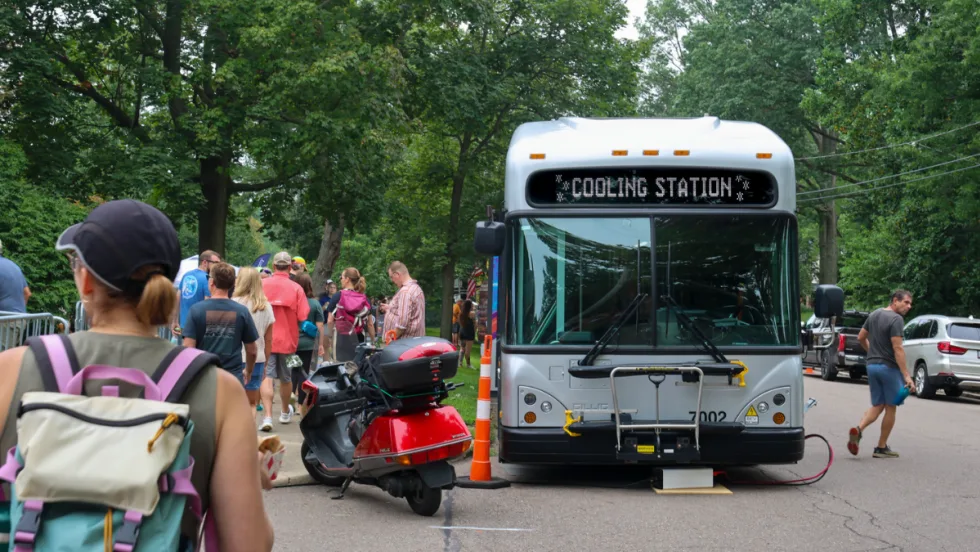
Ohio’s METRO RTA Turns Electric Buses into Mobile Power Sources at PorchROKR
See how three Gillig battery-electric buses powered festival stages while the agency’s new Park & Ride service carried approximately 1,000 attendees, demonstrating another potential use for transit agencies’ electric fleets.
Read More →
CALSTART and Forth Combine to Form Catalyst Mobility
The new name represents a renewed vision for the nonprofit focused on advancing clean, equitable, and affordable transportation solutions that move people and goods.
Read More →
Building a Flexible Path to Transit Electrification
John Hroncich discusses BAE Systems’ modular and scalable approach, lessons learned from decades of real-world operations, and how agencies can identify electrification strategies that fit their fleets.
Read More →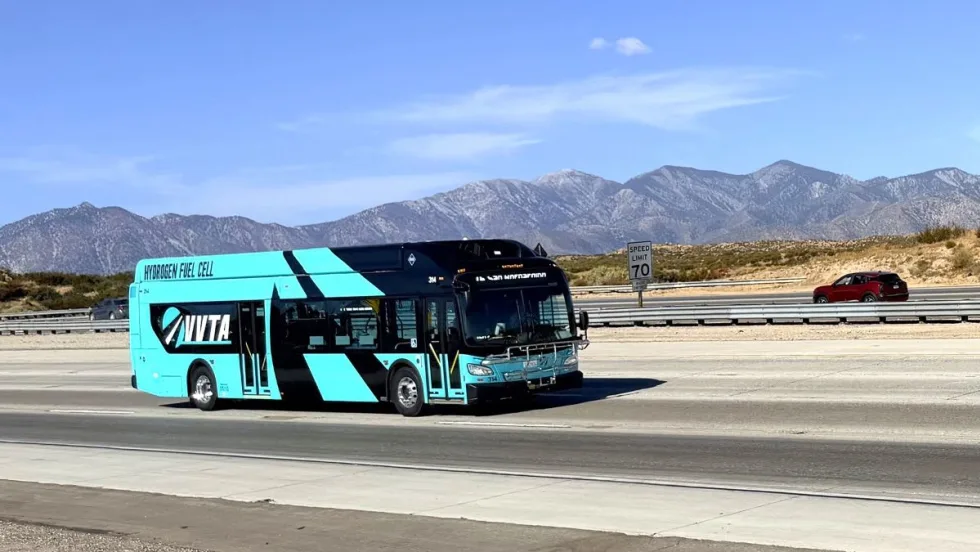
California's VVTA Begins Phased Rollout of Hydrogen Fuel Cell Buses
The agency is introducing 13 zero-emission buses into revenue service while evaluating performance across its urban, rural, and long-distance routes.
Read More →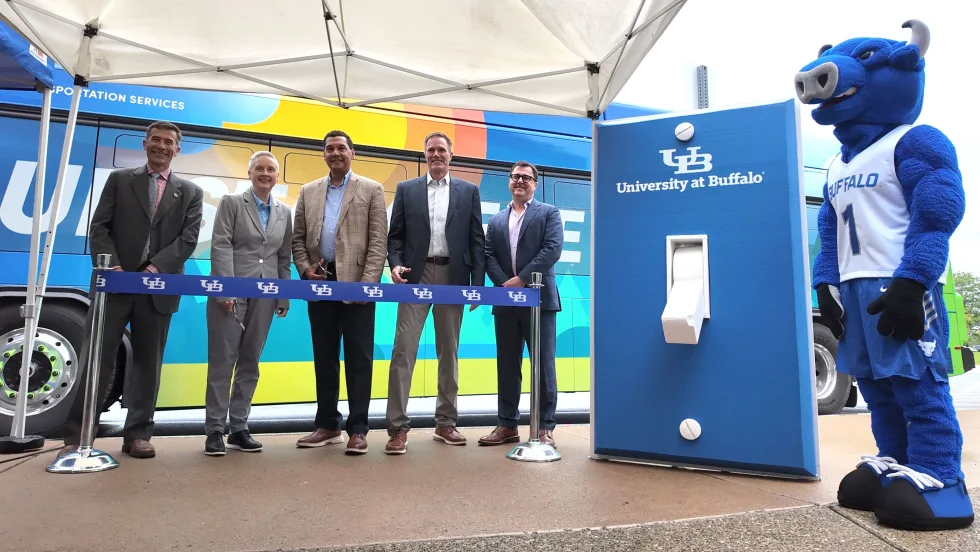
Inside Look: University at Buffalo Puts First 8 Electric Buses Into Stampede Service
UB, transportation solutions provider WeDriveU, and fleet electrification specialist Zenobē marked the deployment in the presence of students, university administrators, and local officials.
Read More →
Biz Briefs: OCTA Taps Clean Energy for Hydrogen Station, Stadler to Supply Via Rail Vehicles, and More
From manufacturers and suppliers to transit agencies and motorcoach operators, these updates offer a snapshot of the projects, partnerships and business moves driving the industry forward.
Read More →
AC Transit’s Cecil Blandon on Building the Next Generation of Transit Maintenance Leaders
The agency’s maintenance chief discusses leadership, workforce development, zero-emission technology, and preparing technicians for the future of public transportation.
Read More →
CTDOT Taps STV for Electric Bus Facility Design
The firm will work with CTDOT and RVT to define the facility layout, operational requirements, and long-term flexibility for RVT’s growing electric fleet.
Read More →
Chicago’s Pace Deploys 24 Hybrid-Electric Buses in Will County
The new buses reduce emissions and fuel consumption while advancing the agency's long-term goal of transitioning to a fully zero-emission fleet.
Read More →
DASH Breaks Ground on First On-Route Electric Bus Chargers in D.C. Region
The fast-charging infrastructure will help extend electric bus range, improve fleet utilization, and support DASH's goal of transitioning to a fully zero-emission fleet.
Read More →