



Sound Transit Board Adopts Realignment Plan for Delivering Critical Expansions
The steep rise in real estate and construction costs in the region in combination with advancing environmental review and project designs have driven up cost estimates for future transit expansions, contributing to a $6.5 billion affordability gap for delivering projects on earlier schedules.
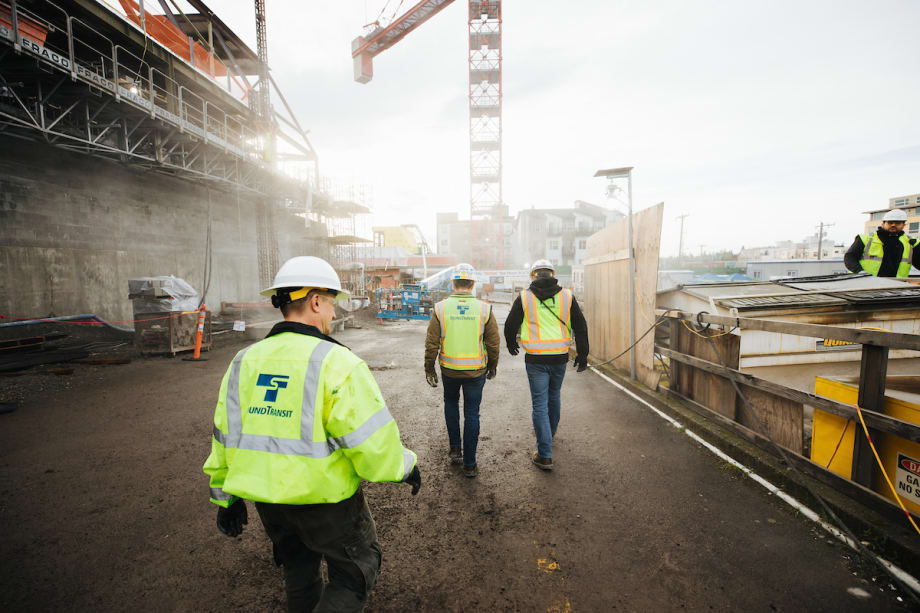
The adopted plan transparently reflects estimated affordable delivery dates for each project under current revenue and cost projections.
Sound Transit
Following 17 months of discussions and engagement with jurisdictions and stakeholders, the Sound Transit Board adopted a realignment plan that will serve as a framework for delivering critical transit expansions across the region as rapidly as possible.
The steep rise in real estate and construction costs in the region in combination with advancing environmental review and project designs have driven up cost estimates for future transit expansions, contributing to a $6.5 billion affordability gap for delivering projects on earlier schedules. While projects already in construction are not affected, the adopted realignment plan will guide the delivery dates for the next generation of voter-approved projects.
“In the next three years Sound Transit will nearly triple the length of our light rail system from 22 to 62 miles,” said Sound Transit Board Chair and City of University Place Councilmember Kent Keel. “The realignment plan will guide our work to expedite the next waves of projects, including reaching Tacoma, Everett, West Seattle and Ballard and delivering bus rapid transit and Sounder expansions. These projects are critical for keeping people moving in the face of our population growth and for protecting our economy and environment. To succeed, we will need expanded collaboration at the local, state, and national levels.”
The adopted plan transparently reflects estimated affordable delivery dates for each project under current revenue and cost projections. However, for priority projects that face delays under current financial projections, the realignment plan also establishes more ambitious completion targets that are based on plans to intensively pursue additional financial capacity and cost reductions.
Despite the affordability gap, current financial projections are sufficient for delivering many projects with minimal delays. Through securing additional funding and reducing costs, the realignment plan reflects the Board’s commitment to seek to eliminate financially necessitated delays altogether.
Project tiers
The plan prioritizes voter-approved projects by dividing them into four tiers. Projects in the top two tiers will be managed under the more ambitious completion targets unless or until it becomes necessary to fall back to affordable completion dates that allow more time to generate the required revenues. Tier 3 and 4 projects will be managed under their affordable schedules unless the program affordability gap is eliminated for Tier 1 and Tier 2 projects, and then shrinks still further to allow Tier 3 and Tier 4 projects to be delivered more quickly. Expenditures on any one individual project will be managed to protect the affordable schedule for all other projects.
Monitoring economic forecasts
The realignment process began early in the COVID-19 pandemic as governments around the country braced for significant impacts of a national recession to their revenues. The process continued in early 2021 as Sound Transit updated project cost estimates to reflect market pressures and advancements of project designs. Realignment deliberations to date have included more than 20 realignment presentations at eight Executive Committee meetings and four System Expansion Committee meetings, three Board workshops, and two special meetings of the Board.
Fortunately, rebounded economic forecasts have restored long-range revenue projections, though project cost estimates remain high. Sound Transit, together with its regional economists, will continue to regularly update financial projections at the same time environmental review and design work continue to update project cost estimates.
Current construction unaffected
Projects now under construction, including light rail extensions to Northgate, Tacoma’s Hilltop neighborhood, Bellevue and Redmond, Federal Way, and Lynnwood, as well as the Puyallup Sounder garage, are not subject to realignment. Between now and 2024, Sound Transit remains poised to open all these projects on schedule. All but the Tacoma Hilltop project are currently trending on or below budget.
More Management

METRO Opens Submissions for 2026 Motorcoach Awards
Nominations are now being accepted for METRO Magazine’s Operator of the Year and Innovative Operator of the Year awards.
Read More →
New York MTA Advances Final Contract for Second Avenue Subway Expansion
Contract Four is the largest in the Second Avenue Subway Phase 2 project and includes construction of station infrastructure, tracks, and signals for the subway expansion, MTA officials said. Work on Contract Four will begin in 2027.
Read More →
Transit Agencies Highlight Safety Gains at National Summit
Leaders from 15 major transit systems shared crime-reduction results and safety initiatives while discussing the role of continued federal support.
Read More →

NITA Names New Leadership, Expands Reduced-Fare Program at First Board Meeting
The new regional transit authority appointed its first board chair and interim executive director while extending reduced fares across CTA, Metra, and Pace for eligible riders.
Read More →
Beyond the Checklist: A Structured Approach to Transit Maintenance
Reliability-Centered Maintenance helps transit agencies move beyond routine checklists to focus limited resources on the assets and failures that have the greatest impact on safety, reliability, and service.
Read More →
APTA 2026 Nominating Committee Selects Leadership Slate, Names Chair and Vice Chair Nominees
Leadership changes will help shape the association’s priorities and its representation of the transportation industry during the 2026–2027 term.
Read More →
DART Launches Major Security, Fare Enforcement Initiative
The 90-day demonstration will deploy coordinated security teams at five light rail stations while testing controlled access and gathering data to guide future investments.
Read More →
Advancing Fare Collection Through Technology and Innovation
Learn about delivering 1300 gates at 91 stations while managing fare evasion. Explore the large scale deployment, solution customization and real-world results that affect the region. Prepare for deployment in your region now.
Read More →
Game Day in Motion: Moving Millions During the 2026 World Cup
Between packed transit stations and team motorcoaches, see how agencies and operators across North America tackled the transportation demands of the 2026 FIFA World Cup.
Read More →
Surface Transportation Extension Averts Shutdown, Leaves Transit Funding Gap
The stopgap keeps federal transportation programs moving, but missing advance funding could complicate the transit and rail projects agencies are planning next.
Read More →