



FTA Summit Highlights Best Practices to Increase Transit Ridership
More than 3,000 transit professionals and stakeholders joined FTA’s national conversation held throughout July and August.
The Federal Transit Administration (FTA) held a National Transit Renewal Summit to summarize the "best of the best" strategies shared by transit agencies, industry partners, and advocacy organizations.
The Summit culminated a series of events to promote tools to safely improve ridership on transit systems while continuing to protect riders and workers across the nation. More than 3,000 transit professionals and stakeholders joined FTA’s national conversation held throughout July and August.
At the National Transit Renewal Summit, industry leaders discussed best practices, resources, and tools for transit agencies to use to renew ridership as they look ahead to a post-pandemic future. FTA also published a comprehensive report to showcase the wide range of strategies, including ridership campaigns, system design review, restoring public confidence in transit safety, and leveraging partnerships.
"We are grateful for the overwhelming participation in our Transit Renewal Initiative and excited to provide these resources to support transit agencies across America," said FTA Administrator Nuria Fernandez. "Our panelists shared a wealth of ideas for all types of transit agencies — large, small, urban or rural — to consider adapting to renew transit ridership."
Examples of best practices emerging from the listening sessions:
TheWashington Metropolitan Area Transit Authority(WMATA)'s "Doing Our Part" series of music-themed video ads highlighted real-time ridership information, expanded mobile pay options and enhanced safety measures and cleanings, broadcast on local TV, radio stations, and social media channels. The essence of the campaign is that WMATA is “doing their part” by increasing safety measures, but riders must also commit to “doing their part” by following mask requirements and getting vaccinated.
TheMiami-Dade County Department of Transportation & Public Works conducted a Better Bus Network comprehensive system design review using real-time passenger load information to address where riders were not being serviced being left behind.
TheNew Orleans Regional Transit Authority (RTA) scheduled daily vehicle fleet deep cleanings and installed plexiglass barriers on the entire vehicle fleet. The agency announced a mandatory vaccination requirement for the agency’s more than 800 employees in July 2021.
The Milwaukee Urban League launched the "Leading Access to Success Transportation" program, or the L*A*S*T* Mile Program, which provides workforce development clients with temporary transportation to job sites not accessible by public transportation.
The National Association for City Transportation Officials (NACTO) cited transit as the most efficient, affordable, and sustainable way of getting around cities large and small, and a pivotal element of climate and equity strategies.
The American Rescue Plan and other pandemic relief grants have provided critical funding to transit agencies nationwide, including covering expenses for cleaning and other measures to improve safety.
According to the National Transit Database, ridership continues to improve in relation to 2019 levels. The City of Lincoln, Neb., reported a 111% ridership increase in June, the City of Tucson, Ariz., saw a 93% increase, while the Greater Richmond Transit Company is at 86% of 2019 ridership levels.
FTA facilitated a national conversation throughout the summer to help transit agencies across America rebuild and enhance ridership by hosting listening sessions and sharing best practices on FTA’s social media from transit agencies that are gaining riders. To learn more and view recordings and presentations from the virtual events, click here.
More Management

Bringing Austin’s First Light Rail System to Life
Austin Transit Partnership CEO Greg Canally discusses the city's nearly 10-mile light rail project, its collaborative approach to project delivery, the importance of community engagement, and the milestones ahead as construction approaches in 2027.
Read More →
ETA CEO John Maglio on Transit Technology, Innovation, and Building Agency Trust
ETA founder and CEO John Maglio explores the evolution of transit technology, the importance of reliable systems, and how stronger partnerships can help agencies improve operations and the passenger experience.
Read More →
Metra Draft Plan Outlines Costs, Service Improvements for Regional Rail
The Systemwide Network Plan identifies infrastructure needs and potential investments to expand all-day, bidirectional rail service across the Chicago region.
Read More →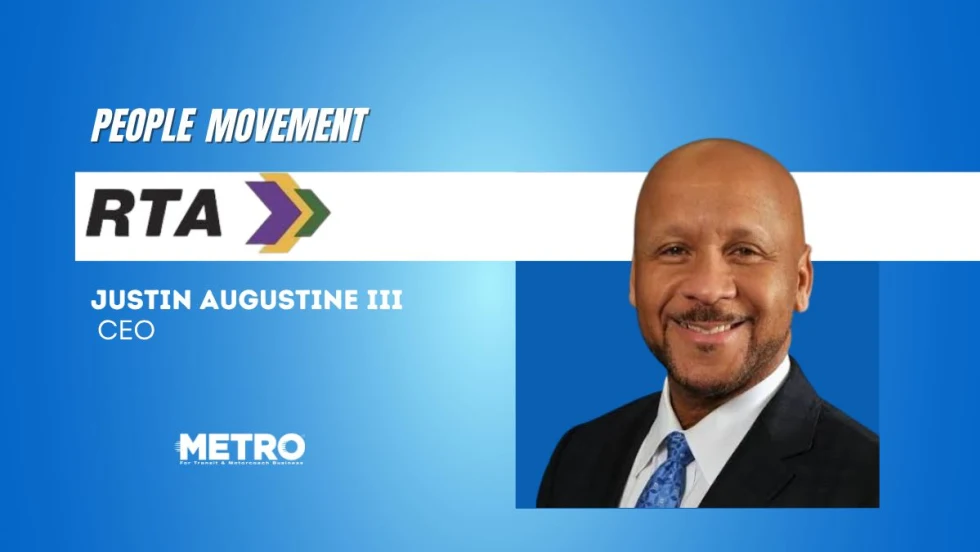
New Orleans RTA Names Augustine III as New CEO
In this edition, we also spotlight recent personnel moves at HDR, PATH, STV, and more, highlighting the people taking on new roles across the transportation industry.
Read More →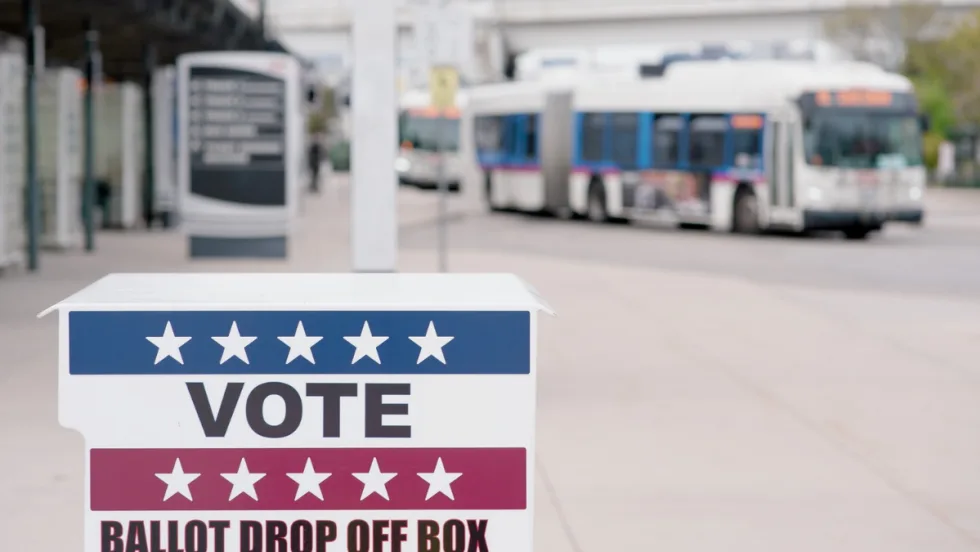
How Transit Agencies Are Using Free Rides to Improve Voting Access
Transit agencies are using fare-free service, trip-planning tools, and targeted rides to improve voting access. See what other agencies can learn from these efforts.
Read More →
Caltrain’s Electrification Drives a New Era of Ridership Growth
The railroad’s shift to electric service has brought more frequent trains, stronger customer satisfaction, and increased ridership, earning it APTA’s Outstanding Public Transportation System award.
Read More →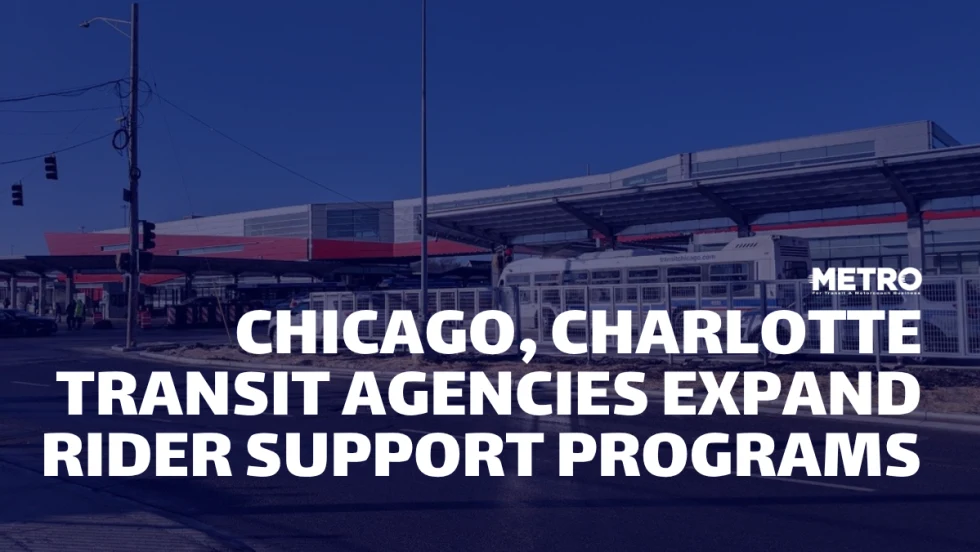
Chicago, Charlotte Transit Agencies Expand Rider Support Programs
CTA launched crisis intervention teams as CATS prepares to deploy fare ambassadors, expanding customer assistance and security efforts across both systems.
Read More →
New York MTA Launches Historic $1.9B Signal, Track Modernization Project
Funded in part by congestion pricing revenue, the project will replace nearly century-old signals along the A and C lines in Brooklyn and Queens.
Read More →
Brian Dickson on Building Stronger, More Resilient Transportation Organizations
Bus Business Consultants Founder Brian Dickson discusses the leadership principles, operational discipline, and strategic planning that separate transportation companies positioned for long-term success from those stuck in survival mode.
Read More →
LA Metro Breaks Ground on Vermont BRT Project
The 12.4-mile corridor is projected to serve 66,200 daily riders, reduce travel times by up to 24%, and create the nation's busiest bus rapid transit corridor.
Read More →