



RTD Taps HDR to Study Feasibility of ‘Peak Service’ Rail to NW Denver Communities
The approximately two-year study will aim to provide updated engineering and cost estimates to determine recommendations for service to northwestern metropolitan communities, which include Broomfield, Louisville, Boulder, and Longmont.
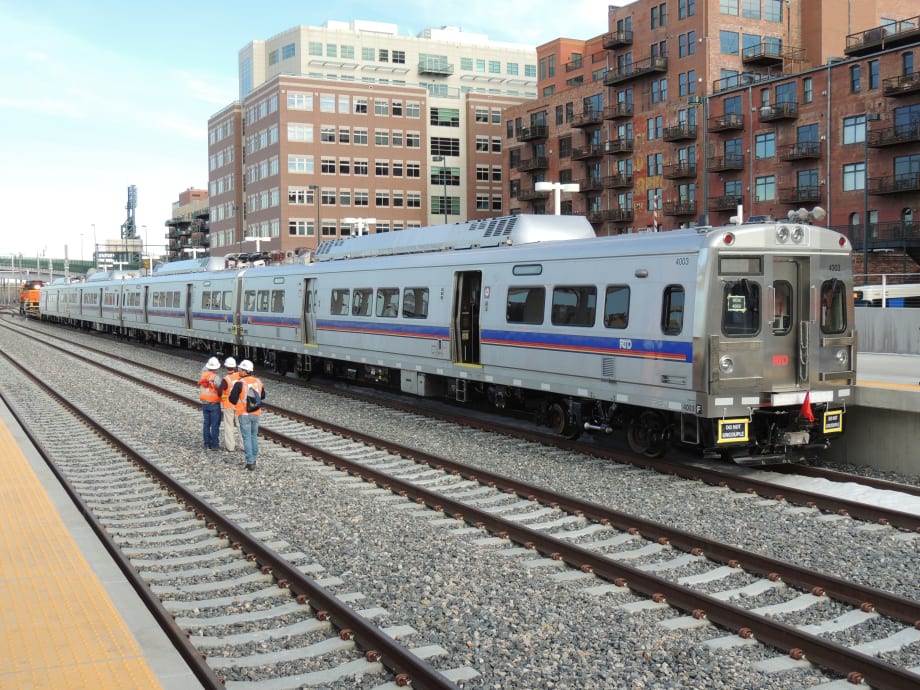
At an estimated cost of $1.5 billion, the Northwest Rail Line remains the costliest of the unfinished FasTracks projects.
Denver RTD
Denver’s Regional Transportation District (RTD) selected HDR Engineering Inc. to study the feasibility of implementing a “peak service” rail schedule between Denver Union Station and downtown Longmont.
Following RTD board approval in August 2021, the agency sought proposals from qualified firms for the Northwest Rail Line Peak Service Study. HDR Engineering was selected among three qualified firms that submitted proposals.
The approximately two-year study will aim to provide updated engineering and cost estimates to determine recommendations for service to northwestern metropolitan communities, which include Broomfield, Louisville, Boulder, and Longmont. Additional goals include positioning the project for the possibility of federal funding, planning peak service to allow for future build-out of the Northwest Rail Line, and aligning RTD strategically with the agency’s stated goals of partnering with agencies such as the Front Range Passenger Rail Service and the Colorado Department of Transportation.
“This feasibility study will provide RTD with public input and 2022 data that will enable the agency and interested parties to utilize a common set of facts in determining how best to serve the northern suburbs within the District,” RTD GM/CEO Debra A. Johnson said. "Like taxpayers throughout RTD’s service area, residents of these communities have contributed to the FasTracks transit-expansion program since its approval 18 years ago, and they continue to express their support for rail service to this part of the region. I anticipate that the collective efforts with HDR Engineering will advance the path forward in a meaningful way."
The plan will examine use of RTD’s existing B Line commuter rail alignment, along with the possibility of leasing BNSF Railway right-of-way and tracks, to extend service during peak commuting hours from Westminster Station 35.3 miles north to Boulder and Longmont.
The peak-hour service plan to be explored in the study would offer three morning trips from Longmont to Denver and three evening trips from Denver to Longmont. The peak service study will examine whether the plan would identify a viable option that would potentially enable RTD to advance service to the northwest suburbs.
At an estimated cost of $1.5 billion, the Northwest Rail Line remains the costliest of the unfinished FasTracks projects, the others being the .8-mile extension of the Central Rail Corridor, the final 5.5 miles of the N Line, and the 2.5-mile extension of the Southwest Corridor. RTD estimates that, given current FasTracks funding, it could take until 2050 to complete infrastructure improvements needed to operate B Line train service throughout the day between Denver and Longmont.
FasTracks is RTD's voter-approved transit expansion program that is transforming transportation through the Denver metro region. Since 2004, RTD has built 25.1 miles of light rail track and 53 miles of commuter rail track, launched the Flatiron Flyer bus rapid transit service, and opened an intermodal hub at Union Station right in downtown Denver.
More Rail

New York MTA Advances Final Contract for Second Avenue Subway Expansion
Contract Four is the largest in the Second Avenue Subway Phase 2 project and includes construction of station infrastructure, tracks, and signals for the subway expansion, MTA officials said. Work on Contract Four will begin in 2027.
Read More →
San Diego MTS Breaks Monthly Trolley Ridership Record
Agency officials said July’s ridership indicates MTS’s continued recovery from the pandemic.
Read More →
Report Examines NJ TRANSIT Reliability, Funding Challenges
The Garden State Initiative analysis examines the roles of Amtrak infrastructure, fleet management, and agency operations while recommending a more performance-based approach to improving reliability.
Read More →
Stadler, CapMetro Sign Long-Term Rail Fleet Support Agreement
Beginning in 2027, Stadler will provide on-site technical expertise, spare parts support, training, and obsolescence management to help extend the reliability and longevity of CapMetro’s GTW fleet.
Read More →
Biz Briefs: Alstom Lands Canadian Contract, LYT to Supply California TSP, and More
In METRO's latest installment, we take a look at recent news from Complete Coach Works, Beep, FlixBus, and more partnerships making headlines across the transportation sector.
Read More →
CATS Gold Line Marks 5 Years of Service, 2.8M Passenger Trips
With a six-mile expansion planned, the Charlotte streetcar is positioned to connect more neighborhoods and major transit hubs across the region.
Read More →
Why Simulating Pedestrian Movement Has Become Essential for Modern Rail Stations
Pedestrian microsimulation is helping rail planners identify bottlenecks, test station designs, and prepare complex transit hubs for growing passenger volumes.
Read More →
Amtrak Begins Major Construction at New York’s Sunnyside Yard
The new maintenance facility will support Amtrak’s Airo trainsets while improving maintenance efficiency and turnaround times in New York.
Read More →
Chicago Leaders Unveil Plans for O’Hare Airport Express Train
The privately developed project would offer a 15-minute trip between downtown and O’Hare’s Terminal 2, with trains operating every 15 minutes on a dedicated track. The service would use battery-electric trains and three existing freight rail rights-of-way.
Read More →
OCTA Maps Out 30-Year Strategy to Protect Coastal Rail Corridor
The draft feasibility report identifies strategies to protect the coastal rail line for decades as the agency continues near-term stabilization and sand placement efforts.
Read More →