



Hometown Manufacturing Changes with the Times
What used to be a primarily trolley-based company has adapted to recent trends by pivoting to fit the needs of customers planning for the future of transportation.


Hometown Manufacturing, formerly Hometown Trolley, still sells its former namesake but is now also filling the needs of a more diverse array of clientele.
Photo: Hometown Manufacturing
Adjusting to new customer desires doesn’t mean a company must forget what put them on the map in the first place; however, any business that wants to stay in business knows it’s equally important to be on top of trends born from a changing transportation landscape. Hometown Manufacturing, formerly Hometown Trolley, still sells its former namesake but is now also filling the needs of a more diverse array of clientele.
Birth of a Brand
The company has been around for 30-plus years, but the business has changed as its products have evolved. In 1996, Kristina Pence-Dunow found herself divorced with two young children. She had obtained the business as part of the divorce settlement, which she leveraged and grew rather than liquidating. She had recently relocated to the northern part of Wisconsin and found the product was being distributed by a sole party, which limited the growth of the company.
Pence-Dunow signed her first official transit bus dealer in 2003 and rebranded the company from Double K Inc. to Hometown Trolley. From there, she focused on building a nationwide dealer network and grew the business.
In 2014, Hometown developed the first full low-floor rear-engine trolley bus capable of operating in mass transit applications equivalent to the top heavy-duty transit buses. This product boosted sales, which enabled the purchase of Supreme’s Classic American Trolley line, thereby eliminating the pricing war and competition within the trolley market.
Branching Out from Trolleys
Hometown Manufacturing may have gotten its start by manufacturing trackless trolley buses but has since branched out. The next growth the Hometown team pursued was a modern bus equipped with liquefied petroleum gas (LPG) fuel. Hometown secured a contract for 36 buses to Acadia National Park, and this was the catalyst for the company’s modern transit line called Hometown Coach.
After receiving requests from existing transit customers that were operating its heavy-duty low-floor rear-engine Streetcar trolleys, Hometown expanded again in 2020 and developed the Urban — a heavy-duty, modern transit bus, which successfully completed a 12-year test in 2021 at the FTA’s Altoona testing facility. The next product will be a light-duty transit vehicle, rounding out a full line up of all sizes of passenger transportation vehicles with a modern appearance.
The corporation was then renamed Hometown Manufacturing Inc. in 2022 to encompass all established and future products manufactured.
“We believe branding is incredibly important in telling a story and describing a product, and we didn’t want to lose the essence and long-standing reputation of our Hometown Trolley line when the bus line was developed. We decided to create an umbrella name for our manufacturing business that would suffice for current products built, as well as any future products our family may create and develop in the future. Thus, Hometown Trolley and Hometown Coach are the brands produced by Hometown Manufacturing, Inc.,” Pence-Dunow explains.
Ready for an EV Future
The move to electric is not new for Hometown. It already has experience in this area, as several electric trolley buses were developed in the past and are still operating today.
Taking the product to the new generation of electric propulsion systems is underway, with full production planned for late 2022. The company will be offering fully electric, zero-emissions packages for both the trolley and bus lines and is working with Freightliner and BAE to propel its light- to heavy-duty electric options.
Hometown Manufacturing is a member of Center for Transportation and the Environment (CTE), providing grant writing and applications for funding services, which is a bonus for customers.
Certified to Assist
The company is a certified Disadvantaged Business Enterprise (DBE) and Women's Business Enterprise (WBE) and is 100% woman-owned. Hometown Manufacturing’s leadership uses its expertise in this area to mentor and help other small minority businesses become certified.
Owner Kristina Pence-Dunow was awarded Small Business Person of the Year in 2017, and this platform provided recognition in the Small Business Administration (SBA), DBE, and WBE arenas. This has enabled opportunities for ample networking and keynote speaking, which in turn helps Hometown stand out amongst competitors. Pence-Dunow was a keynote speaker at the 2018 Wisconsin Governors Minority Conference, as well as other venues, gaining more networking prospects for minority businesses.
“Being a woman in the FTA industry has been extremely difficult, but I have persevered even during some of the greatest challenges I’ve experienced during my 30 years in business,” says Pence-Dunow. “I compete with the leading companies of the transit industry, and for that, I am extremely proud. I believe it’s valuable to share my experience, knowledge, and advice with anyone experiencing adversities within their businesses. Speaking out and inspiring others has also put our company front and center, allowing us the recognition our product and our craftsmen deserve.”
Pandemic Pivoting
Hometown Manufacturing was fortunate to have a substantial backlog when the pandemic hit, which enabled production to continue as normal with slight adjustments for the safety of its team members. The changes to the safety and cleanliness of transit vehicles provided another opportunity for the company to continue to innovate and provide improved features and options, such as driver barriers, air recirculatory systems, and more to meet customers’ changing needs.
Within the next five years, the company sees itself as an industry-leading, American- made, full-electric transit bus manufacturer. It also has a few other confidential product lines being developed outside of the transit industry. Hometown Manufacturing is committed to the environment and will always be at the forefront of the latest zero- emissions and transit technology offered in the market.
More Zero Emissions
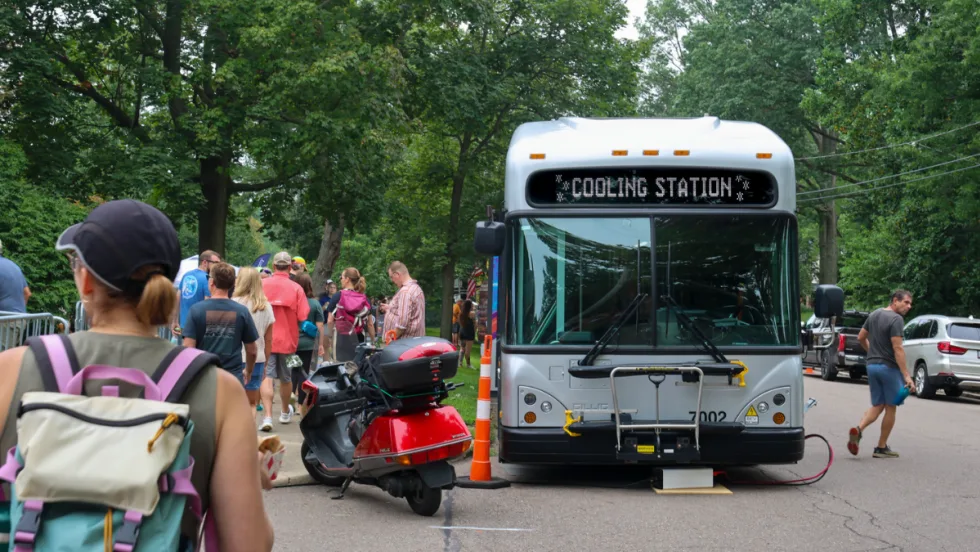
Ohio’s METRO RTA Turns Electric Buses into Mobile Power Sources at PorchROKR
See how three Gillig battery-electric buses powered festival stages while the agency’s new Park & Ride service carried approximately 1,000 attendees, demonstrating another potential use for transit agencies’ electric fleets.
Read More →
CALSTART and Forth Combine to Form Catalyst Mobility
The new name represents a renewed vision for the nonprofit focused on advancing clean, equitable, and affordable transportation solutions that move people and goods.
Read More →
Building a Flexible Path to Transit Electrification
John Hroncich discusses BAE Systems’ modular and scalable approach, lessons learned from decades of real-world operations, and how agencies can identify electrification strategies that fit their fleets.
Read More →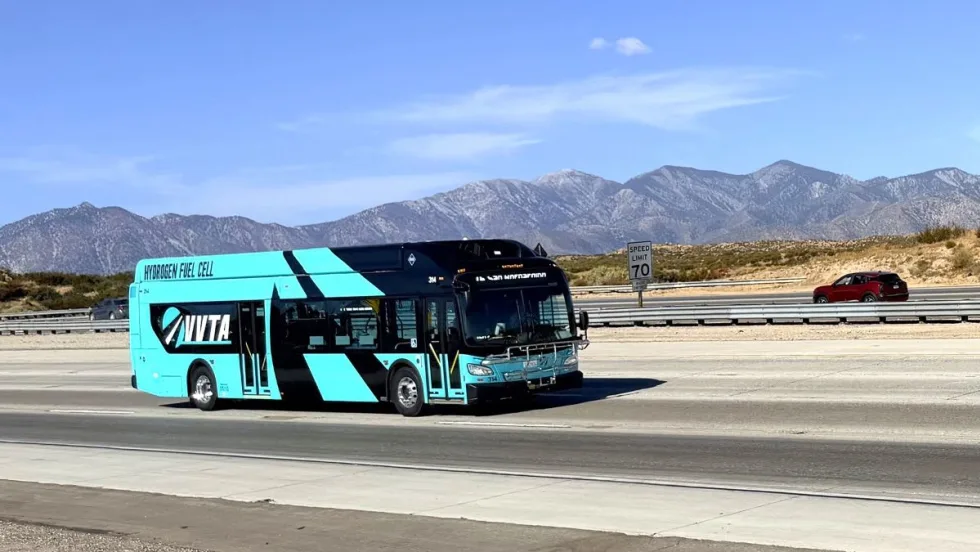
California's VVTA Begins Phased Rollout of Hydrogen Fuel Cell Buses
The agency is introducing 13 zero-emission buses into revenue service while evaluating performance across its urban, rural, and long-distance routes.
Read More →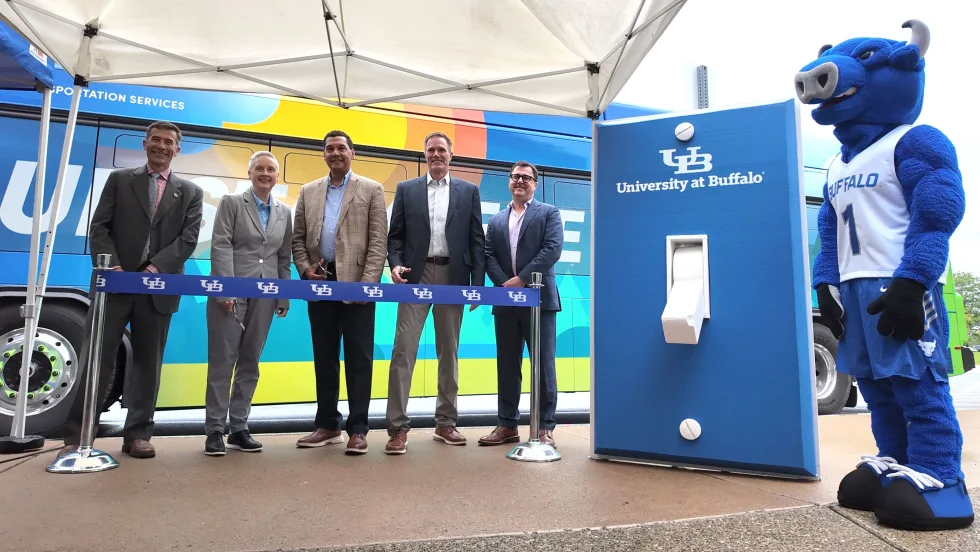
Inside Look: University at Buffalo Puts First 8 Electric Buses Into Stampede Service
UB, transportation solutions provider WeDriveU, and fleet electrification specialist Zenobē marked the deployment in the presence of students, university administrators, and local officials.
Read More →
Biz Briefs: OCTA Taps Clean Energy for Hydrogen Station, Stadler to Supply Via Rail Vehicles, and More
From manufacturers and suppliers to transit agencies and motorcoach operators, these updates offer a snapshot of the projects, partnerships and business moves driving the industry forward.
Read More →
AC Transit’s Cecil Blandon on Building the Next Generation of Transit Maintenance Leaders
The agency’s maintenance chief discusses leadership, workforce development, zero-emission technology, and preparing technicians for the future of public transportation.
Read More →
CTDOT Taps STV for Electric Bus Facility Design
The firm will work with CTDOT and RVT to define the facility layout, operational requirements, and long-term flexibility for RVT’s growing electric fleet.
Read More →
Chicago’s Pace Deploys 24 Hybrid-Electric Buses in Will County
The new buses reduce emissions and fuel consumption while advancing the agency's long-term goal of transitioning to a fully zero-emission fleet.
Read More →
DASH Breaks Ground on First On-Route Electric Bus Chargers in D.C. Region
The fast-charging infrastructure will help extend electric bus range, improve fleet utilization, and support DASH's goal of transitioning to a fully zero-emission fleet.
Read More →