



A New, Fast-Moving Trend that Deserves Immediate Attention
Transit authorities throughout the country are quickly becoming big-time developers…and in more ways than one might have ever thought possible.

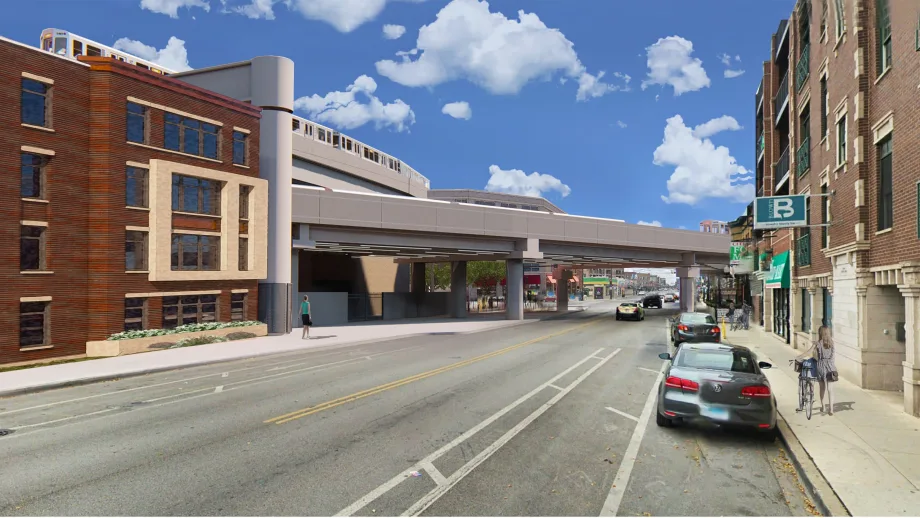
Funding for Chicago will fuel the planning, design, and technical support needed to deliver developments around train stations and high-frequency bus corridors throughout the city.
Rendering via CTA/Purple Group
Transit authorities throughout the country are quickly becoming big-time developers…and in more ways than one might have ever thought possible. Many citizens and contractors may not be aware of how large this trend has become…and how fast it is moving.
The mixed-use projects that transit authorities are launching include all types of development. One of the most common initiatives is to develop mixed-use retail and housing on property that once served as a parking lot for automobiles owned by riders. However, the trend is much greater and more diverse. The projects, called transit-related development initiatives (TODs) have become quite common because of an abundance of federal funding for them.
The federal government encourages the adoption of TOD planning on an even wider scale. Funding support comes from USDOT’s Transportation Infrastructure Finance and Innovation Act (TIFIA) program. TIFIA loans can cover a large part of a major transportation project’s budget. That percentage had been capped at 33% up until November, but now TIFIA loans will cover up to 49% of a project’s cost. The loans also offer tax benefits to encourage private investment and that further accelerates the delivery of funding.
The scope of TIFIA financing was expanded to more categories of transit projects. The loans can now be awarded to efforts that will increase transit ridership services surrounding infrastructure assets and housing. TIFIA loans are specifically reserved for projects that meet minimum cost thresholds…translated, that means projects with budgets larger than $10 million.
The Role of the Feds
Another major source of funding for these development projects comes from the Federal Transit Administration (FTA). In fact, this federal agency can contribute 38% more funding in the coming years than it did over the previous four-year cycle of funding. The Bipartisan Infrastructure Law allocated $69 million for TOD projects. During this same period, TOD efforts will also receive a combined $1 billion in additional state and metropolitan funding, which marks a 41% increase over funding from previous years. Funding is available for projects that meet the criteria.
Without doubt, this new funding and the trend that is moving in warp speed should not be ignored. In mid-November, the FTA announced its first round of funding and a total of 19 projects received a combined $13.1 million just for planning new projects. More affordable housing options and economic development initiatives will begin emerging in areas immediately surrounding new transit stations. TODs will also foster connectivity to schools, hospitals, retail options, and restaurants. The following projects outlined provide a quick overview of what is happening throughout the U.S.
Projects Moving Forward
A TOD award of $576,000 will allow the Massachusetts Bay Transportation Authority to plan a sequence of improvements around its busiest subway line. The planned projects will focus on economic development, neighborhood connectivity, and the creation of new mixed-use spaces. In conjunction, the state of Massachusetts is also providing funding to support TOD plans that involve new housing options. The state budget for fiscal year 2023 includes $10 million in total grant awards just to plan housing developments around transit services.
The support for TOD is growing at the local level, too. In Texas, the Metropolitan Transit Authority of Harris County (METRO) plans to engage professional consulting services for developments around METRO’s existing public assets. The objective will be to generate more revenue, increase ridership, and/or create other regional benefits. METRO’s TOD projects will also connect with other partners in the region such as the city of Houston and Harris County.
Similarly, the city of Dallas and Dallas Area Rapid Transit (DART) have formed a partnership to launch similar types of projects. The upcoming initiatives will capitalize on existing DART-owned properties near light rail stations.
The city of Chicago has announced a $10 million Equitable Transit-Oriented Development grant program. The funding will fuel the planning, design, and technical support needed to deliver developments around train stations and high-frequency bus corridors throughout the city.
A $500 million project in California will be launched by the San Francisco Metropolitan Transportation Agency. The objective will be to electrify its fleet of rapid transit buses and that will support a series of TOD projects. One of the projects is related to a Potrero Yard Modernization initiative. It will replace an outdated maintenance facility and adjoining bus yard. By 2025, the agency plans to add 200 electric vehicles to its current fleet of 1,300 vehicles. To meet that growth a large facility will be required.
In Fairfax County, Va. a $35 million TOD project will deliver 382,000 square feet of mixed-use space around a transit hub to create space for retail establishments, offices, and community uses. It will also include the creation of a civic plaza with urban greenspace designed to enhance 15,000 future housing units.
Sound Transit, the public transit agency that provides services surrounding Seattle, has announced a large TOD project. It will expand its light rail service to its new Lynnwood station, which is currently scheduled to open in 2024. A TOD project complicating the expansion will include housing options priced to accommodate incomes at or below 80% of the area median income. In fact, Sound Transit is now required to offer 80% of the suitable surplus property it owns to qualified developers interested in providing affordable housing. Cost estimates have not been provided but are expected as soon as planning documents are complete.
A $40 million TOD project in Raleigh, N.C., will include the building of two 30-story towers next to a prominent transit center in the city’s downtown district. The plan will include repurposing historic warehouses for a modernized transit hub, a combined 560 new apartment units, and new space for commercial operations. The historic preservation plan also will include a bridge designed to connect people from the housing and transfer center to the city’s nearby Union Station.
These upcoming opportunities are just a sampling of the development initiatives that are currently in design phases throughout America. The trend definitely is worthy of scrutiny. Collaborative initiatives of all types are already in very high demand.
More Blog Posts
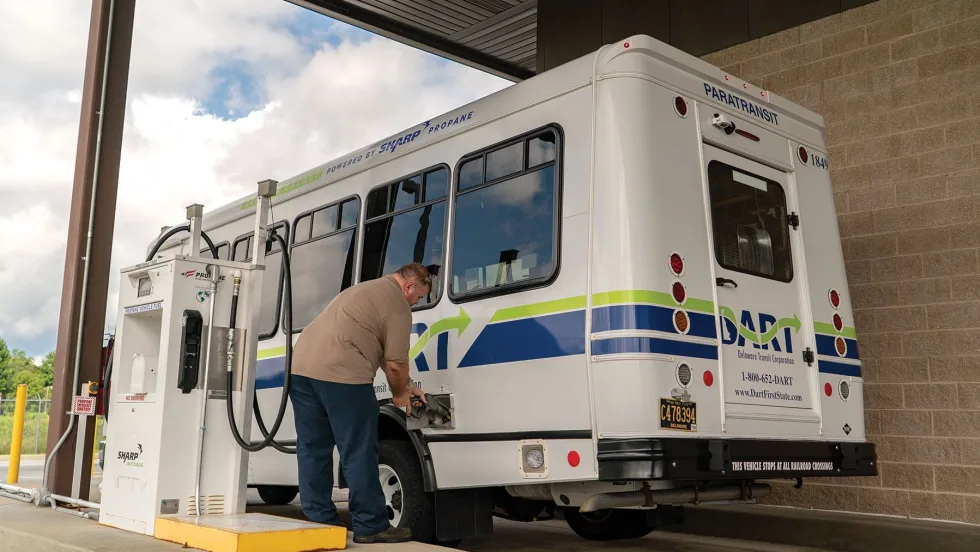
Building a Winning FTA Grant Proposal: Why Propane Autogas is the Pragmatic Choice for Fleet Resilience
With $610 million available through the FY 2026 Buses and Bus Facilities Competitive Program and the Low or No Emission Grant Program, agencies must build a compelling case before the September 21 deadline that balances environmental compliance with operational feasibility.
Read More →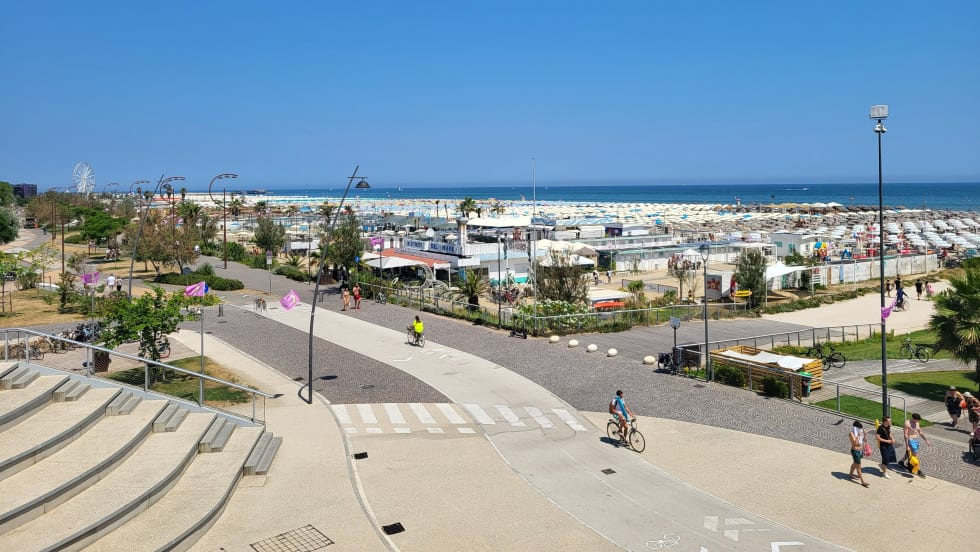
Velo-city Conference 2026: Latest Trends in Cycling as Part of Urban Mobility
The global cycling conference highlighted how cities are integrating bicycles into multimodal transportation networks, expanding cycle tourism and reshaping urban mobility.
Read More →
Kindness Isn’t Soft...It’s Strategic.
Mike Bismeyer — often known as “The Kindness Guy” — has spent more than 17 years in public transit and mobility, serving in industry leadership roles, speaking across North America, and advocating for stronger workplace cultures. But his message doesn’t come from theory. It comes from lived experience.
Read More →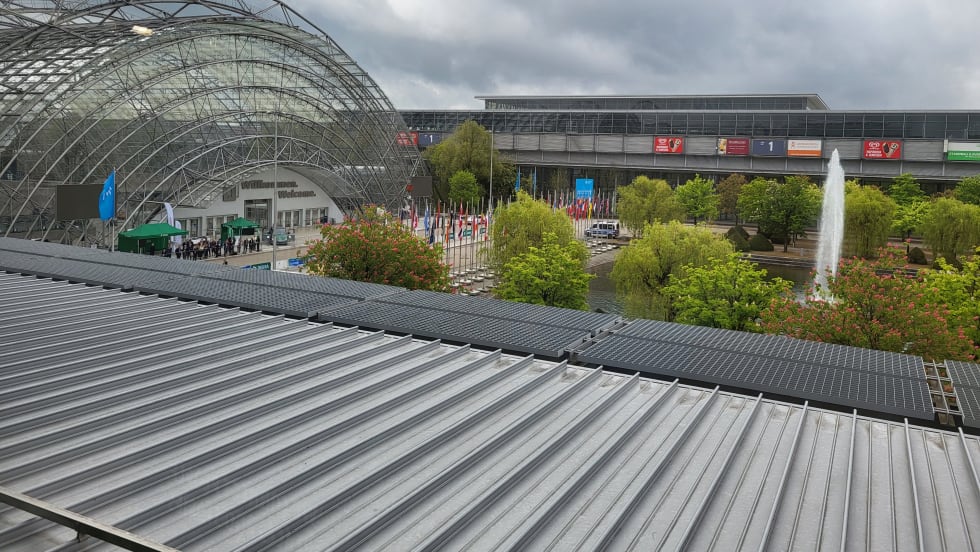
Inside ITF 2026: Transport Reacts to A Challenging World
Transport leaders from around the world gathered in Leipzig, Germany, for the 2026 International Transport Forum to discuss resilience, climate impacts, supply chains and the future of sustainable mobility.
Read More →
Every Ride Tells a Story — But You’re Not Just Selling the Ride
You’re selling the moment, the meaning, and the emotion behind it.
Read More →
How Digital Signage is Reshaping the Traveler Experience at Transportation Hubs
What was once a landscape of static signs has evolved into a responsive, immersive environment powered by real-time visual communication.
Read More →
Latest Trends in Urban Mobility from Polis Conference 2025
Polis comprises cities and regions, as well as corporate partners, from across Europe, promoting the development and implementation of sustainable mobility. This year’s event had over a thousand attendees across various policy forums and an exhibition.
Read More →
Why Transit Leaders Require Better Tools for Operational Clarity In Today’s Tech-Fragmented Environment
Across North America and beyond, transit agency officials are contending with a perfect storm of operational headaches and strategic challenges that hamper daily service and long-term progress.
Read More →
The Powerless Brokers: Why California Can’t Build Transit
It is no secret that transit in the U.S. is slow and expensive to build.
Read More →
Why Transport Sustainability Should Focus on People Instead of Cars
Simply incentivizing electrification is not enough to make a meaningful impact; we must shift our focus toward prioritizing public transportation and infrastructure.
Read More →