




Preteckting Buses: AI Company Uses Tech to Help NYCT Buses
DHSES Brings Agencies Together for Counter Terrorism Exercises
The State Division of Homeland Security and Emergency Services’ Operation NY-SECURE works with agencies to improve incident responses through counter terrorism exercises.
March 6, 2023
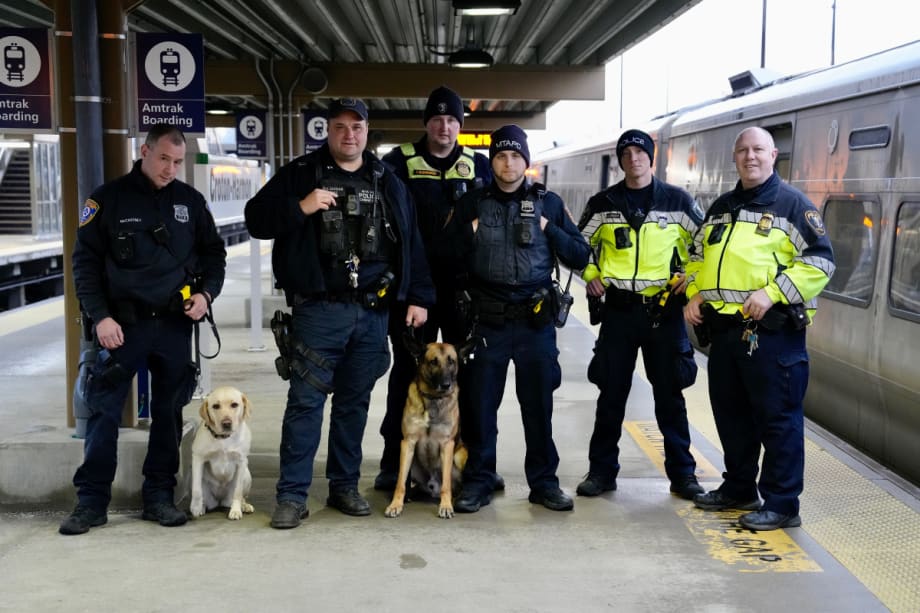
Since the program's inception in 2018, law enforcement teams have conducted 322 details across the state.
Photo: DHSES
3 min to read
The State Division of Homeland Security and Emergency Services (DHSES) recently partnered with federal, state, and local law enforcement agencies in Operation NY-SECURE to conduct counter terrorism and incident response details along Amtrak routes and MTA commuter lines.
These details help improve coordination and response between the railroad police agencies responsible for each station, and the state and local law enforcement agencies that respond to emergencies at those locations, according to the DHSES.
These details included heightened platform patrols, increased security presence onboard trains, detection canine sweeps, and counter-surveillance measures.
Operation NY-SECURE’s Purpose
Benjamin Voce-Gardner, director of the office of counter terrorism at NYS DHSES, said Operation NY-SECURE’s purpose is to “both improve coordination and response capacity between the different law enforcement agencies.”
Voce-Garner further discussed the goal of the rail details.
“Part of the goal is to make sure that these agencies have an opportunity to work together, to get to know each other, and to get familiar with their operations and their tempo,” Voce-Garnder said. “But then it’s also to provide a presence to commuters so that they understand that their law enforcement is engaged and protecting them.”
Teams conducted 72 single-station details across the state, and 12 multi-station details at Amtrak and MTA stations along the Empire Line.
In 2022, Operation NY-SECURE completed 84 details across the state. Voce-Gardner said the DHSES anticipates that tempo to continue in 2023.
Since the program's inception in 2018, law enforcement teams have conducted 322 details across the state.
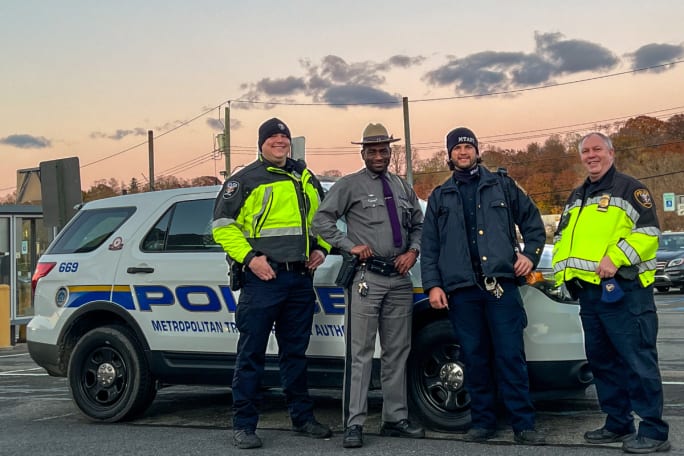
More than 5,200 of the exercises have been conducted across New York since 2016.
Photo: DHSES
Numbers Behind the Training Exercises
New York governor Kathy Hochul recently announced the State DHSES office of counter terrorism conducted training exercises at more than 1,000 locations statewide in 2022.
More than 5,200 of the exercises have been conducted across New York since 2016.
"By utilizing these critical counter terrorism exercises at over 1,000 locations, we are helping educate New Yorkers across the state on how to spot suspicious activity and report it to law enforcement, as well as enhance security measures," Hochul said. "Keeping all New Yorkers safe is my number one priority, and I thank DHSES, State Police, and our public safety partners across the state for their continued support of these important programs that safeguard the public."
More Ways to Counter Terrorism
Another way DHSES is combating terrorism is with red team exercises.
“We work with local law enforcement, federal law enforcement, and state police, and then work with specific communities or at specific event locations to provide them counter terrorism briefings and actually do exercises with them,” Voce-Gardner said.
Public safety teams across the state conducted exercises involving over 450 law enforcement personnel in each of the state's 16 counter terrorism zones. As part of this process, teams assessed suspicious activity reporting and recognition at 842 retailers and businesses that sell chemicals, compounds, components, services, or rent space or resources that could be exploited by those with nefarious intent, according to the DHSES.
Additionally, teams assessed more than 180 infrastructure locations across the state, including stadiums and arenas, malls and shopping centers, colleges and universities, airports, transit hubs, and other mass-gathering locations.
Subscribe to Our Newsletter
More Security and Safety

Transit Agencies Highlight Safety Gains at National Summit
Leaders from 15 major transit systems shared crime-reduction results and safety initiatives while discussing the role of continued federal support.
Read More →
DART Launches Major Security, Fare Enforcement Initiative
The 90-day demonstration will deploy coordinated security teams at five light rail stations while testing controlled access and gathering data to guide future investments.
Read More →
RTD Launches NextRide App to Consolidate Trip Planning, Fares, Security Reporting
The app expands on RTD’s existing NextRide web application and allows customers to view real-time vehicle locations and service alerts, purchase and store digital fares, and access customer support.
Read More →

TAPTCO Updates OSHA Compliance Training for Transit Maintenance Operations
The revamped program addresses 26 OSHA standards for maintenance facilities, with TAPTCO pointing to training, documentation, and everyday shop hazards as continuing challenges for transit operations.
Read More →
Sponsored•August 18, 2026
How VaporVision Adds Value to Transit Door Systems
Wabtec engineers explain how the system improves doorway detection, strengthens diagnostics and gives transit agencies and OEMs greater operating flexibility.
Read More →
FRA Announces $5.3B in Rail Investments, Including $2B for Amtrak
Funding will support grade-crossing improvements, infrastructure upgrades, and new Amtrak equipment in 23 states.
Read More →
Chicago, Maryland Expand Non-Law-Enforcement Safety, Rider Support
The CTA and MTA are launching new programs aimed at de-escalation, crisis response, rider assistance, and greater transparency.
Read More →
LA Metro, City of West Hollywood, and Partners Advance Smarter Bus Lane Enforcement
The award-winning partnership combines AI-powered detection with human oversight to improve bus reliability, accessibility, and enforcement efficiency.
Read More →
LA Metro Reports 57% Decline in Homelessness on Transit System Since 2024
The agency's latest homelessness count offers new data on how care-based services and cross-sector partnerships can complement traditional transit security strategies.
Read More →
FTA Launches 'Transit Moves America' Dashboard to Highlight Agency Safety and Performance
The online dashboard transforms National Transit Database information into a public-facing resource that allows users to compare transit agencies on key operational and safety metrics.
Read More →