



SacRT Launches Development of First Mobility Hubs
The SacRT Mobility Hub Implementation Plan will be a community-driven approach to identify and site which of SacRT’s light rail stations should be prioritized for inclusion in the Sacramento Region’s 52 mobility hubs.

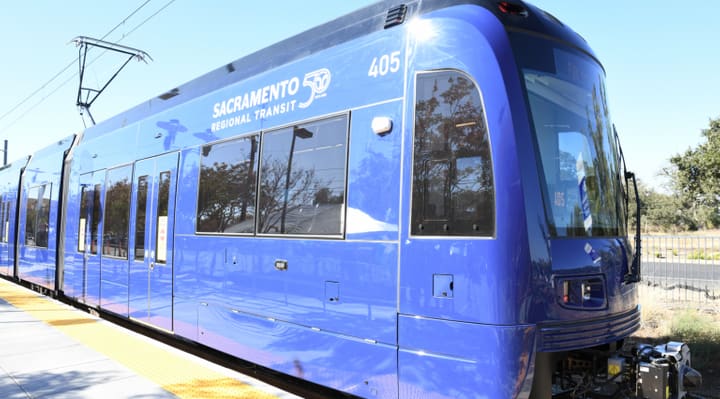
The SacRT Mobility Hub Implementation Plan will be a community-driven approach to identify and site which of SacRT’s light rail stations should be prioritized for inclusion in the Sacramento Region’s 52 mobility hubs.
Photo: Siemens/SacRT
California’s Sacramento Regional Transit District (SacRT) launched the development of Mobility Hubs at three light rail stations.
The groundbreaking initiative has been made possible through the receipt of $1.7 million in federal grant funding from the Joint Office of Energy and Transportation.
Additionally, the Sac Metro Air District may contribute up to $3 million to further bolster the benefits and amenities of these Mobility Hubs, including enhancements such as landscaping, lighting, and other infrastructure improvements.
To kick start this project, the California Air Resources Board’s (CARB) Sustainable Transportation Equity Program (STEP) granted $500,000 for the creation of a Mobility Hub Implementation Plan, which will be led by Civic Thread.
SacRT’s Mobility Hub
The SacRT Mobility Hub Implementation Plan will be a community-driven approach to identify and site which of SacRT’s light rail stations should be prioritized for inclusion in the Sacramento Region’s 52 mobility hubs.
The first three pilot locations have already been identified as part of the partnership with the Sac Metro Air District and Clean Cities.
The Mobility Hubs will serve as vital community hubs, strategically located within disadvantaged neighborhoods, and will offer a multitude of transportation options aimed at reducing reliance on gas-powered and single-occupancy vehicles.
Among the amenities provided at these hubs are EV carshare, bike and scooter share services, EV charging stations, carpool/vanpool connections, and electric microtransit shuttles.
“We are excited to embark on this journey toward creating Mobility Hubs that will serve as vibrant community centers, fostering sustainable transportation options and connectivity within our region,” said Henry Li, SacRT GM/CEO. “Through strategic partnerships and innovative solutions, SacRT is committed to enhancing the quality of life for all residents while leading the charge towards a greener, more equitable future.”
More to Come
This pilot project represents the first phase of a larger mobility initiative led by the Sac Metro Air District, aiming to introduce up to 52 Mobility Hubs across the Sacramento region.
Over a two-year period, SacRT will work on collaborating with EV vendors, acquiring electric shuttles, and engaging in extensive community outreach to gather input on the features and services desired at each Mobility Hub. The project is anticipated to kick-off in the summer or fall of 2024.
The goal is to develop, demonstrate, and document the benefits, effectiveness, and sustainability of e-mobility hubs, with a focus on providing zero-emission equity for disadvantaged communities.
More New Mobility

From Hardware to Digital Partner: Luminator Charts Its Next Chapter
CEO Magnus Friberg discusses Luminator’s shift toward becoming a digital partner, the growing importance of software and interoperability, and how AI can help agencies improve operations and passenger experience.
Read More →
Biz Briefs: Alstom Lands Canadian Contract, LYT to Supply California TSP, and More
In METRO's latest installment, we take a look at recent news from Complete Coach Works, Beep, FlixBus, and more partnerships making headlines across the transportation sector.
Read More →
CharterUP’s Armir Harris on Technology, AI, and the Future of Group Mobility
In a recent episode of METROspectives, CharterUP Founder/CEO Armir Harris discussed the company’s evolution from an online charter bus marketplace into a technology platform supporting public- and private-sector mobility and much more.
Read More →
Jacksonville’s NAVI Project Charts a New Course for Autonomous Public Transportation
Through its NAVI program, JTA is showing how autonomous vehicles, intelligent infrastructure, and coordinated operations can work together to deliver everyday public transportation.
Read More →
Biz Briefs: Luminator Marks Milestone and More
From manufacturers and suppliers to transit agencies and motorcoach operators, these updates offer a snapshot of the projects, partnerships and business moves driving the industry forward.
Read More →
New Tricks for Old Bureaucracies: Joshua Schank on Making Transit Innovation Stick
Former LA Metro Chief Innovation Officer Joshua Schank discusses why good ideas aren't enough, how transit agencies can overcome resistance to change, and why today's challenges demand more innovation.
Read More →
How DART's GoPass Is Redefining Regional Mobility
Serving 14 transit agencies, GoPass simplifies multimodal travel by allowing riders to plan, pay for, and manage an entire trip through one app.
Read More →
Biz Briefs: OCTA Taps Clean Energy for Hydrogen Station, Stadler to Supply Via Rail Vehicles, and More
From manufacturers and suppliers to transit agencies and motorcoach operators, these updates offer a snapshot of the projects, partnerships and business moves driving the industry forward.
Read More →CharterUP Expands Into New Mobility and Autonomous Transportation
Vice President of New Mobility Stephen Joos discusses how CharterUP is leveraging its nationwide transportation network, technology platform, and autonomous vehicle partnerships to expand into workforce mobility, campus shuttles, and transit solutions.
Read More →
METRO Magazine Announces 2026 Innovative Solutions Awards Winners
Projects Recognized for Advancing Mobility Through Technology, Accessibility, Workforce Innovation, and Operational Excellence
Read More →