California High-Speed Rail Authority Releases RFP for Rolling Stock
The Authority will now solicit proposals from Alstom Transportation Inc., and Siemens Mobility Inc. — the two prequalified shortlisted firms announced in January.
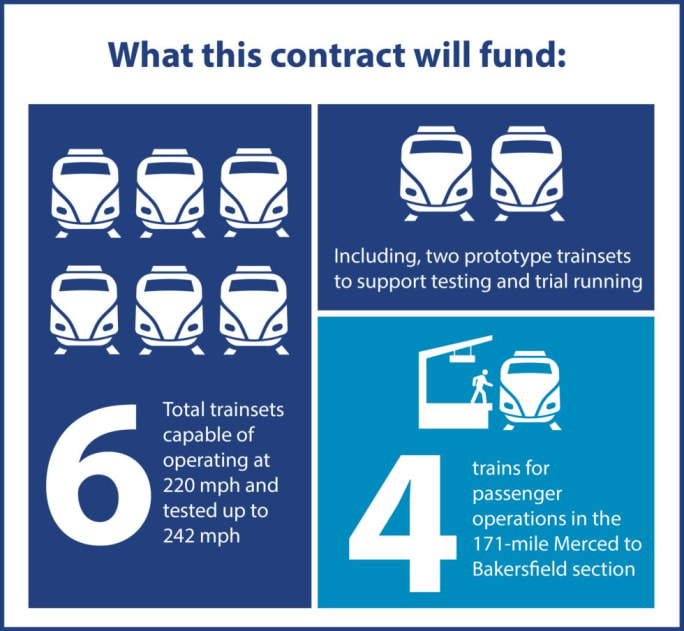
The Authority has begun work to extend the 119 miles currently under construction to 171 miles of future electrified high-speed rail from Merced to Bakersfield.
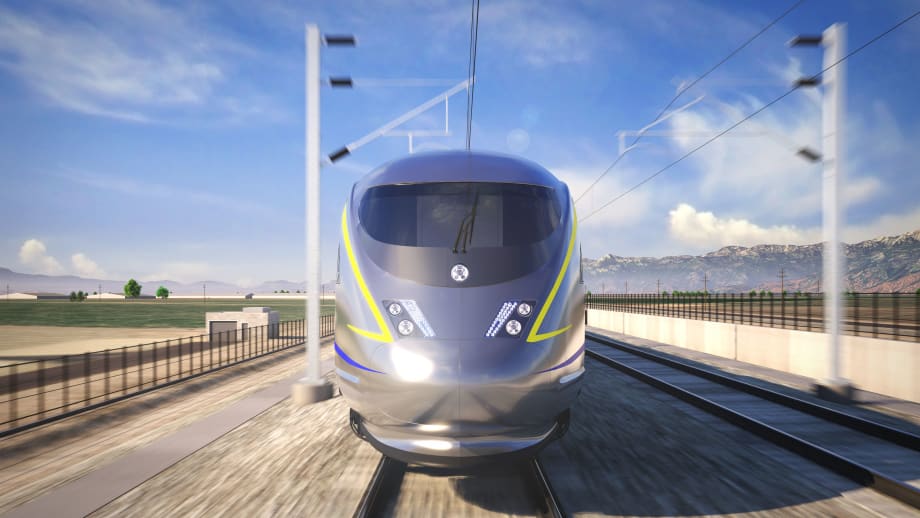
Photo: California High-Speed Rail Authority
2 min to read
The California High-Speed Rail Authority’s (Authority) board is moving the project closer toward bringing electrified high-speed rail service to California by approving the release of a Request for Proposals (RFP) to industry for the nation’s first 220 mph electrified high-speed trains.
The shortlist of these firms emerged from the Request for Qualifications approved by the board in August of 2023.
With proposals due in the fall, the Authority hopes to award a contract by the end of the year.
With proposals due in the fall, the Authority hopes to award a contract by the end of the year.
Photo: California High-Speed Rail Authority
High-Speed Rail Procurement
The procurement is possible in part due to the recent record federal grant awarded to the Authority in December, which included funding for new electric trains.
In accordance with federal funding, trainset procurement will be Buy America compliant. Trainset design will be informed by formal feedback from hundreds of stakeholders.
Impact of California’s High-Speed Rail Line
The Authority’s work to date has created more than 13,000 construction jobs, mostly in the Central Valley.
Ad Loading...
The Authority has begun work to extend the 119 miles currently under construction to 171 miles of future electrified high-speed rail from Merced to Bakersfield.
There are currently more than 25 active construction sites in the Valley, with the Authority having also fully environmentally cleared 422 miles of the high-speed rail program from the Bay Area to Los Angeles County.
Contract Four is the largest in the Second Avenue Subway Phase 2 project and includes construction of station infrastructure, tracks, and signals for the subway expansion, MTA officials said. Work on Contract Four will begin in 2027.
The Garden State Initiative analysis examines the roles of Amtrak infrastructure, fleet management, and agency operations while recommending a more performance-based approach to improving reliability.
Beginning in 2027, Stadler will provide on-site technical expertise, spare parts support, training, and obsolescence management to help extend the reliability and longevity of CapMetro’s GTW fleet.
In METRO's latest installment, we take a look at recent news from Complete Coach Works, Beep, FlixBus, and more partnerships making headlines across the transportation sector.
Pedestrian microsimulation is helping rail planners identify bottlenecks, test station designs, and prepare complex transit hubs for growing passenger volumes.
The privately developed project would offer a 15-minute trip between downtown and O’Hare’s Terminal 2, with trains operating every 15 minutes on a dedicated track. The service would use battery-electric trains and three existing freight rail rights-of-way.
The draft feasibility report identifies strategies to protect the coastal rail line for decades as the agency continues near-term stabilization and sand placement efforts.